Wednesday, June 15, 2016

Welfare group organises food and clothing giveaway for refugees and the underprivileged in Selayang


A Myanmar refugee leaving with a smile along with her son after receiving the donations.

OVER 500 Myanmar refugees and poor Malaysians in Selayang can observe Ramadan without having to worry about food and clothing for Hari Raya, thanks to the Malaysian International Welfare and Humanitarian Organisation (MyWelfare).

The organisation, a registered society that advocates and supports the welfare and dignity of the marginalised minorities in society, held a Ramadan Garage Giveaway event recently providing them with food packets, clothes and toys.

MyWelfare acting president Badariah Abdul said the organisation’s main focus was to provide welfare and support for refugees and asylum seekers, particularly the Rohingyas from Myanmar.

She also thanked Mon Space (M) Sdn Bhd chief executive officer and executive director Datuk Seri Jessy Lai for donating an ambulance worth RM300,000 and St. John Ambulance Malaysia (Pantai Selangor region) vice-president Datuk Lee Kim Tian for agreeing to operate the ambulance on behalf of MyWelfare.


“We are also indebted to MBI International Sdn Bhd for giving us an initial grant of RM100,000 to enable us to launch our first programme,” added Badariah.

Also present during the charity event were Mon Space (M) Sdn Bhd treasurer Rothman Lim See Chong, Mon Space (M) Sdn Bhd hotel manager Liow Miow Keong along with MyWelfare community adviser Uztaz Rafik and Malaysia freelance journalist, fixer, producer and documentary filmmaker Jules Rahman Ong.


(From left) Lee, Lim, Liow and Badariah briefing St. John Ambulance members on the giveaway.

One of the main components of MyWelfare is providing assistance to refugees who had limited access to healthcare.

Among facilities provided by MyWelfare are Rainbow of Love Informal school for refugee children, free medical clinics in collaboration with IMAM Response and Relief Team (IMARET) and Buddhist Tzu Chi, assistance to negotiate for hospital access in cases of medical emergencies, food and clothing distribution via monthly Garage Giveaways and the collaboration with The Berani Project in developing skills training centre for refugees to earn a living.

Jules said over 150,000 existing registered refugees and asylum seekers with the United Nations High Commissioner for Refugees (UNCHR) did not have official legal recognition in Malaysia.

“Refugees are not allowed to legally work, their children cannot attend formal schools and they have limited medical access.

“The absence of a legal recognition renders them vulnerable to exploitation and abuse,” he said, adding that MyWelfare was supported by public donations and contributions.

Rohingya families happy to celebrate Ramadan in Malaysia


KUALA LUMPUR: Spending his third Ramadan in Malaysia, schoolteacher and Rohingya refugee Arfat Ganumia is not at all optimistic that the newly democratic Myanmar will be rolling out a welcome mat for the Rohingya anytime soon.

The forecast looks the same for this ethnic minority, even as Aung San Suu Kyi’s National League for Democracy (NLD) takes the mantle to build a democratic bedrock in formerly authoritarian Myanmar.

However, not all is gloomy.

Arfat, who teaches some 130 children at the Al-Akhlas Rohingya refugee school in Selayang, appreciates Malaysia for its peacefulness, tolerance and generosity, especially during this time of the year.

Back in Myanmar, he said the biggest challenge during Ramadan was for Muslims to perform congregational prayers at the mosque for the five daily prayers andtarawih.

“Sometimes we would get stopped and questioned when we headed to the mosque in a group,” said Arfat, 33, recalling three decades of Ramadan in Myanmar.

There were even times when they were attacked or arrested, he said.

In fact, the Law degree holder added, Rohingya families are happy to be able to celebrate the holy month as Malaysian Muslim families do. They can fast, cook, eat and pray together without worrying about systematic mistreatment due to their identity.

The Myanmar government’s ethnic pigeonholing scheme does not recognise the Rohingya as an ethnic group, causing them to be stateless.

“Alhamdulillah (Praise be to God), I have a good life in Malaysia. I have everything,” he said, grinning from ear to ear.

At the Al-Akhlas school, Ramadan is marked by the spirit of charity from both outside and within the community. This is because the Rohingya are not just free to celebrate their Islamic culture here, but their children are also free to learn.

Checks by The Star at the school showed children aged five to 15 studying English, Burmese, Malay and Mathematics.

Ramadan also typically sees more volunteers arriving at the school’s doorsteps bearing food, clothes and books.

In return, Arfat distributes instant noodles and rice to the families of the Al-Akhlas children and the other schoolteachers.

The families would then prepare and distribute halim among the school community. Halim is a dish made of rice and meat diluted in broth, similar to Malaysia’s bubur.

As of April this year, there are 53,410 Rohingya refugees registered with the United Nations High Commissioner for Refugees in Malaysia.

http://www.thestar.com.my

Myanmar teenage refugee dreams of being a rock star


KUALA LUMPUR: Like most teenagers his age, Myanmar refugee Gideon Ni Ssi Ki Dawng also has ambitions and dreams of becoming a professional musician as great as Kurt Cobain of rock band Nirvana.

But being merely a refugee living in Malaysia, he knows such a wish was next to impossible.

“But it would be great if I can get a professional qualification from a university so that I can learn music further, then work hard to make a lot of money,” he told Bernama at the “Everyone Has Hope” gala night here on Saturday.

Still, the 17-year-old said even though he did not have the opportunity to attend formal music lessons, nothing would stop him from learning and pursuing his dream in music.

Gideon, who received his basic education at Fugee School, Gombak, said he loved to play guitar and sing. He learned to play the instrument by himself without proper guidance from anyone.

“I always wish volunteers with a music background would come and teach music regularly at my school.

“I want to showcase my talent all over the world, showing that there is hope to end war someday. Through music I’m making my spirit come alive.

“There are four used guitars in the class; actually we’re figuring out how to earn enough money to change the broken strings, but it’s okay, I’ll make the most of it,” he said.

Gideon is one of 35 participants in the “Everyone Has Hope” photography and fundraising initiative by Taylor’s College Canadian Pre-University and the United Nations High Commissioner for Refugees (UNHCR).

The programme involved Myanmar, Syrian and Somalian refugee youths living in Malaysia.

About 50 pictures taken by the refugees were displayed at the exhibition as they had been taught basic photography skills by volunteers comprising college students, local photographers and UNHCR through a six-month workshop.

Gideon came to Malaysia with his elder brother about five years ago, and deep in his heart there is always the hope he will be reunited with his family members who are still living in their home country.

“Both my parents and little sister are still living there, in my village… there is only one telephone and so our contact is very limited,” he said.

The teenager, who is from the ‘Chin’ ethnic race in Myanmar, is positive he will have a better future living in Malaysia.

“I wish the conflict in my country will be over soon. I wish I can live peacefully with family and friends,” he said.

Like Gideon, Syrian refugee Tuka Sahyoun, 13, also has big dreams and wants to become a famous artist.

The bubbly girl believes she can, through her passion in painting and drawing art, deliver messages for world peace and unity.

“I hope through my artwork I can inspire people and encourage them to be kind and to love one another,” she said.

Meanwhile, project founder Paula Reyes hoped the project would ignite endless passion for learning and growing among refugee children, besides optimising their full potential.

“Everybody deserves access to education and exposure and so do they (the refugees); we hope the community can open their eyes and not think negatively of them,” she said.

Based on UNCHR statistics, 154,140 refugees and asylum-seekers were registered with UNCHR in Malaysia as at end April this year, with 139,780 of them from Myanmar.

– BERNAMA

Thursday, June 9, 2016

More than 150,000 refugees, asylum seekers in Malaysia


KUALA LUMPUR: As of April-end, there were 154,140 refugees and asylum-seekers registered with the United Nations High Commissioner for Refugees (UNHCR) in Malaysia. UNHCR Representative in Malaysia, Richard Towie said the majority of them were from Myanmar. A total of 139,780 refugees and asylum-seekers were from Myanmar, with the rest coming from Sri Lanka, Pakistan, Somalia, Syria, Iraq, Iran, Palestine and other nations, he said. He said this at a press conference after attending the launch of ‘Odysseys: A Photographic Exhibition of the Asia and Europe Refugee Crises’ organised by Agence France-Presse here today. He said 68 per cent of the refugees and asylum-seekers comprised males while 34,600 were children below the age of 18.

 --Bernama 

‘Asylum-seekers who fail UNHCR test must leave Malaysia’

Those who fled to Malaysia but cannot prove they are in danger at home, will not be granted refugee status, said UN refugee agency UNHCR representative in Malaysia Richard Towle.


He was asked if Afghan refugees who failed the UNHCR interview should be deported from Malaysia.

UNHCR: Release Roghingya refugees from detention

KUALA LUMPUR: The Rohingya refugees who arrived in Malaysia after being stranded in the Bay of Bengal a year ago must be released from detention, says United Nations High Commissioner for Refugees (UNHCR).

UNHCR Malaysia representative Richard Towle said the refugees needed to be looked after properly and this could not be done effectively or fairly in the immigration detention system.

“That’s why after the Bay of Bengal crisis we have been saying give us access, let them out of detention and we will look after them,” Towle told reporters after the launch of Odysseys: A Photographic Exhibition of the Asia and Europe refugee crises by Agence France-Presse (AFP) here on Wednesday.

In May last year, over 1,000 people from Bangladesh and Myanmar had arrived by boat after being stranded in the Bay of Bengal.

They were abandoned by human trafficking syndicates following the discovery of mass graves and detention camps in Thailand and Malaysia.

Of the 371 Rohingya refugees accepted into Malaysia last year, 36 have been resettled to the United States and the rest still languishing in detention centres.

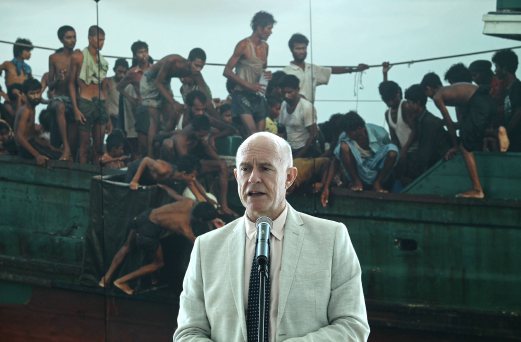
UNHCR representative in Malaysia Richard Towle


Towle said there have been no major boat arrivals of refugees from the Rakhine state in Myanmar in the past year, but warned that the situation could happen again.

He acknowledged that some of the governments in the region were trying to put in place cooperation arrangements to be better prepared of future incidents.

The Rohingya are considered by the United Nations as one of the most persecuted minorities in the world, often subjected to arbitrary violence and forced labour in Myanmar.

They come mainly from the Rakhine state in Myanmar, which borders Bangladesh.

To escape persecution, they take long and arduous journeys by boat to other countries in the region.

As of April this year, there are 53,410 Rohingya refugees registered with the UNHCR in Malaysia.The exhibition will run until June 18 at Whitebox@Publika. Admission is Free.

Tuesday, June 7, 2016

Policy to address medical issues faced by migrants in Malaysia, says UNHCR rep


KUALA LUMPUR: More than 150,000 refugees in Malaysia will have access to medical security, thanks to a new insurance scheme.

The Refugee Medical Insurance Scheme (Remedi) is fixed at RM164.30 annually per refugee, for hospitalisation and surgical coverage of RM10,000.

UNHCR representative in Malaysia Richard Towle said the collaboration with RHB Insurance Bhd on the scheme was the correct way to deal with the medical issues faced by refugees in Malaysia.

“This model doesn’t rely on the Government or taxpayers. In fact, it relieves Malaysian taxpayers because the cost of medical treatment is covered through the commercial transaction itself,” he told a press conference at RHB Centre yesterday.


Asked how the refugees could afford to pay for the coverage, Towle said while refugees were not allowed to work legally, they often found “3D” (dirty, dangerous and difficult) jobs to sustain themselves.

“We don't encourage people to break the law in this country but the reality is they need to work to survive,” he added.

Families of five or fewer members pay RM206.70 per annum, with an additional RM20 fixed per child if there are more than three children. The scheme covers up to RM12,000 per family.

For an additional RM12.20, refugees can get personal accident coverage of RM23,000.

RHB Insurance managing director Kong Shu Yin said the company is targeting 30,000 policies over the first year.

“We had more than 500 policies signed up during our soft launch about a week ago,” he said.


As of April, there are 154,140 registered refugees from Myanmar, Sri Lanka, Syria, Pakistan and Somalia in the country.

Friday, June 3, 2016

Myanmar refugees turning Selayang market into turf war: Sentul police chief


Song Boon Mun

KUALA LUMPUR: A large number of Myanmar refugees at the Selayang market here are forming gangs and turning to criminal activities. ​

Targeting only their fellow countrymen, the Myanmar thugs mainly extort "protection money" but are also behind kidnappings and murder cases.

Sentul police chief ACP R. Munusamy said the gangs leaders, in their 20's to 30's and have picked up Bahasa Malaysia, prey on their own community and extort money claiming they will act as "intermediaries" for their fellow countrymen when they land themselves in trouble with the police.

He said all the refugees are UNHCR (United Nations High Commission for Refugees) cardholders and are employed at the market.

"After paying the fees, the gang leaders will 'protect' them and also settle issues with the police as some of them cannot converse in Bahasa Malaysia. The leaders will then say they are legal cardholders in the country," he added.

"In other situations, if the victims have welfare issues such as their health, the leaders will also assist them. This is how they get their people to pay for protection money." Munusamy toldtheSun.

Munusamy said new faces spotted by gang leaders in their turf are often confronted and extorted.

"Each of the refugees pay about RM100 each month. It is a way for the foreign thugs to earn a side income," he said, adding that police uncovered such occurrence since January this year.

He said police have recently conducted surveillance in the area and managed to identify a few of the gang members.

Munusamy said 30 refugees were arrested in connection with the extortion.

"We charged 15 of them for extortion and they have been imprisoned while the rest who were members of the gang but escaped court action due to lack of evidence were placed in detention under preventive laws of the Prevention of Crime Act (Poca)." he said.

In January this year, a clash between a group of local gangsters and Myanmar nationals believed to be over drug-pushing and "protection money" occured at the Selayang market.

A 34-year-old man and a two-year-old child, both Myanmars were wounded when several men armed with pistols opened gunfire randomly at a crowd of foreigners.

Police launched a massive operation in the area in search of those involved in the incident soon after and police personnel are on guard in the area till this day to ensure no further clashes occur.

Munusamy said the case was settled but police are taking precautionary measures by keeping a close watch on the area.

Blogger Comment

Malaysia has a culture of gangs stars ruling the local markets and housing as well. Local polices pay more respect to the gangs that I have personally experienced so many times. The gangs are usually governed by local Malaysians OR Indians. Malaysia and Burmese Military rulers are traditionally the same like polices, you can buy the authority from them when you have to deal something with them. Pay money for what you want, money is the real second God in Burma and Malaysia. Gangs always involve with rape, robbery and drug. 

More Refugees Expected to Return From Thailand Next Year


Refugees who fled Burma walk at the Mae La refugee camp, near the Burma border in Thailand’s Mae Sot district, Tak province, on July 21, 2014. (Photo: Reuters)

More individual and large-scale returns of Burmese refugees from Thailand are expected during the dry season next year, according to nongovernmental organizations (NGOs) that provide assistance to more than 120,000 refugees on the Thai-Burma border.

In its report released Tuesday, the UN’s refugee agency, UN High Commissioner for Refugees (UNHCR), said a growing number of refugees in Thailand’s camps were seeking support to return and rebuild their lives back home because they were encouraged by the prospects of the peace process, social and democratic reforms and the new civilian government.

The report said that several hundred Burmese refugees from nine camps along on the Thai-Burma border have approached the UNHCR in recent months seeking support to return home. In response, the UNHCR dispatched a team to conduct voluntary repatriation interviews in Nupo Camp in Thailand’s Tak province.

Iain Hall, the agency’s senior field coordinator in Mae Sot said in the report, “While UNHCR is not promoting or encouraging large-scale returns at this point, we recognize that every refugee has the right to return home and will facilitate their requests as we can.”

Duncan McArthur, partnership director at The Border Consortium (TBC), an NGO that has been providing humanitarian aid to Burmese refugees for more than 20 years, told The Irrawaddy that more refugees from Thailand are expected to return in the dry season next year.

“I think group returns may start to increase in the next dry season [February to May 2017]. But we don’t expect a big movement during the wet season [June to August this year],” McArthur told The Irrawaddy.

The preparation process such as consultations and meetings with community organizations are still going on in the camps and concerned communities, according to McArthur.

Meanwhile, the Karen National Union, an ethnic Karen armed resistance organization, is preparing land allocations and housing to host returning internally displaced persons and refugees. It also has built some houses in territories it controls in Karen State and Tenasserim Division, southeastern and southern Burma.

NGOs like TBC, the UNHCR and the World Food Program will provide assistance such as food, shelters and other supplies to refugees who have returned and are planning to return home, said NGO sources.

“UNHCR will support refugees’ returns if we can confirm that their decision is voluntary and if the Myanmar authorities welcome them home,” wrote Hall, adding the UN refugee agency’s involvement is contingent on there being no significant security issues in the areas of return and assurances that the UNHCR can access those regions to assist local communities and returning refugees.

However, some refugees still have lingering concerns over safety, land and livelihoods, and prefer to take a wait-and-see approach.

Naw Poe, a resident of Nupo Camp, told the UNHCR team that some refugees are, however, still worried about fighting in parts of the country.

She was quoted in their report as saying, “If the Myanmar government can issue an announcement that it welcomes refugees back, that would give people the confidence to return.”

The UNHCR’s staff also informed refugees that the organization can provide assistance such as transportation and reintegration grants and three months of food assistance in cash during the facilitated phase of return.

In Burma, the UNHCR is engaged in community-based livelihood support and is advocating for returning refugees’ right to access public services such as healthcare and education.

Sunday, May 29, 2016

Malaysia set to take in 100 Syrian refugees next week


By P Prem Kumar

KUALA LUMPUR

Malaysia is due to take in 100 Syrian refugees next week as part of its commitment to accept 3,000 people from the war-torn country over the next three years, a deputy prime minister announced Saturday.

Malaysia's Ahmad Zahid Hamidi, who also serves as home minister, said the 100 Syrians consisting of 24 families currently at a refugee camp in Lebanon would be brought to capital Kuala Lumpur on May 28.

"They will arrive on three special flights at the Royal Malaysian Air Force base. Prime Minister [Najib Razak] would receive them," he said in a statement.

Hamidi added that officials from his ministry, including a police team, would depart for Beirut soon to carry out a security and health screening process before transporting the Syrians to Malaysia.

"We ensure that Malaysia will only bring in those with clean records in both health and security criteria,” he underlined. “They will be placed at a temporary housing in Shah Alam [in western Selangor state].”

In December, eight Syrians with family members living in Malaysia became the first group of refugee from the Middle Eastern country to arrive in the archipelago.

In October, premier Razak had announced to a United Nations General Assembly session in New York that Malaysia would open its doors to 3,000 Syrian migrants over the next three years to help with the refugee crisis caused by the ongoing war.

Five Syrian refugees families have arrived in Malaysia to date, all screened through the Advance Passenger Screening System with the cooperation of Interpol and the United Nations High Commissioner for Refugees (UNHCR).

Malaysia is expected to take in 1,000 Syrian refugees every year from 2016 to 2018.

Malaysia had earlier stressed its unwillingness to become party to the UN’s 1951 Convention relating to the Status of Refugees and its 1967 Protocol.

The country has remained steadfast against inking the convention, while expressing its commitment to continue extending assistance to refugees from the Middle East and the Rohingya Muslim minority who fled Myanmar.

Malaysia currently hosts one of the largest urban refugee populations in the world.

As of 2014, some 146,020 refugees and asylum seekers had been registered with the UNHCR in Malaysia -- with the vast majority, or some 135,000, being from Myanmar.

The three largest groups among those from Myanmar are ethnic Chin, Rohingya and other Muslims.

Syria has been locked in a vicious civil war since early 2011, when the Bashar al-Assad regime cracked down on pro-democracy protests with unexpected ferocity.

Since then, more than 250,000 people have been killed and more than 10 million displaced, according to UN figures.

Turkey, which has hosted 2.7 million Syrians since April 2011, shelters more refugees than any other country in the world, according to the UNHCR.

Saturday, May 28, 2016

Malaysia receives 68 migrants from Syria


SUBANG JAYA: Malaysia received 68 Syrian migrants who are seeking refuge from the conflict-torn country Saturday.

The group, consisting of 18 families with 31 children as young as seven-months, arrived in a chartered plane at the Subang Royal Malaysian Air Force (RMAF) base at about 11am.

With their bags in tow, the refugees disembarked from the plane to a round of applause from the ground staff, members of non-governmental organisations and politicians waiting below.

Among those welcoming the Syrians were Deputy Prime Minister Datuk Seri Dr Ahmad Zahid Hamidi and Women, Family and Community Development Minister Datuk Seri Rohani Abdul Karim.

"The presence of our brothers and sisters from Syria today renews our commitment, as put forward by our Prime Minister last year, to help solve the problem in Syria and in other Middle Eastern countries now," Dr Ahmad Zahid said in a short ceremony at the base observation lounge.

He stressed that the migrants were being housed in Malaysia on a temporary basis and that they will be issued a temporary pass and other relevant documents to remain here until the situation in Syria stabilises.

In the meantime, Dr Ahmad Zahid said that the Home Ministry would issue temporary work permits to allow the adult migrants, some of whom were engineers, doctors and lecturers, to find work here.

The children would be issued student visas to study in kindergartens, primary and secondary schools and in universities.

They will be housed at a condominium in Setia Alam, with families being allocated a three-bedroom apartment each, he said.

Private companies have helped to sponsor the families during their stay here.

The migrants' movements will be monitored by NGOs and Ministry officials.

At the United Nations General Assembly in New York last year, Prime Minister Datuk Seri Najib Tun Razak had announced that Malaysia would open its doors to 3,000 Syrian migrants over the next three years to help alleviate the refugee crisis.

About four million Syrian refugees have fled into neighbouring countries since the start of the civil war there in 2011.

Malaysia received 11 Syrians in the first batch of arrivals in December last year.

Dr Ahmad Zahid said Malaysia had targeted 150 Syrian migrants to be brought in for the second batch but had to narrow it down to 68 after some did not pass health or security checks.

In his speech, Dr Ahmad Zahid also suggested that some migrants made the cut but chose not to come to Malaysia because they may have had "the wrong perception" of the country.

"Malaysia is not the United States or a European country so maybe that is why they did not want to come. Maybe they don't know the situation here and that we are a peaceful country with a caring Government and nation.

"I am sure after they hear from the 68 that have come, they will regret not coming here," he said in his speech.

He said Malaysia aimed to bring in another 200 Syrians during the Ramadan fasting month and was in the process of screening migrants in the Bekaa Valley Syrian refugee camp in Lebanon.

Pope receives life jacket of drowned refugee child


VATICAN CITY: "We are rescuers and we are saving lives in the Aegean Sea:" this is how the NGO Proactiva Open Arms is literally reaching out with arms extended, to save refugees landing on the Greek island of Lesbos.

At Wednesday’s General Audience, Proactiva founder Oscar Camps presented Pope Francis with the life jacket of a 6 year old girl who drowned together with her family as they tried to reach safety on Lesbos.

"I know. I know your story," the Pope said to Oscar Camps, who said he and his non-profit Spanish organization arrived on Lesbos after they saw the horrifying images of “hundreds of children dying along the shore and nobody was doing anything. " "Each boatload of people, has a dramatic tale to tell:" families are separated, orphaned children who lost their parents along the way now find themselves in a strange country, a continent that is not their own, and no one to help them.

Camps said he and other lifeguards were indignant about the tragedy unfolding in nearby Greece. He couldn’t just sit on the couch at home – so, he took 15,000 euros in savings and together with a group of volunteer rescue workers and lifeguards, set off for Lesbos last September.

Since then, the Proactiva team has been on hand to help the some 3,000 people, most fleeing the conflict in Syria, who arrive on the island each day. "There have been days when we’ve reached 8,000 in one day, without forgetting tragedies like that of October 28, 2015 in which more than 300 men and women and drowned," said Laura Lanuza, another Proactiva Open Arms volunteer.

Pope Francis visited the island of Lesbos on 16 April this year. On the flight back to Rome, he confessed to reporters that, for him, it had been a "sad journey" full of grief, having witnessed the plight of the refugees.

"With his visit, Pope Francisco gave us a lesson for everyone," Oscar Camps observed. The Pope brought back to Rome three families of refugees, Camps recalled, “so we are now in the Vatican to thank him, returning the visit and to explain how the situation is developing [on Lesbos].”

The volunteer rescuer said the Pope congratulated the Proactiva team for their work and said they were in his prayers and that the current crisis situation is "no humanitarian crisis,” but a crisis “of humanity".--Vatican Radio

http://www.heraldmalaysia.com

36 Rohingya refugees resettled in the US

Two of the Rohingya refugees who were resettled in the US. - Photo courtesy of UNHCR

PETALING JAYA: One year after landing in Malaysia, following a harrowing ordeal in the Bay of Bengal, 36 Rohingya refugees have been resettled in the United States.

The United Nations High Commissioner for Refugees (UNHCR) said that the 36 refugees departed Malaysia early Thursday morning under its resettlement programme. 

The refugees had been released from the Belantik Immigration Detention Centre the previous afternoon.

“UNHCR welcomes the move by the Malaysian Government to release the 36 extremely vulnerable Rohingya refugees from the Belantik Immigration Detention Centre,” said Richard Towle, UNHCR Representative in Malaysia in a statement on Friday.


“We are also extremely grateful to the Government of the United States of America for their generosity in providing resettlement spaces for this group of extremely vulnerable individuals, for whom no other safe, long-term solution would be an option,” he added.

In May last year, over 1,000 people from Bangladesh and Myanmar had arrived by boat after being stranded in the Bay of Bengal.

They were stranded at sea after human trafficking syndicates abandoned them following the discovery of mass graves and detention camps for Rohingya and Bangladeshis in Thailand and Malaysia.

According to UNHCR, 371 of the refugees were identified as Rohingya from Myanmar and of concern to the commission.

Towle, however, expressed concern for the remaining 334 Rohingya "boat arrivals" who are still at the Belantik centre.

“These people have undergone traumatic experiences at the hands of smugglers and traffickers, and are in need of specialised care.

“The best option for them is to be released into UNHCR’s care where we can assess their protection needs and help find support for them within the refugee communities in Malaysia,” he said.

The Rohingya are considered by the United Nations as one of the most persecuted minorities in the world.

They are considered to be stateless and were often subjected to arbitrary violence and forced labour in Myanmar.

They come mainly from the Arakan state in Myanmar, which borders Bangladesh.

To escape persecution back home, they took long and arduous journeys by boat to other countries in the region.

As of February this year, there are 53,700 Rohingya refugees registered with the UNHCR in Malaysia.

The Malaysian Government does not legally recognise refugees, although they are allowed to work in informal sectors.

http://www.thestar.com.my

Immigrants, refugees share stories at forum


Monica Reyes


WATERLOO — Gunda Brost experienced “Iowa nice” when she was a child and her family immigrated from Germany.

“But sometimes it’s very superficial,” she said. “If you want to make people feel welcome, actually mean it. If you ask how are you doing, take some time and listen to their story.”

Brost, now a Cedar Falls immigration lawyer, offered the advice Thursday to a hardy crowd who gathered at the Black Hawk County YWCA in Waterloo to hear Cedar Valley immigrants and refugees share their stories, hopes and dreams.

The event, sponsored by Cedar Valley Advocates for Immigrant and Refugee Rights and other organizations, was designed to prompt a conversation and foster understanding about the area’s growing and diverse newcomers.

“Whether we like it our not, there’s always going to be immigrants,” said panelist Monica Reyes. “There’s going to be people fleeing whatever problems they have, and we need to (have) a system that accepts them.”

Reyes was 3 when her mother fled her abusive husband in Mexico, but she has not been allowed to gain citizenship. Reyes and her sister have become advocates for immigration reform.

“When you call somebody illegal — even if you’re saying ‘illegal immigrant’ — that is taking away their humanity,” she said. “I’m just like you guys: educated. I debated Hawkeyes versus Cyclones my whole childhood. I grew up with corn dogs, hamburgers, chips.”

America is a much newer and more difficult place still for Burmese immigrants Shaw Reh and Liani, who both fled their native country during civil war. They spent many years living in refugee camps in Thailand and Malaysia, respectively, before making it to the U.S., where their families eventually found jobs at Tyson Fresh Meats.

Liani recalls crying every night as her family, expected to find work within three months of arriving in the U.S., struggled with language and other barriers.

“We could not speak any English so we had many troubles,” she said. “Ninety days is not enough to learn American culture or learn English.”

Reh, who spent his first 13 years growing up in a refugee camp, said he was picked on by classmates when he attended grade school in Louisville, Ky. But he noted “in Iowa, people are nicer.”

Bullying of immigrant and refugees is something Dema Kazkaz said must be addressed in schools.

A Muslim who immigrated from Syria 18 years ago, Kazkaz said her kids and other children of Middle Eastern descent were often treated poorly in schools after 9/11 and again today.

“Unfortunately that Islamophobia industry is alive in election years,” Kazkaz said. “These candidates will just keep competing who wants to get more voters by fear mongering.”

Panelist Umaru Balde is a native of Guinea-Bissau who was given away by his father to a Muslim sheikh, lived on the streets, joined the military at age 14 and fled the country in 2008 when civil war erupted.

He works at the YWCA today helping other immigrants and refugees adjust to life in Iowa. Balde hoped the forum would encourage others to pay more attention to the needs of their new neighbors.

“Some people are tolerant but they’re not accepting, and there’s a difference,” he said. “People want to be accepted.”

http://wcfcourier.com

MEF: Don't hire refugees until legal framework in place


PETALING JAYA: Employers should not hire refugees until the proper legal framework is put in place by the Government, said Malaysian Employers Federation (MEF) executive director Datuk Shamsuddin Bardan.

"We are in agreement with the Government that refugees should not work, and holding the United Nations High Commissioner for Refugees (UNHCR) card is not a licence to be employed.

"Currently, refugees can only be employed with the sanction of the Home Ministry," he said when contacted by The Star Online on Thursday.

Shamsuddin said that while most refugees holding a UNHCR card are usually moved to a third country within a few years, this is not the case here, with many Rohingya refugees in Malaysia for 25 years.


"Employers need to understand that the UNHCR is not an employment agency and it cannot allow these people to be taken in as employees. If the employers are caught, they can be prosecuted," said Shamsuddin.

He added that the Government needs to decide as a matter of policy what to do with the refugees in Malaysia.

"If the Government allows them to earn a living when they are here, it is up to the Government to set the conditions for the work permits. If we do employ them, it can be for an even longer period than foreign workers, who can be here for up to 10 years. They can be a stable source of human resources," said Shamsuddin.

It was reported on Sunday that the UNHCR receives many calls from businesses asking it to supply workers, with UNHCR Malaysia deputy representative Brian Gorlick saying that the requests can be from small businesses asking for 50 workers to large ones asking for 1,000 people.

As of March, 158,794 refugees have been registered with UNHCR, out of which 90% are from Myanmar.

Malaysia however does not legally recognise refugees, and they are forced to earn a living by working in informal sectors.

Gorlick however said that refugees who work risk being picked up by the authorities for breaking the law.

He pointed out that a World Bank report last December indicated that refugees could contribute to the migrant worker pool.

www.thestar.com.my


Thursday, May 26, 2016

UNHCR: Business come to us asking for workers


PETALING JAYA: Every week, the United Nations Commissioner for Refugees (UNHCR) receives many calls from businesses asking them to supply workers.

These requests can be from a small business requiring 50 people or even a big one that requires 1000 people said UNHCR Malaysia Deputy Representative Brian Gorlick.

They however can’t refer any refugees to those businesses added Gorlick.

“We say that we are not an employment agency. We can’t offer you people because its unlawful for these people to work here,” he said at a recent discussion on the Rohingya community that was organised by the Society for the Promotion of Human Rights (Proham).


Gorlick said that many of the refugees want to work and can contribute to the economy as they come here with skills.

As of March this year, a total of 158,794 refugees have been registered with UNHCR, out of which 90% are from Myanmar. 

Malaysia however does not legally recognise refugees, and they are forced to earn a living by working in the informal sectors.

Gorlick however said that everyday they work they risk being picked up by the authorities for breaking the law.

He pointed out that a World Bank report in December last year indicated that refugees could contribute to the migrant worker pool.

In recent times, various businesses have complained of labour shortages after a government decision to freeze the intake of foreign labour.

Minister in the Prime Minister’s Department Datuk Seri Shahidan Kassim had in March said the government acknowledged calls by several quarters to let refugees work.

“We are considering this request and the matter is under discussion. A decision will be announced soon,” he was reported as saying.

www.thestar.com.my

Friday, May 20, 2016

British women give back to society


(From left holding cheque) ABWM chairman Tracey Ross, Rennie and Oelofse with recipient charitable organisations and ABWM committee members.

The Association for British Women in Malaysia (ABWM) has distributed RM142,000 to 13 Malaysian charitable organisations.

The funds were raised primarily from the ABWM Christmas Bazaar last year and other ABWM activities.

ABWM charity coordinator Amber Oelofse said, “We are heartened by the generous contributions from our supporters, and motivated by the positive difference we could bring to the lives of those in need.

“From the donations we made last year, three young individuals were able to obtain degrees or diplomas; refugee schools have been able to take in more students; 1,300 refugees received mental health assessments and treatment; 600 stray animals were given a home; 450km of land around Sungai Yu in Pahang was protected from deforestation and poaching; play therapy is now being offered to children who have been a part of or witnessed domestic violence; a child therapy programme has been launched to help children diagnosed with cancer,” she added.

Acting British High Commissioner to Malaysia Paul Rennie presented the cheques during a luncheon at the British High Commissioner’s residence.

“The UK and Malaysia share a special bond and for over 40 years the ABWM have been a shining example of what that bond means in practice.

“The fundraising to support communities is part of it. I believe it is the great personal connections that are made which truly underpin the links between our two countries, and of which I am immensely proud,” said Rennie.

This year, PAWS Animal Welfare Society and Desa Amal Jireh Children and Senior Citizens Home are the latest additions to the list of beneficiaries.

The other beneficiaries are National Cancer Society Malaysia, Breast Cancer Welfare Association Malaysia, Women’s Aid Organisation, Lighthouse Children’s Home, Health Equity Initiatives, Malaysian Conservation Alliance for Tigers, Openhands Fellowship Girls Home, Home of Peace Children’s Home, Alliance of Chin Refugees, Tasputra Perkim centre for the disabled.

ABWM is a voluntary association founded in 1975 comprising British women living in Malaysia.

http://www.thestar.com.my/

Tuesday, May 10, 2016

UN Refugee Agency applauds Sharjah’s ruling family for their support of refugees in Malaysia


Sheikh Sultan also helped the students with their lessons while at the educational centre. The children also gave Sheikha Jawaher a drawing as a gesture of appreciation for Their Highness visit and assistance.Her Highness Sheikha Jawaher Al Qasimi speaks to refugee children at the centre. (Photo Credit: UNHCR)

Both royals met with refugees, including single mothers who shared stories of their experiences and the challenges they faced with the dignitaries. Many of the families expressed their concerns regarding health, education and shelter.


His Highness Sheikh Dr Sultan Al Qasimi and Her Highness Sheikha Jawaher meet refugee children (Photo Credit: UNHCR)


The United Nations High Commissioner for Refugees (UNHCR) lauds His Royal Highness Sheikh Sultan Al Qasimi, Supreme Council Member and Ruler of Sharjah and Her Highness Sheikha Jawaher Al Qasimi, Wife of the Ruler of Sharjah, and UNHCR Eminent Advocate’s for renewing international solidarity and humanitarian support for displaced persons worldwide while visiting refugees in Malaysian capital Kuala Lumpur.

The visit was the first time Sheikh Sultan accompanied Sheikha Jawaher on an official mission in Her Highnesses’ capacity as UNHCR Eminent advocate.


His Royal Highness Sheikh Sultan stressed the importance of the international community’s attention to the suffering of refugees around the world and the need to move seriously towards providing them with the requirements for a dignified life, including shelter, food, health and education. His Highness emphasised that everyone in this world, whether governments, institutions or individuals, are required to play an active role in the protection of refugee families, especially children.

Dr Nabil Othman, UNHCR Acting Regional Representative to the Gulf Cooperation Council(GCC) Countries praised the efforts of Sharjah’s Ruling family, noting;


“His Royal Highness Sheikh Sultan Al Qasimi and Her Highness Sheikha Jawaher Al Qasimi’s generosity has touched the lives of thousands of vulnerable families in the Middle East and North African region and beyond. Their Highnesses truly reflect the values of humanitarianism and compassion, which are a true translation for the deep values of Islam.”

In light of HH Sheikha Jawaher’s personal commitment and interest in assisting refugee women and children, their Highnesses visited UNHCR’s Harmony Refugee Learning Centre, an educational centre in Kuala Lumpur where they met with refugee children. Time was spent speaking to the children and listening to their aspirations and concerns. Her Highness encouraged refugee children, particularly girls, to continue their pursuit of knowledge in order to secure a better future for themselves.

Reaffirming Their Highnesses resolve to alleviate the suffering of displaced persons worldwide, including refugees from Myanmar, Sheikha Jawaher, UNHCR’s Eminent Advocate, asserted:


“We are with you with our hearts and our actions. We came here to assess your conditions on the ground and listen to your requirements and needs. I will continue to work with UNHCR, with the support of His Highness Sheikh Dr Sultan bin Muhammad Al Qasimi, to mobilise support and provide you with your needs to live a dignified life until you return to your home country”.


Through The Big Heart Foundation, Sheikha Jawaher has expressed an interest in providing support for health and educational programmes for refugees in Malaysia. The one-day visit reflected her interest in assisting vulnerable refugees in Southeast Asia, an area that has received limited coverage despite ongoing suffering.

The royal couple were welcomed and briefed by James Lynch, UNHCR’s Regional Representative and Regional Coordinator for Southeast Asia and Richard Towle, UNHCR’s Representative in Malaysia. UNHCR’s Senior Officials also discussed refugees’ most pressing needs, and how their Highnesses can provide additional support for refugees.

Their Highness’ visit to Kuala Lumpur comes after The Big Heart Foundation, under the patronage of HH Sheikha Jawaher Bint Mohammed Al Qasimi, donated 1 million AED last Ramadan in response to UNHCR’s urgent appeal for the Bay of Bengal and the Andaman Sea in 2015.

There are some 158,000 refugees and asylum seekers registered with UNHCR in Malaysia, the majority of whom are from Myanmar, including more than 54,000 Rohingyas. Women compromise 31% of the refugee and asylum seeker population. Moreover, there are some 34,540 children below the age of 18.


His Highness the Ruler of Sharjah and Her Highness Sheikha Jawaher during a meeting with UNHCR representatives in Malaysia. (Photo Credit: UNHCR)

Mr Toby Harward, UNHCR Head of Office in the United Arab Emirates also stressed the importance of the visit, commenting:


“UNHCR would like to thank their Highnesses for their visit which has shed much-needed light on the plight of refugees in South-East Asia. UNHCR is optimistic that the visit will help to mitigate suffering”.

In 2014, Sharjah’s royal family hosted a two-day regional conference titled “Investing in the Future: Protecting Refugee Children in the Middle East and North Africa.

The conference was the first of its kind in the region and was attended by over 300 delegates, including government officials, humanitarian aid workers and experts in refugee affairs and child protection who discussed a wide range of issues related to child protection, education and youth empowerment.

Sheikha Jawaher has personally supported hundreds of thousands of refugees through multi-million dollar contributions.

In 2015, The Big Heart Foundation responded to UNHCR’s urgent appeal for the Bay of Bengal ­­and provided support for newly arrived refugee families in Southeast Asia. Most recently, the foundation made a contribution of more than 500,000 dirhams (USD 136,239) for the provision of health services and hygiene kits for Syrian refugees in Zaatari camp, Jordan.

Likewise, The Big Heart Foundation provided winter support for Syrian refugees in Lebanon and Iraq and cash assistance for vulnerable Syrian refugee families in Egypt worth over 1.8 million dirhams (USD 500,000).

Saturday, May 7, 2016

Dr. Shaikh Sultan, Shaikha Jawaher meet Rohingya refugees in Malaysia


Dr. Shaikh Sultan and Shaikha Jawaher met Richard Towle, UNHCR Representative in Malaysia.


His Highness Dr Shaikh Sultan bin Mohammed Al Qasimi, Member of Supreme Council and Ruler of Sharjah and his wife, Shaikha Jawaher bint Mohammed Al Qasimi, United Nations High Commissioner for Refugees (UNHCR)'s Eminent Advocate for Refugee Children, visited UNHCR's Harmony Refugee Learning Centre in Malaysian capital Kuala Lumpur, on Wednesday. 

During the visit, Dr. Shaikh Sultan stressed the importance of the international community's attention to the suffering of refugees around the world and the need to move seriously towards providing them with the requirements for a dignified life, including shelter, food, health and education. He emphasised that everyone in this world, whether governments, institutions or individuals, are required to play an active role in the protection of refugee families, especially children. 

At the Learning Centre, Dr. Shaikh Sultan and Shaikha Jawaher met Richard Towle, UNHCR Representative in Malaysia. They discussed the situation of refugees in the country and UNHCR's efforts to support them and help them overcome the trials and challenges of life of exile. Dr. Shaikh Sultan and Shaikha Jawaher inquired about UNHCR's needs to be able to continue providing support and assistance to refugees residing in Malaysia, specifically displaced Rohingya Muslim families from Myanmar. 

The meeting was attended by James Lynch, UNHCR Regional Representative for South East Asia; Richard Towel, UNHCR Representative Malaysia,Yante Ismail, UNHCR Associate External Relations Officer in Malaysia; Houssam Chahin, Senior Private Sector Partnerships Officer in UAE, UNHCR and Ayat El Dewary, Associate Private Sector Partnership Officer, UNHCR. Also attending were Badr Jafar, Chief Executive Officer of Crescent Enterprises and founder of Pearl Initiative; Noura Al Noman, Chairperson of the Executive Office of Shaikha Jawaher; Ameera BinKaram, Deputy Chairperson of Nama Women Advancement Establishment; Erum Mazher Alvie, Senior Advisor at Executive Office and Mariam al Hammadi, Director of 'Salam Ya Seghar,' an initiative of the Big Heart Foundation. 

At the Learning Centre Dr. Shaikh Sultan and Shaikha Jawaher met Rohingya refugee families from Myanmar and listened to the details of their arduous journey to asylum. They also met a number of students who receive education at the Centre. 

Dr. Shaikh Sultan commended UNHCR's efforts to protect refugees across the world and provide them with their needs. He stressed that helping one another is a human imperative that cannot be sidelined or abandoned. Dr. Shaikh Sultan called for raising the level of cooperation by both the public and private sectors in all countries to provide more support, rehabilitation and care for refugees living in Malaysia, especially with regards to education. He said the future coming generations will be compromised if we fail to invest in our children's education. He called for coaching and mentoring programs for young adult refugees to ensure that they can acquire the professional skills that enable them to earn and support themselves and their families. 

Shaikha Jawaher reiterated her commitment to closely following up the issue of Myanmar refugees, especially children, who account for 20% of the total refugees in Malaysia, according to UNHCR data. She underscored the need to reunite children who have been separated from their parents, in addition to urgently providing them with education and healthcare. Shaikha Jawaher indicated that she will coordinate with the UNHCR through the Sharjah-based humanitarian initiative The Big Heart Foundation to explore new mechanisms to expand the scope of services provided to refugees, so as to ensure they enjoy their fundamental rights. 

She urged all refugee children to pursue their education and to focus on academic achievement more than any time before and think ahead. Shaikha Jawaher encouraged the girls to focus on their education and to refuse early marriage or sitting at home without studying.

"My dear daughters, the future still lies ahead. With education, you can build what was demolished and help yourselves and your families. You will grow to become physicians, engineers, teachers and leaders, don't accept early marriage for any reason, you are the future and with education and knowledge, youwill be tomorrow's builders and future leaders," she said. 

During the visit to the Learning Centre, Shaikha Jawaher distributed school bags containing school supplies and books to the children there. She urged them to look to the future with hope and optimism, saying: "The entire world is morally bound to protect the future of Myanmar's Rohingya refugees." She added "We are with you with our hearts and our actions. We came here to assess your conditions on the ground and listen to your requirements and needs. I will continue to work with UNHCR, with the support of Dr. Shaikh Sultan to mobilise support and provide you with your needs to live a dignified life until you return to your home country". 

In May 2013, the United Nations High Commissioner for Refugees, UNHCR, appointed Shaikha Jawaher Al Qasimi as UNHCR Eminent Advocate for Refugee Children in recognition of her efforts to raise public awareness about the problems faced by refugees and to mobilise support for them. Shaikha Jawaher is one of the main supporters of UNHCR's humanitarian work, having contributed to launching and supporting many initiatives to support Palestinian Syrian and Somalian refugees, as well as Rohingya refugees. The Big Heart Foundation, the global humanitarian agency launched by Shaikha Jawaher, allocated Dh 1 million to help Rohingya Muslim refugees in response to UNHCR's 2015 appeal to organise an urgent relief campaign to support displaced persons and help improve their conditions.

Pope appoints former Vietnamese boat refugee to lead Australian diocese


by Catholic News Service

Bishop Vincent Long Van Nguyen (Photo: Diocese of Parramatta)


Bishop Vincent Long Van Nguyen will lead the Diocese of Parramatta

Pope Francis has appointed a former refugee who had fled war-torn Vietnam by boat to lead the Australian Diocese of Parramatta.

Bishop Vincent Long Van Nguyen, 54, begins his new role after ministering as a Conventual Franciscan priest in Australia since 1989 and Auxiliary Bishop of Melbourne since 2011.

The Vatican made the announcement yesterday.

Born in Dong Nai province in South Vietnam in 1961, he was one of hundreds of thousands of “boat people” who fled the fighting, tyranny and chaos that engulfed the region in the 1970s and 1980s after the Vietnam War.

“Our boat journey was risky. There were more people on board than the boat could carry safely. By the third day, we had run out of food, water and fuel. From then on, we were at the mercy of the elements. On the seventh day, we drifted near an oil rig, half alive and half dead,” he said in an interview with the Australian Catholic Bishops’ Conference in 2015.

The bishop and the family members he travelled with were rescued and settled in a refugee camp in Malaysia, where he stayed for 16 months. He was accepted to go to Australia in 1981.

He felt a vocation for religious life when he was a young teenager in Vietnam, he said in the interview, published on the Archdiocese of Melbourne’s website.

“It began when I was 13 years of age, living in one of the most turbulent periods of my country’s history. The war and its terrible effects had a profound impact on me,” he said, and the desire to become a priest “was initially motivated by a desire to help people who suffered.”

He was studying at St Paul’s Minor Seminary for his native Diocese of Xuan Loc, some 40 miles north of Saigon, when the communist “Liberation Army arrived and turned it into their barracks. We were expelled, and my desire for the priesthood would remain concealed until I found myself in the free land of Australia,” he said.

The bishop said meeting Franciscan Friars in the Melbourne suburb of Springvale after his arrival was key to his vocational discernment. He was immediately struck by the friars’ “simplicity, and especially their service to the marginalised,” he said. “I wanted to share in their vision of life.”

He became a friar in 1983, received a degree in theology in 1988.

After his ordination, he continued his studies in Christology and spirituality at the Pontifical University of St Bonaventure in Rome.

He served as parish priest of Kellyville, 1998-2002, and Springvale, 2002-2008.

He was superior of the Order of Friars Minor Conventual in Australia from 2005-2008 and assistant general for the Federation of the Conventual Order for Asia-Oceania, 2008-2011.

In 2011, Pope Benedict XVI appointed him auxiliary bishop for the Archdiocese of Melbourne.

His episcopal coat of arms includes the depiction of red waves and a red anchor, which is used in heraldry as a symbol of salvation.

Red often symbolises martyrdom or the strength to survive. His motto is “Put Out Into the Deep.”

Bishop Nguyen is the Australian bishops’ delegate for migrants and refugees and chairman of the Australian Catholic Social Justice Council.

Extend right to work to all


I REFER to the letter “Give jobs to locals instead of refugees” (NST, March 21). I would like to correct some points raised by the writer. ON allowing refugees to work: It is an effort to weed out those who hold fake United Nations High Commissioner for Refugees (UNHCR) cards. This mechanism can help because the records of refugees will be tallied with their work permits. 

However, it is more than this. Allowing refugees to work means they will no longer be employed illegally or work in “black market”. Work rights for refugees are a violation of the country’s laws: Section 55 of the Immigration Act 1959/63 gives discretionary power to the home minister to allow a class of people to enter this country and it has been used a few times. IMM 13 permits were issued before to the Moro, Acehnese and Rohingya refugees to allow them to stay and work.

 In fact, the Muslim Chams from Cambodia were accepted and integrated into local society. WHAT about locals who are jobless?: There are many factors that contribute to unemployment among Malaysians. Blaming refugees and migrants of stealing jobs is simplistic and xenophobic. Refugees whom I’ve met said they were willing to take up 3D (dirty, dangerous and demeaning) jobs. 

In fact, refugees are already working in informal sectors. It’s a matter of legalising for better regulation and protection. THIS policy encourages those still in their home countries to redouble their efforts to enter Malaysia illegally: Refugees flee their home countries because of “well-founded fear of persecution”. If people come just solely because they want to work, they are not refugees; they are economic migrants and they are not entitled to rights as refugees. 

Refugees find a safe haven while economic migrants find better opportunities overseas. Malaysians must be prioritised when it comes to filling up vacancies: The main problem is that Malaysians do not want 3D jobs. Why do we need foreign workers when refugees are already here and they have been working all this while? The process of taking in migrant workers costs a lot to both employers and industries. Refugees who are familiar with Malaysian culture can also easily adapt compared to the migrants, who are alien to this country. BY allowing refugees to freely enter our country and issuing cards to those who are not genuine refugees, the United Nations is violating Malaysians’ rights: UNHCR does thorough background checks through refugee status determination. 

Nowadays, the newly arrived refugees from Chin, Myanmar, are no longer considered as having “well-founded fear of persecution” due to the stability in the region. If Malaysia wants to safeguard its internal affairs, the responsibility to handle refugees should not be outsourced to UNHCR, which has limited resources. 

THE government should close the UNHCR office in Kuala Lumpur: As a member of the UN Security Council, protecting refugees in a humane way that fully respects the international laws is needed for world stability. Malaysia was a member of UNHCR from 1993 to 1998 and was also elected as Chair of the 52nd session of the UNHCR in 1995. Closing down the office is contradictory to Malaysia’s foreign policy, which promotes global peace within the international framework and bodies. Government should insist refugees be deported to third countries: This is against the non-refoulement principle under the customary international law which Malaysia is bound to follow. 

For a few years, Malaysia has the highest number of refugees being “resettled” (not deported) to third countries such as the United States, Australia and Canada. However, being resettled to third countries remains a slim option for the refugees due to other more severe refugee conflict in other regions. Malaysia is not a signatory to the UN Refugee Convention: Malaysia is a signatory to other conventions and declarations that specifically provide protection for refugees, such as Article 11 of the Convention on the Elimination of All Forms of Discrimination Against Women, Article 22 of the Convention on the Rights of the Child, Article 16 of the Asean Declaration of Human Rights, Article 12 of The Cairo Declaration on Human Rights in Islam and Article 14 of the Universal Declaration of Human Rights. Existing conventions and declarations that Malaysia ratified already outline legal and moral responsibilities for Malaysia to give protection to the refugees. 

If Malaysia is accommodating, refugee numbers will rise: This is why there should be a clear mandate given to a particular agency to handle refugees. Currently, no ministry is liaising directly with UNHCR, and UNHCR is assumed to take care of the refugees without support. The Home Ministry should work together with UNHCR and the Human Rights Commission of Malaysia, and share equal responsibilities in handling refugees. If the other parties are so concerned, they can take in these refugees: During the UN General Assembly in October last year, Prime Minister Datuk Seri Najib Razak pledged to bring 3,000 Syrian refugees into Malaysia over the next three years. 

How do you expect them to live here without being able to earn a living? In fact, the existing 1,380 Syrian refugees in Malaysia are unable to work. The right to work should be extended to all refugees, and not discriminated based on nationalities, ethnicity or gender. My request is simple: understand why employment rights mean a lot to the refugees. Everyone should get to know them and listen to their stories and the hardship they face everyday. Aslam Abd Jalil, Master of Public Policy student at International Institute of Public Policy and Management, Universiti Malaya, and a refugee rights advocate