Showing posts with label Thailand. Show all posts

Tuesday, October 27, 2015

Why Myanmar elections are important to Thailand


BANGKOK: — THE NOVEMBER 8 election is not only important for Myanmar but also for Thailand, as political changes in this neighbouring country have always had an impact on this part of the region.

This election is important and crucial because this is the first time in 25 years that Myanmar’s two major rival political parties – the ruling Union Solidarity and Development Party (USDP) and the opposition National League for Democracy (NLD) – will contest against each other.

Electoral competition is good because it will give Myanmar people a choice when it comes to votes, unless history repeats itself and the NLD and its leader Aung San Suu Kyi are once again not handed power if they win.

Zuma Office Supply - Save Up To 60%

Suu Kyi was not handed power in 1990 despite winning by a landslide, a move that is seen as a repercussion of the 1988 crackdown on an uprising, that eventually brought on economic difficulties and forced millions of people to leave and seek better lives overseas. Unfortunately though, most of these asylum seekers ended up in Thailand’s refugee camps as well as factories, construction sites, fishing trawlers and other places in the Kingdom.

The 2010 election, which the NLD was prohibited from, put President Thein Sein in power and made the military-backed USDP the ruling party. Thein Sein, however, has introduced many reforms and worked on developing the political system by allowing the NLD to participate in the 2012 by-election. Now, the much-loved Nobel laureate Suu Kyi has some space in the field of politics and is able to play a role. Myanmar is also relaxing some of its laws, and many dissidents are able to return home.

However, Thein Sein has either intentionally or unintentionally not completed his reform task and might just be leaving behind a lot of time bombs to explode after the polls. Myanmar’s 2008 Constitution still prohibits people who are married to a foreigner, like Suu Kyi, to lead the country, and the military will still maintain a 25-per-cent quota in parliament.

So, what happens if the NLD wins, but the USDP insists on allying with the military and other minor parties to form the government? There is a high possibility that the NLD will defeat the USDP, but it will still have less than half the total seats in parliament required to form a government – though the two sides may come up with a deal to solve this problem.

Zuma Office Supply - Save Money Do Good Work

Then there’s the peace process. Thein Sein still hasn’t completed that job, as only eight out of the initially announced 15 armed ethnic groups agreed to sign the nationwide ceasefire agreement on October 15. This means armed conflict is still continuing in many areas, notably along the border with Thailand.

People in war-torn areas will have little or no chance to cast their ballots on November 8 due to security issues. It is still unclear when the remaining groups will agree to a truce so people in conflict-ridden areas have a chance to participate in politics.

Peace in Myanmar is really important for Thailand, as hundreds of thousands of people have been waiting in border camps for more than two decades. Previous Thai governments had sent many signals to Nay Pyi Taw, seeking to settle the problem with refugees, but there has been no sign of readiness.

Zuma Office Supply

Unless the new election brings political stability and peace to Myanmar, the ethnic groups will keep fighting, and people will keep leaving to seek asylum elsewhere. The Myanmar-Thai borders will never be clear and safe, while economic development, special economic zone, Asean connectivity and many other projects between the two countries will never become a reality.

Wednesday, August 1, 2012

Everyone loves having good neighbours


In the past two months, Thailand has received two prominent figures from its former pariah neighbour, Myanmar.
That the recent visits to Thailand by Myanmar democracy icon Aung San Suu Kyi, left, and President Thein Sein, above, were such big news items here shows a changing mentality among Thai people towards welcoming a former enemy now seen as a resource-rich potential business partner.

Nobel Peace Prize winner Aung San Suu Kyi visited in June and reformist president Thein Sein has just concluded a trip focusing on trade collaboration.
Despite both being hailed as successful in their own way, each carried contrasting messages to the kingdom.
Mrs Suu Kyi's visit was to attend the World Economic Forum in Bangkok and she received full media coverage and attention. This was a rock star visit and a huge inspiration to many Thais and migrant Myanmar people.
At the forum, Mrs Suu Kyi's message was to warn investors against "reckless optimism" in Myanmar's political reform.
"Even the best investment laws would be of no use whatsoever if there are no courts that are clean enough and independent enough to be able to administer those laws justly," she said. "This is our problem: So far we have not been aware of any reforms on the judicial front."
Was she overly pessimistic, as some observers suggested? At the very least, Mrs Suu Kyi definitely contradicted the nature of Thein Sein's visit this week.
Last week, the former general and protege of Than Shwe landed at Don Mueang airport. Although his arrival was rather modest compared to that of Mrs Suu Kyi, Thai newspapers still treated it as front-page news _ a sign of Myanmar's newfound respectability.
Thai radio and television also covered the visit with discussions focusing on Myanmar's recent political opening and, of course, newfound business opportunities in the mysterious once-hermit nation _ a traditional enemy of Thailand's ancient Lanna and Siamese kingdoms.
His visit was transparently all about boosting business between the neighbours and inviting more investment rather than preaching democracy and human rights.
Activists were bound to be disappointed, even if they were perhaps not surprised, that these thorny subjects remained conspicuously absent from talks.
The fact is Thailand is the second largest investor in Myanmar _ bilateral trade amounted to US$6.1 billion (195 billion baht) last year and was beaten only by China.
Since 1988, a flurry of Thai generals and businessmen have frequently visited Myanmar despite its appalling human rights record and the thousands of political prisoners kept incarcerated. The bottom line is that Thailand has never missed an opportunity to develop commercial relations.
More importantly, Thai leaders were the ones who broke Myanmar's diplomatic isolation under Saw Maung after he staged a bloody coup in September 1988. Then-army chief Chavalit Yongchaiyudh led businessmen on a controversial visit to Myanmar.
So it is not surprising to see that Thai-Myanmar relations remain strong despite occasional hiccups over the past decade.
Last week, Thein Sein, who once served as commander of the Triangle Command overseeing the Thailand, Laos and Myanmar border area, signed three memoranda of understanding aimed at tightening economic links between the two countries.
The MoUs focused on the Dawei deep-sea port on Myanmar's southwest coast as well as development cooperation in Myanmar and joint energy sector projects. There is a plan to link Dawei with the Laem Chabang deep-sea port in Chon Buri province to dramatically cut transport time between central Thailand and Chennai in India.
Thailand cannot readily afford to lose Dawei _ the multi-billion-dollar port and special economic zone project is in doubt following Nay Pyi Taw's rejection of a coal-fired power plant in the area and the withdrawal of domestic partner, the Max Myanmar Group. Thai construction conglomerate Italian-Thai Development, the scheme's major backer, is reportedly struggling to raise the finances needed to make it happen.
Prime Minister Yingluck Shinawatra thanked Thein Sein for his "reaffirmed commitment to Dawei" and added that "both sides agreed to build connectivity between Dawei and Laem Chabang", which he visited on July 22.
Thein Sein also met top executives from Charoen Pokphand, Siam Cement Group and PTT Plc, which will soon be investing more in Myanmar.
There is no doubt that Thai investors are upbeat as Western nations, including the United States, ease sanctions on Myanmar as they know their neighbour still has plenty to offer. Although there is more discussion needed on how Thailand's business investments will be protected, Thais are quite optimistic that Myanmar's recent political and economic opening will not make an abrupt U-turn. There is even renewed interest among Thais to learn Burmese, Myanmar's lingua franca.
Myanmar's natural energy resources will be the biggest area of mutual interest between the neighbouring countries.
Ms Yingluck visited Myanmar last year and deals announced at the time included two oil field concessions granted to Thailand.
Thailand does not have abundant domestic energy supplies and benefits greatly by having a source of natural gas sitting next door. There is also a political dynamic to this relationship _ it is fitting to see Myanmar becoming more open as the Shinawatras reassume power in Thailand. Their mutual economic and political interests will no doubt lead to a period of increased interaction.
Last year, ex-prime minister Thaksin Shinawatra visited Myanmar once again. During his visit, Thaksin had a chance to meet ex-junta chief Than Shwe, despite the latter being retired and no longer officially involved in government business. However, there is little doubt that Than Shwe, though formally out of the picture, remains the key patron of the present regime.
When word of Thaksin's visit leaked in the media, the former Thai premier said that he travelled to "smooth the way" for his sister's trip. Indeed, Ms Yingluck subsequently visited Myanmar soon after her brother.
Thaksin has had his eyes on the excellent prospects of Myanmar's tourism industry for many years now. When prime minister, he proposed the construction of a ski resort in the snow-capped mountains of Kachin State and the development of the unspoiled beaches of Arakan State. Lately, he was said to have expressed interest in the Dawei project.
But despite the obvious economic incentives for Thailand, there are many areas the two countries need to focus on. The long border dividing the neighbours has been a source of tension for generations and remains so today as old grudges and prejudices remain.
In spite of the sweet handshake and exchange of smiles in Bangkok, historical pressures remain between the two nations.
Myanmar's sacking of the Siamese capital Ayutthaya in 1767 is still taught in Thai schools, and the Myanmar people are still portrayed as bad neighbours and socially inferior in Thai dramas and soap operas. There is no shortage of news on the ill treatment and exploitation of Myanmar migrant workers in Thailand.
Conversely, the Myanmar people also remain distrustful of Thais. In the past, Thailand was accused of harbouring dissidents and rebels to stage attacks on Myanmar, and in return the Thais accused Myanmar of flooding it with speed pills and heroin.
Amid this quarrelling, Myanmar ethnic minority insurgents operate in border jungles and around 2 million migrant workers from Myanmar are currently employed in Thailand. Myanmar refugees who fled civil wars live in the camps on Thai soil which Mrs Suu Kyi visited last June, and Myanmar's political exiles still search for a safe haven in Thailand.
The flow of drugs and the other illegal activities of armed groups including human smuggling remain a major source of concern.
Recently, 92 Thai citizens were detained in southern Myanmar after they were accused of sneaking across the border. Myanmar security forces seized timber-cutting machinery, bulldozers and trucks allegedly being used for illegal logging.
Indeed, the more than 2,400km border remains a source of tension. When relations reached a low ebb in the early 2000s, serious skirmishes broke out and the two countries engaged in a war of both words and rockets.
Both fired mortars into the other's border towns and military encampments, while the Myanmar government published several articles openly attacking prominent figures in Thailand. It added further fuel to the fire by introducing a new history textbook for fourth graders that portrayed Myanmar's eastern neighbours as servile and lazy, and the Thais returned the favour by routinely discriminating against Myanmar migrant workers inside Thailand.
Now, by contrast, Thais respect the names Mrs Suu Kyi and Thein Sein and, of course, relish doing business in resource-rich Myanmar. It is hoped that Thailand's attitude toward Myanmar will eventually change, and the Myanmar will begin to understand how to co-exist with a neighbour.
As of now, deep-seated mistrust and uneasy feelings remain. But if Myanmar continues to open up and prosper there can be a new-found friendship between the two nations and a new dimension to Thai-Myanmar relations will develop. Yet this remains hard to foretell at this stage.
Lastly, one should not overlook ethnic groups, many of whom are currently involved in peace talks with Nay Pyi Taw, who also play a crucial role in the borderlands. They will not take kindly to being a pawn in these new business deals inked between governments.
Karen, Shan, Karenni and Mon leaders remain sceptical of Myanmar's overtures. They will undoubtedly be wary over increased business relations between Thailand and Myanmar. The question remains _ who will suffer from these megaprojects in ethnic regions? And similarly, who stands to profit?
Several bilateral projects including power plants, hydropower dams and the opening of more border checkpoints will directly involve ethnic regions. These schemes require the restoration of stability and peace. More importantly, the people who live there must see a fair share of the benefits.

http://www.bangkokpost.com

Burma, Thailand Sign Dawei MoU

Burma’s President Thein Sein and Thai Prime Minister Yingluck Shinawatra pictured outside Thailand’s Government House on Monday (Photo: Simon Roughneen)

BANGKOK—In his first visit to next-door neighbor Thailand as president, Thein Sein on Monday signed three Memoranda of Understanding (MoUs) aimed at tightening the growing economic links between the two countries.
The MoUs focus on the Dawei [Tavoy] deep-sea port on Burma’s southwest coast, on development cooperation in Burma, and on joint energy sector projects.
In a brief press conference earlier on Monday at Thailand’s Government House, the Burmese president thanked Thai Prime Minister Yingluck Shinawatra for her country’s “ongoing support for political and economic reforms.”
Questions were not permitted at the press conference, during which the Thai premier did most of the talking and which centered around economic issues. Yingluck thanked Thein Sein for his “reaffirmed commitment to Dawei,” the multi-billion-dollar port and special economic zone which is being developed by Thai conglomerate Italian-Thai Development (ITD) but about which doubts have emerged in recent months, amid concerns that ITD is struggling to raise the backing and finance needed to make the project happen.
Burmese officials have publicly questioned the viability of Dawei, with other port and economic zone projects under development inside the country at Kyaukpyu in the Bay of Bengal near the Shwe Gas pipeline, and at Thilawa outside Rangoon, while India is backing a new port and jetty at Sittwe in conflict-ridden Arakan State.
“Both sides agreed to build connectivity between Dawei and Laem Chabang,” said Yingluck, referring to the port 100 km southeast of Bangkok that Thein Sein visited on Sunday, and which will be linked to Dawei by road, according to current plans.
During his visit to Laem Chabang on Sunday, Thein Sein was briefed by Thailand’s Office of the National Economic and Social Development Board on the port and on possible benefits of the Dawei- Laem Chabang link.
Thailand is Burma’s second-largest trade partner after China, with a reported trade volume of US $4.5 billion for the fiscal year 2011-2012.
The Thai prime minister proposed opening three additional border crossings between the two countries, one near Chiang Mai, one near Mae Hong Song and one near Kanchanaburi, though no mention was made of the 140,000 or so Burmese refugees living in camps on the Thai side of the 2,300-kilometer (1,300-mile) border, amid cutbacks by Western donors which could prompt some of the refugees to return to Burma prematurely to areas that are heavily mined.
The Thai government, however, pledged to “take care of the Myanmar labour in Thailand in a just manner and according to Thai law,” according to Yingluck. There are 2-3 million Burmese migrant workers in Thailand, most of whom work in low-paid menial jobs in sectors such as fishing and construction.
Trafficking of Burmese labor is common, however, and recent years have seen frequent revelations alleging slavery and mistreatment of Burmese at the hands of Thai employers and Burmese traffickers.
Meanwhile, 92 Thais who were arrested in Kawthaung in Burma on July 4 will appear before a Burmese court on July 27. The issue was not raised at the press conference but according to Thai officials, Yingluck was set to discuss the fate of the 92 separately with Thein Sein.

http://www.irrawaddy.org

Tuesday, June 26, 2012

iPad2 Video Production in a Burmese Refugee Camp

 
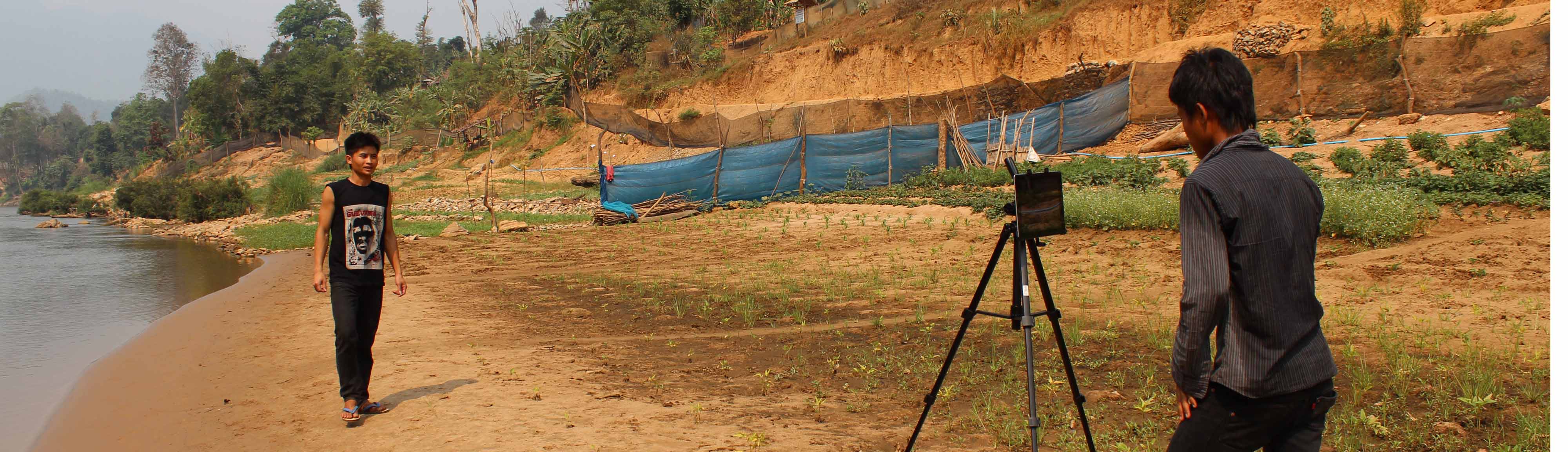
At the inception of my Traveling Teacher project, a core motivation was to see just how far mobile technologies could reach. If an iPad2 can hold a battery charge for 10 hours, is it possible to conduct iPad video workshops in remote villages where there was no electricity? Could the iPad and a little technology education be all that was needed to provide people living in remote regions of the world an opportunity to tell their own stories to the world, to add their voices to the Global Discussion? In late March, I was given the opportunity to find out: I was invited to travel to the far north of Thailand to the Mae La Oon Burmese refugee camp. After a week of preparations, I had secured a camp pass, hired a driver, and found myself staring out the dusty window of a Toyota 4WD, looking out at the scrub covered dry earth, pondering, once again, how many different experiences people in this world have. And how many different stories they have to tell…. 
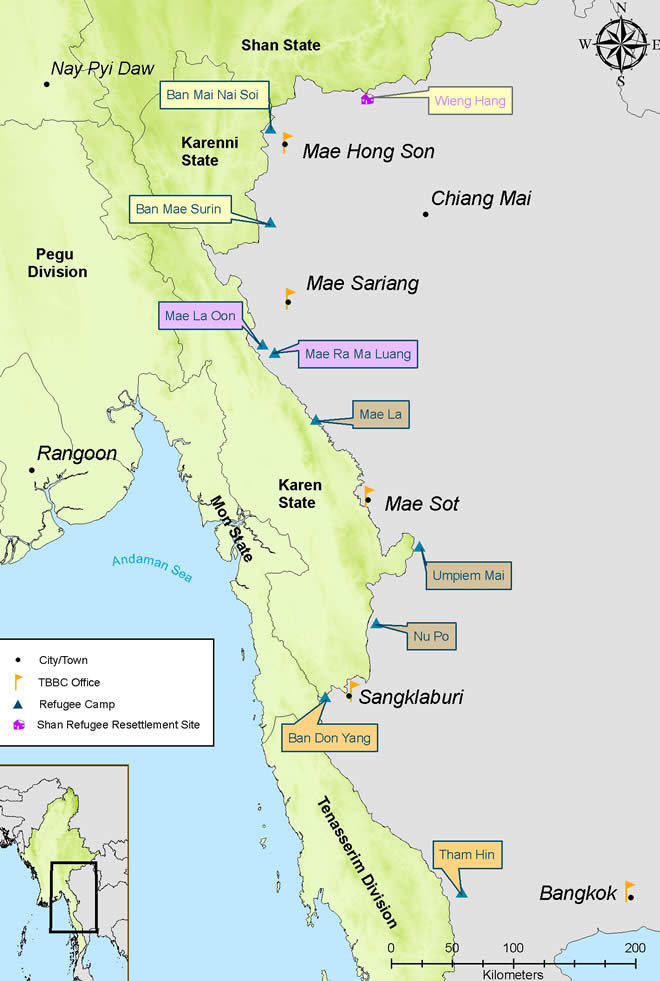
credit: www.tbbc.org
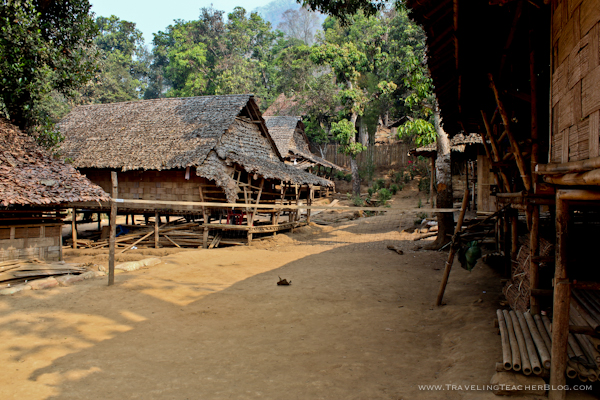
Prior to March of 2012, I had little understanding of the refugee situation along the Thai-Burma border. Since 1991, Myanmar (formerly known as Burma) had been under military rule : Fighting in many of the ethnic states forced over 800,000 Burmese to seek refuge in Thailand, Malaysia, and other countries. There are currently 160,000 refugees living in Thailand. Mae La Oon is just one of the refugee camps. located 2 km from the Thai-Burma border, a 4 – 6 hour drive via 4WD vehicle from Mae Sariang, Thailand. Electricity is only available for 3 hours in the evening, generated solely by gasoline generators. Cell phone reception is non-existent. The one internet shop offers intermittent, dial-up connection and a landline phone.
After 6 hours, I arrived to the KLMTC School.
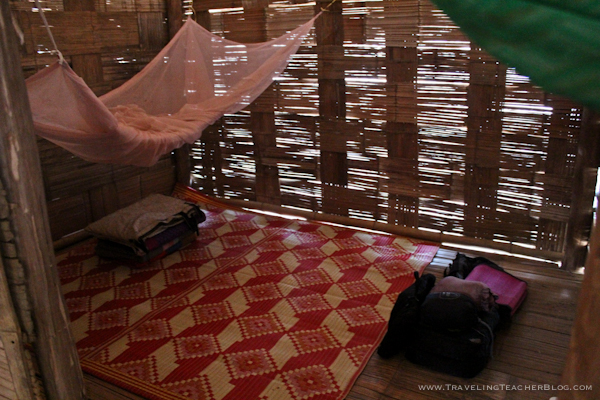
We arrived late in the evening, and I was dropped off at the Karen Leadership and Management Training School entrance. I carried my two small bags into the bamboo school office building, where I was given a small room with wool blankets and a mosquito net.
My room during the TYOS workshop.
Ordinarily, the first thing I do upon arrival in a new location, after emailing family and friends that I’ve arrived safely, is to unpack and set up a charging station for the iPad, iPhone, laptop and cameras. Instead, I turned off my phone, laid the blankets out to form a bed, tucked my flashlight into my pocket, and went to go see the space we would use for the workshop that would begin the next morning.
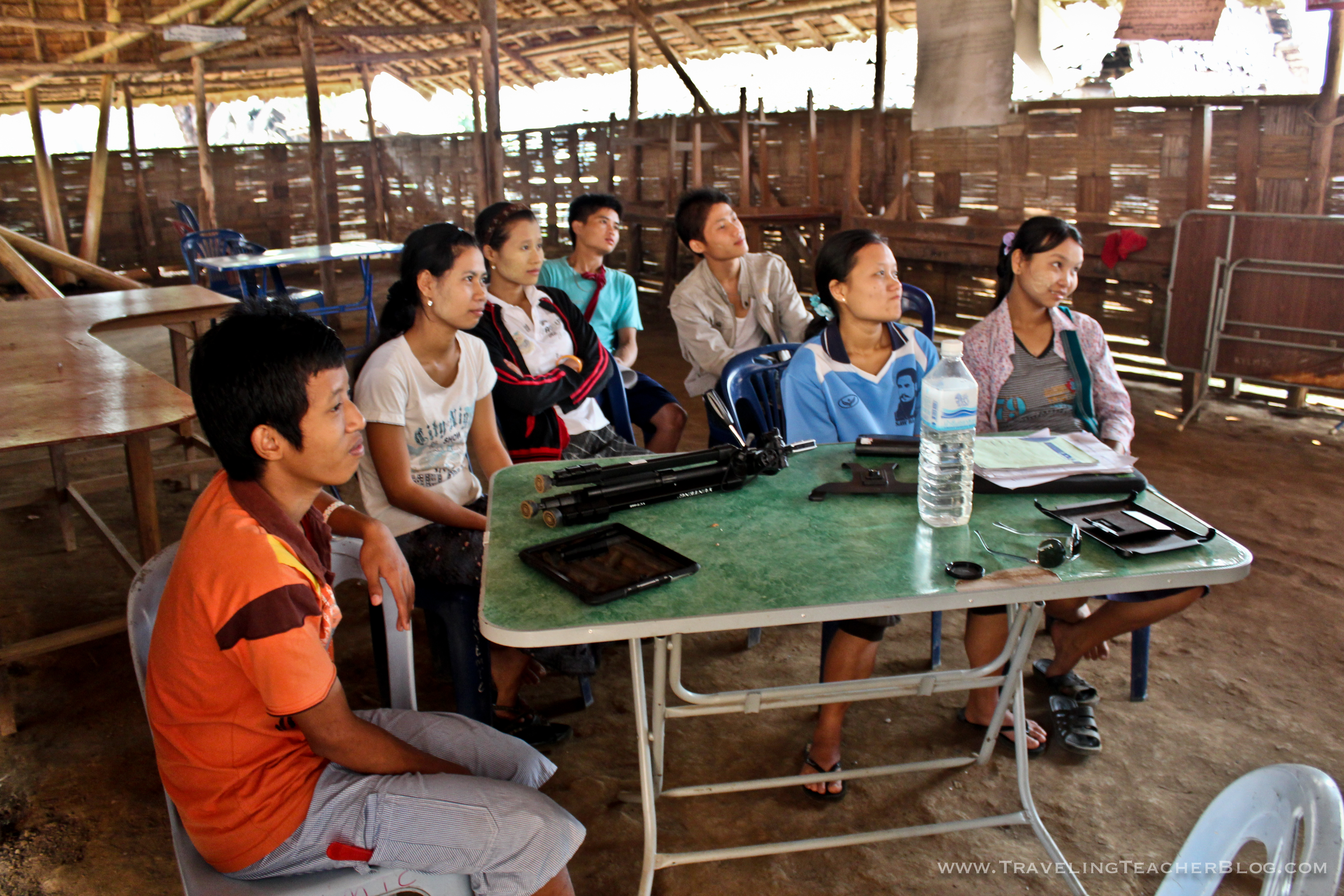
That evening was the graduation celebration for the school. Using the gasoline powered generator, the students lit up the outdoor stage, plugged in microphones, and spent 3 hours playing music and singing for each other. I was introduced to the six students who had been selected to participate in the project. Several more asked, in their shy English, if it were possible to also join. With only one iPad and one MacBook Air, I had to, with a heavy heart, tell them no. I made a promise to myself then, to try to find more iPads for these workshops.
The next morning, after a breakfast of rice and greens provided and prepared by the students, we began the workshop with Brainstorming. The irony of these two events would become evident by the end of that day’s class.
The Students on Day 1 of the Workshop. Most had no computer experience.
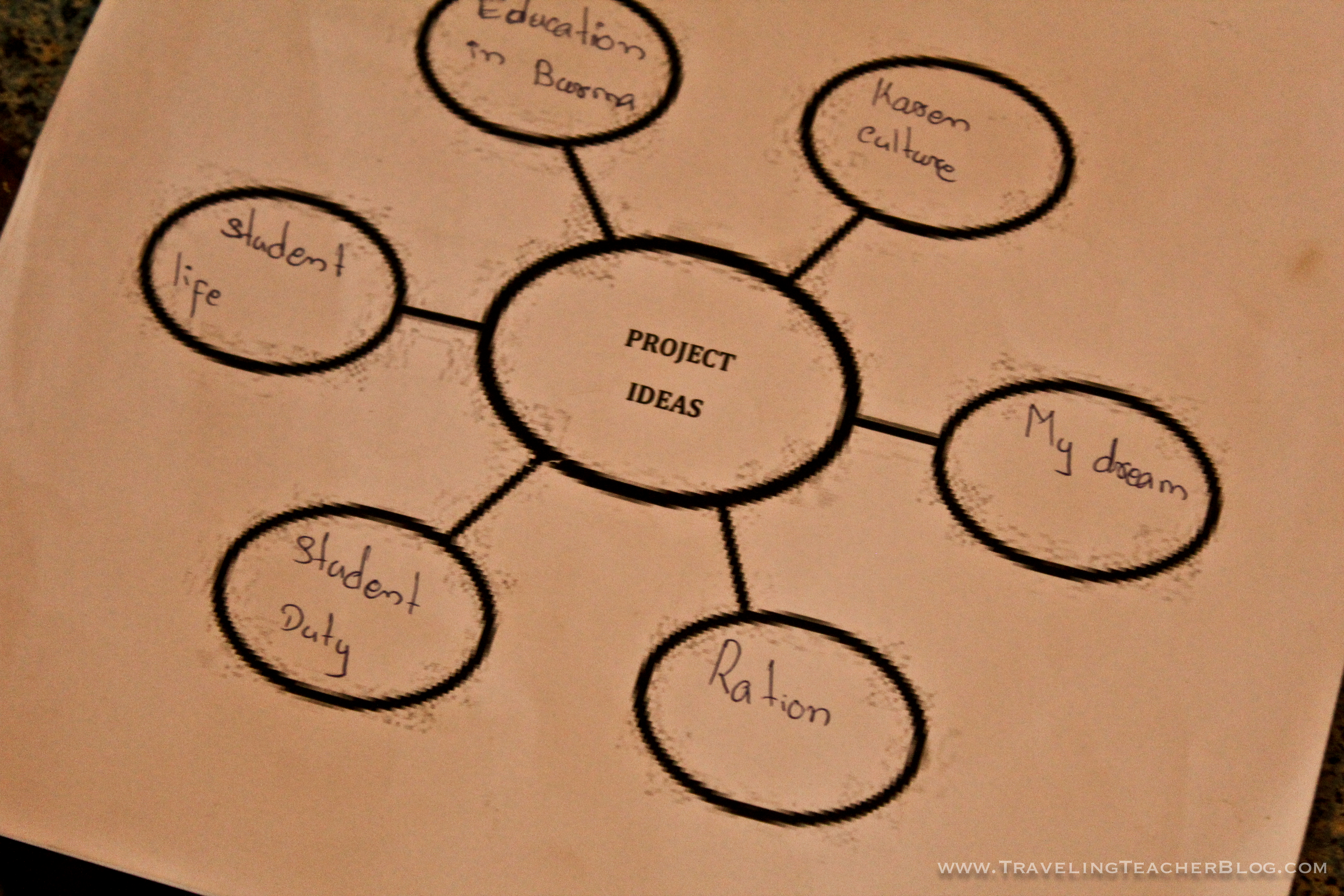
 After watching the Water Wells in My Village, Proud to Be BurmeseMy Future Dreams, and A Day in the Life of Nary from previous Tell Your Own Story Project participants, the women chose to make a “Day in the Life Of” video. The men struggled a bit more with choosing their topic, but finally, a small idea stuck out: and it was then that the irony of them cooking and sharing their food with me became apparent:
“Ration”.
As it often happens during the brainstorming sessions, one word stands out from the rest. My co-facilitator Paul was instrumental in pulling the story out from the students. It was a far-reaching issue. They were not sure they could tell it: due to the rising global food prices, food rations provided to the refugees by the Thai Burma Border Consortium had to be reduced during the past year. There simply is not enough funds to feed the increasing number of refugees.
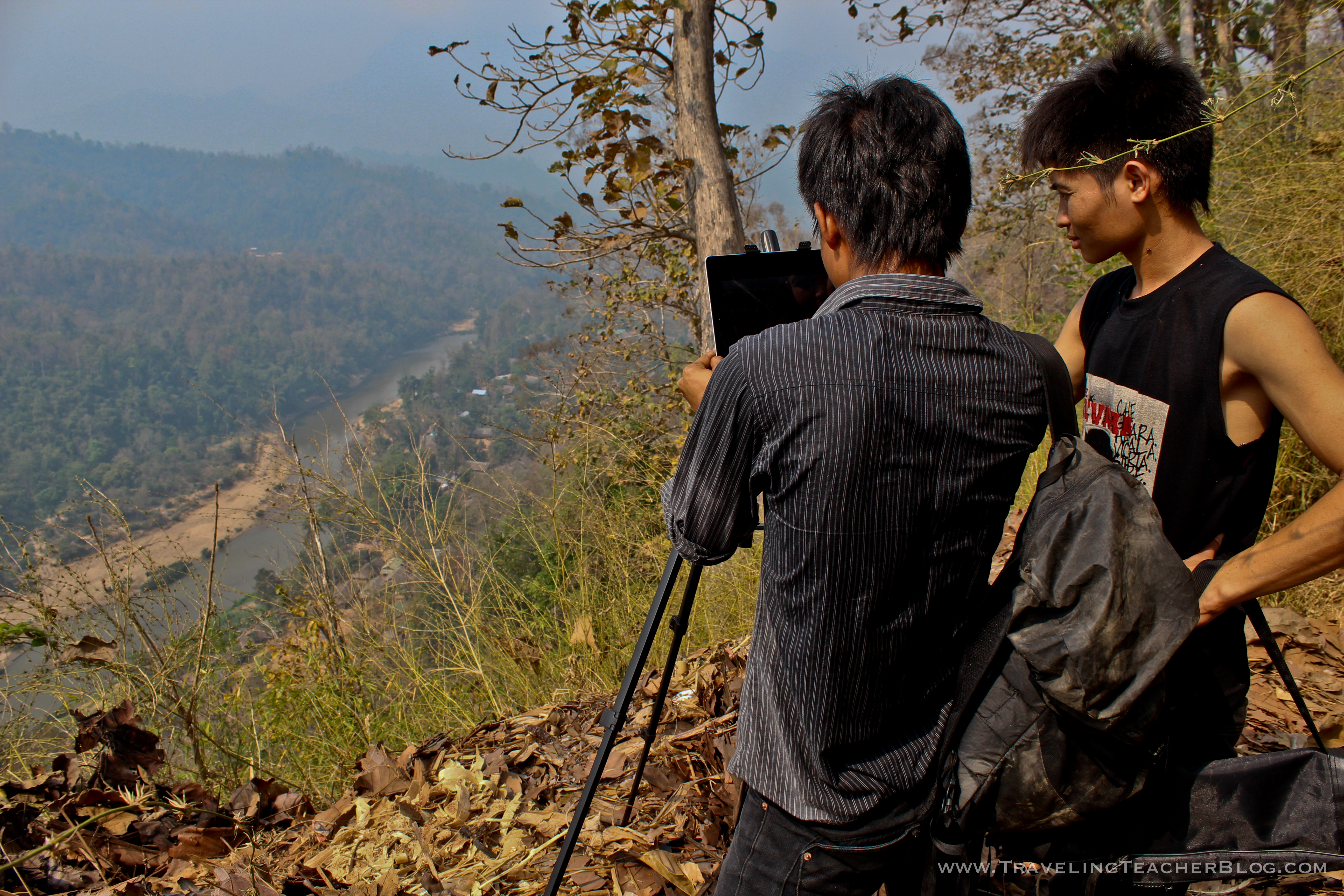
After discussing the various facets of the issue, we began to brainstorm how the students could visually SHOW the problem. “Where and when do you go to collect the food rations,” I asked. The answer to that simple question unlocked the solution. The men quickly set about writing their script and then hurried out to begin capturing video on the iPad. They went alone. And returned with footage that only people who are living the story can tell. They literally put their sweat into this project, climbing the largest mountain in the camp on a 38+ celsius degree day in order to capture birds eye footage of the sprawling camp.
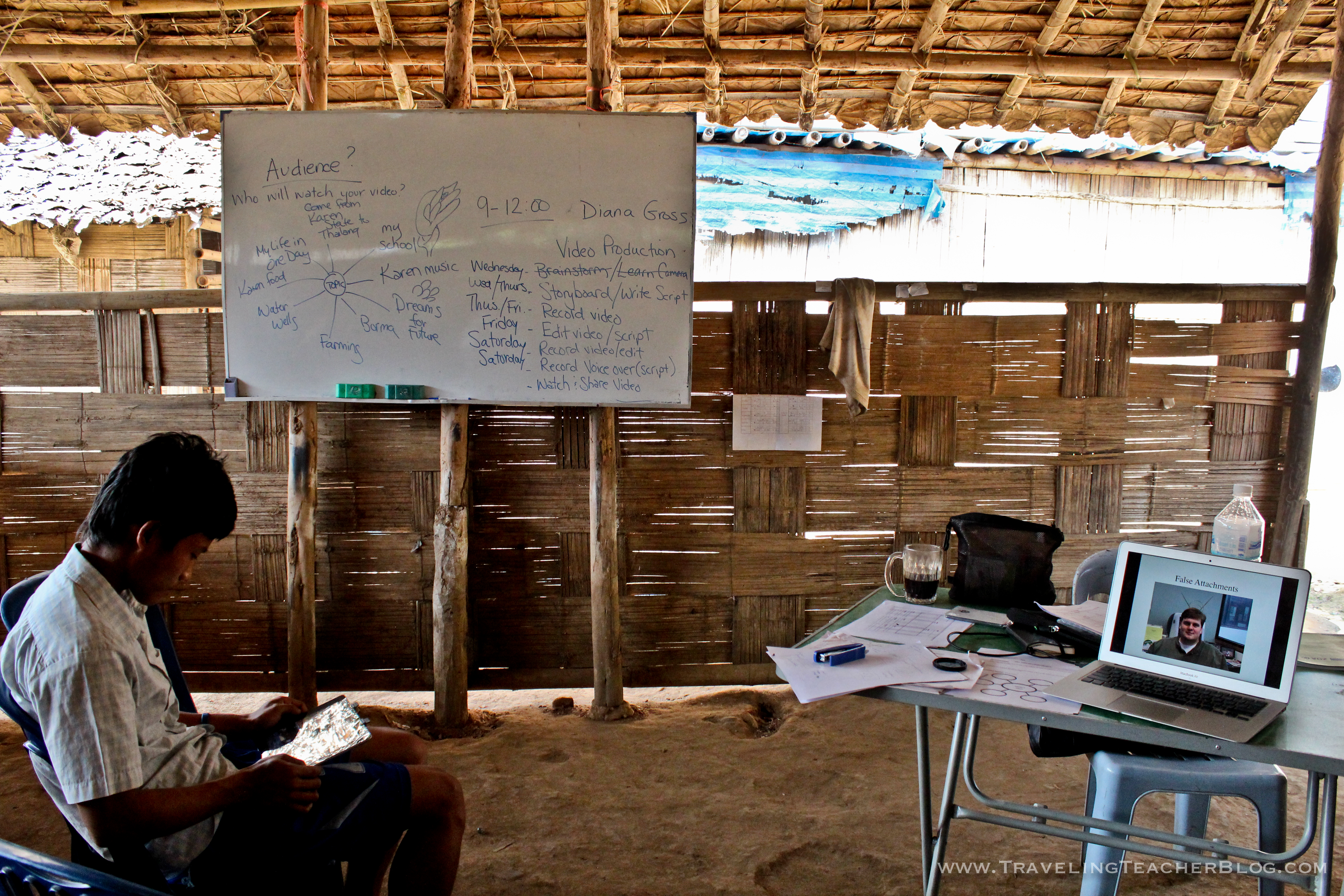
Writing the Script. Sunlight enters into the classroom. No Electricity Needed.
The iPad2 is light and small enough to fit in a bag for hiking to the top of mountains.
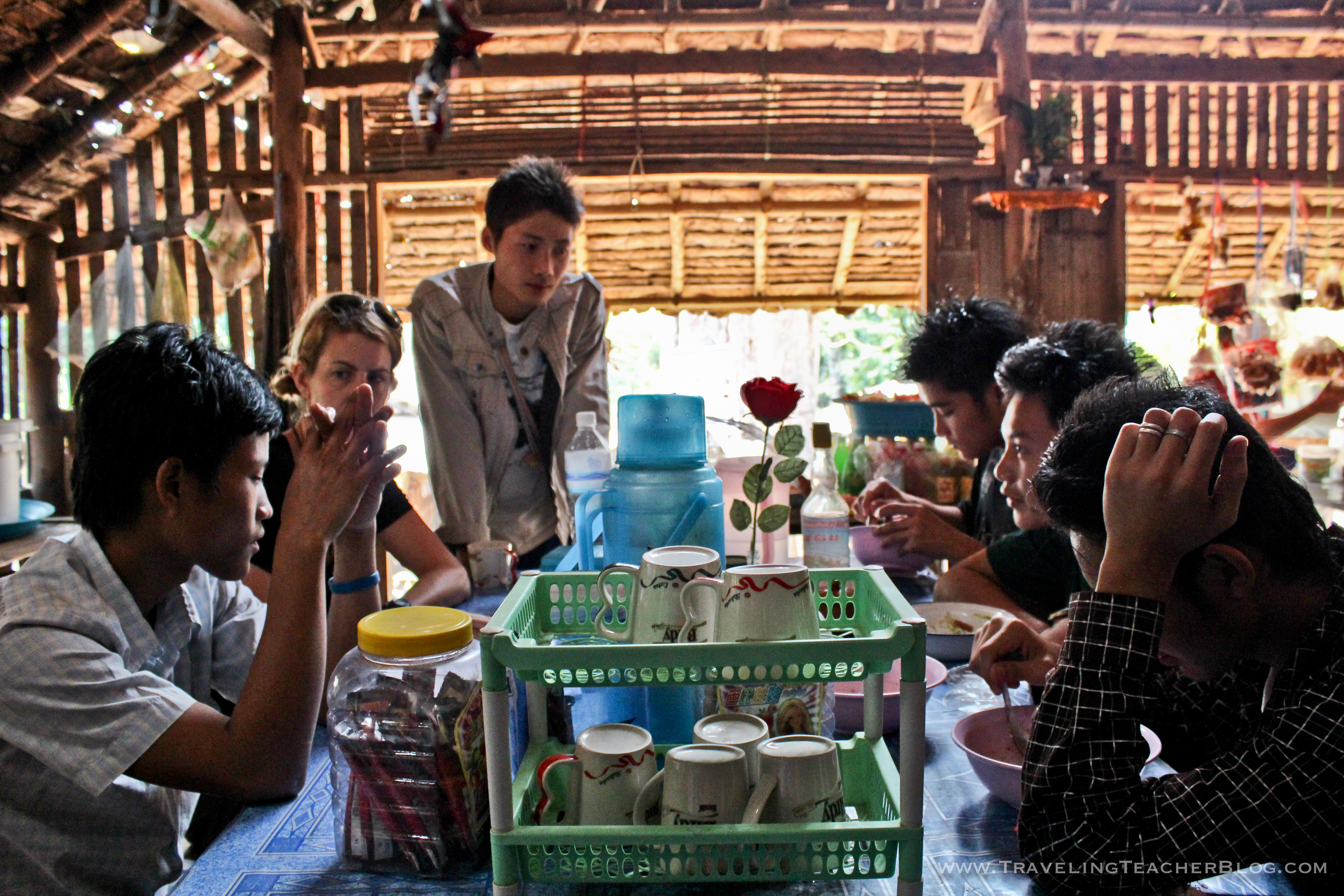
In order to tell this important story, the students worked with the iPad2 which we charged in the evenings for three hours while the generator ran. They conceived the idea and wrote the script on paper in a bamboo classroom constructed to allow in the sunlight. We reviewed footage and revised the script while a drinking instant coffee in a local shop that provided boiled water to anyone passing by.
Post Production in the Local Shop; no electricity but plenty of Birdie Instant Joe.
If ever there were a situation that confirmed my beliefs that an iPad2 is the tool for providing marginalized communities to tell their stories to the world, Mae La Oon refugee camp was it. These students worked despite the overwhelming obstacles to produce a compelling video of the reality of life in a refugee camp. And during the entirety of the workshop, they graciously prepared and shared their food rations with me. I would return to Mae La Oon in a heartbeat, hopefully with an entire fleet of iPads. There are so many stories to be told.

http://travelingteacherblog.com

CSW backs call for aid increase to Burma refugees


CSW backs call for aid increase to Burma refugees  
 
 Aung San Suu Kyi is visiting the UK in the latest stage of her historic visit to Europe PA
 
Christian Solidarity Worldwide has backed Aung San Suu Kyi’s call for an increase in aid to Burmese refugees along the Thai-Burma border.
Suu Kyi made the appeal in her Nobel Peace Prize lecture in Oslo, during which she recounted her recent visit to the Mae La refugee camp.
She relayed the concerns about “donor fatigue” from workers at the camps, which she added could “could translate as ‘compassion’ fatigue”.
“Donor fatigue expresses itself precisely in the reduction of funding,” she said.
“‘Compassion fatigue’ expresses itself less obviously in the reduction of concern. One is the consequence of the other.
“I appeal to donors the world over to fulfil the needs of these people who are in search, often it must seem to them a vain search, of refuge.”
CSW said that cuts in funding from the international community, including the European Union, had resulted in reductions to food rations of up to 25 per cent.
Provisions of clothing, blankets, mosquito nets and shelter had also suffered.
The human and religious rights group said the cuts were having a serious impact on the health of more than 140,000 people staying in camps along the Thai-Burma border as a result of inter-ethnic conflict.
CSW has made numerous visits to Burma, where it has documented the ransacking and destruction of churches. It reports that Christians have faced the choice of being used as forced labour or staying in the refugee camps.
Suu Kyi is visiting the UK for the next four days, during which she will become the first non-head of state to address both Houses of Parliament in Westminster on Thursday.
She will also meet David Cameron and members of Burma’s exiled community in the UK.
CSW’s East Asia team leader, Benedict Rogers said her visit was “hugely significant and historic” and a “sign of the positive changes in Burma”.
However, he warned that serious human rights violations were continuing in Burma despite the reforms of the last year, including attacks by the military on ethnic civilians in Kachin State and the detention of hundreds of prisoners of conscience in jail.
“Religious freedom must be protected, and inter-religious and inter-ethnic dialogue promoted," he said.
"It is essential that at this time of potential change in Burma, the international community invests in the lives of refugees, to ensure that they can return home in good health, security and with skills to contribute to reconstruction and reconciliation in their country when the time is right.
“Britain is the largest bi-lateral donor to Burma and has provided significant assistance which is welcome, but now is the time to act to ensure that the basic needs of refugees and internally displaced peoples are met and that a serious humanitarian challenge caused by a shortage of funding can be averted.”

Source :  http://www.christiantoday.com