Showing posts with label Burmese Migrants. Show all posts
Showing posts with label Burmese Migrants. Show all posts
Thursday, October 29, 2015


Wednesday, October 28, 2015
Tuesday, October 27, 2015
Why Myanmar elections are important to Thailand
BANGKOK: — THE NOVEMBER 8 election is not only important for Myanmar but also for Thailand, as political changes in this neighbouring country have always had an impact on this part of the region.
This election is important and crucial because this is the first time in 25 years that Myanmar’s two major rival political parties – the ruling Union Solidarity and Development Party (USDP) and the opposition National League for Democracy (NLD) – will contest against each other.
Electoral competition is good because it will give Myanmar people a choice when it comes to votes, unless history repeats itself and the NLD and its leader Aung San Suu Kyi are once again not handed power if they win.
Suu Kyi was not handed power in 1990 despite winning by a landslide, a move that is seen as a repercussion of the 1988 crackdown on an uprising, that eventually brought on economic difficulties and forced millions of people to leave and seek better lives overseas. Unfortunately though, most of these asylum seekers ended up in Thailand’s refugee camps as well as factories, construction sites, fishing trawlers and other places in the Kingdom.
The 2010 election, which the NLD was prohibited from, put President Thein Sein in power and made the military-backed USDP the ruling party. Thein Sein, however, has introduced many reforms and worked on developing the political system by allowing the NLD to participate in the 2012 by-election. Now, the much-loved Nobel laureate Suu Kyi has some space in the field of politics and is able to play a role. Myanmar is also relaxing some of its laws, and many dissidents are able to return home.
However, Thein Sein has either intentionally or unintentionally not completed his reform task and might just be leaving behind a lot of time bombs to explode after the polls. Myanmar’s 2008 Constitution still prohibits people who are married to a foreigner, like Suu Kyi, to lead the country, and the military will still maintain a 25-per-cent quota in parliament.
So, what happens if the NLD wins, but the USDP insists on allying with the military and other minor parties to form the government? There is a high possibility that the NLD will defeat the USDP, but it will still have less than half the total seats in parliament required to form a government – though the two sides may come up with a deal to solve this problem.

Then there’s the peace process. Thein Sein still hasn’t completed that job, as only eight out of the initially announced 15 armed ethnic groups agreed to sign the nationwide ceasefire agreement on October 15. This means armed conflict is still continuing in many areas, notably along the border with Thailand.
People in war-torn areas will have little or no chance to cast their ballots on November 8 due to security issues. It is still unclear when the remaining groups will agree to a truce so people in conflict-ridden areas have a chance to participate in politics.
Peace in Myanmar is really important for Thailand, as hundreds of thousands of people have been waiting in border camps for more than two decades. Previous Thai governments had sent many signals to Nay Pyi Taw, seeking to settle the problem with refugees, but there has been no sign of readiness.

Unless the new election brings political stability and peace to Myanmar, the ethnic groups will keep fighting, and people will keep leaving to seek asylum elsewhere. The Myanmar-Thai borders will never be clear and safe, while economic development, special economic zone, Asean connectivity and many other projects between the two countries will never become a reality.
Source: http://www.nationmultimedia.com
Friday, October 23, 2015
Thailand Must End Its Own Rohingya Atrocity

This article is part of “Southeast Asia: Refugees in Crisis,” an ongoing series by The Diplomat for summer and fall 2015 featuring exclusive articles from scholars and practitioners tackling Southeast Asia’s ongoing refugee crisis. All articles in the series can be found here.
In May 2015, gruesome mass graves were unearthed in southern Thailand, revealing scores of bodies belonging to mostly Rohingya refugees who had been victimized by human traffickers. The discovery placed Thailand under a global spotlight exactly at the time when the country was seeking to be upgraded by the United States in terms of its handling of human trafficking.
$5 DVD's at Second Spin Offer Ends Nov 13 or while supplies last
$5 DVD's at Second Spin Offer Ends Nov 13 or while supplies last
Seeking to distance itself from any guilt, the ruling regime charged at least 85 persons with complicity in the scandal, including Army General Manas Kongpaen. Thailand also agreed to offer humanitarian assistance to Rohingya refugees and convened a regional conference on Rohingya and Bangladeshi migrants, which indirectly blamed Myanmar. Though Myanmar bears primary responsibility for the Rohingya crisis, Thailand’s own deplorable treatment of the Rohingya must immediately come to an end. The fact remains: the line between security officials and human traffickers in Thailand has become increasingly blurred. And Thailand has yet to be held accountable.
The Rohingya are a Muslim people of southwestern Myanmar, though neither Myanmar state authorities nor most Burmese accept their right to legally exist as citizens. The Burmese military practiced ethnic cleansing of Rohingya in 1978, 1992, and 2012-2013. Rohingya have also suffered from violent attacks by Buddhist Burmese nationalists and suffer discrimination throughout Myanmar.
Waves of Rohingya have fled to Bangladesh. But by 2006, Bangladesh was overcrowded with refugees and many Rohingya decided to go to Malaysia instead. Doing so meant transiting through Thailand. Getting through Thai territory by land or water was difficult. First, human traffickers which brought most Rohingya through Thailand, were exploitative. Second, there were numerous health challenges. Third, Thailand’s military has been waging a heightened war against a Malay-Muslim insurgency in far southern Thailand, the very area Rohingya needed to transit to reach Malaysia. Given the insurgency, the mindset of many Thai security officials was hostile toward southern Thai Muslims. It was not difficult to extend that paranoia to the Rohingya, who Thai soldiers feared might join the revolt. Thus, Thai army and navy patrols routinely detained Rohingya refugees and either deported them back to Myanmar or — less frequently — helped their boats on to Malaysia.
Then Malaysia shifted its policy, refusing to register any new Rohingya. Those transiting through Thailand now found themselves stranded there, with others continuing to arrive. In 2008, Thai Prime Minister Samak Sundaravej proposed sending all the Rohingya to a draconian immigration facility on a deserted Thai island. Though the idea was never implemented, the policies Thailand has used are not much better.
Thailand has never signed the 1951 United Nations Convention Relating to the Status of Refugees or its 1967 protocol. As such, the country has no specific international legal responsibility to safeguard refugees or asylum seekers. Nevertheless, Thailand has signed other human rights agreements, including the International Covenant on Civil and Political Rights, which arguably cover the rights of stateless Rohingya in Thailand. But a lack of enforcement has made these instruments ineffective. This has meant that Thailand has dealt with Rohingya as it sees fit.
Turning a blind eye to any international obligations to respect refugee rights, the Thai military initiated a new “pushing out” policy in which Rohingya, after surviving the harrowing ordeal of reaching Thailand across the sea, were now held on a remote island for two days. Then boatloads of them were towed out to international waters, their engine would be cut, and they would be set adrift with little food or water. The policy — which saw hundreds of Rohingya bodies later wash up on Asian beaches — was meant to deter potential Rohingya refugees from coming to Thailand. The strategy was tasked out to Gen. Manas Kongpaen of the Thai military’s Internal Security Operations Command (ISOC). Manas himself had gained infamy for participating in the massacre of Thai Muslims at Krue-Se mosque in 2004, though a court later acquitted him of any wrongdoing.
Under the Abhisit government, the “push-back” program was suspended, and instead a program of deportation or the indefinite detention of Rohingya was implemented. Whilst not as immediately condemnable as the “push-back” program, it was only facilitated by the Thai police joining forces with human traffickers. Deportation back to Myanmar has only led to imprisonment by Myanmar authorities, escape back into Thailand, or, most commonly, the handing over of Rohingya to human traffickers who smuggle Rohingya to Malaysia. Since most Rohingya could not pay the traffickers, they were forced into human slavery to work off the debt. Such a policy financially benefited local Myanmar security officials and smugglers alike while providing a clandestine solution to the returning Rohingya deportees.
In 2013, a Reuters investigation revealed that Thai police had admitted an official Thai policy of removing Rohingya detainees using a similar alliance between Thai security forces and human traffickers. As the policy was official, it had to have been sanctioned by Thailand’s senior-most security officials on down. It commenced following the 2012-2013 Myanmar state atrocities against Rohingya, which had exacerbated the latest Rohingya exodus abroad, including to Thailand. The strategy amounted to this: Thai authorities sold Rohingya detainees to traffickers who spirited them through a series of savage jungle camps (involving regular beatings and rapes) close to Malaysia, where relatives of the Rohingya had to pay ransom for them. Those who could not be ransomed were sold as slaves, or they died. A related report revealed that the Thai Navy had beaten Rohingya boatpeople and sold them to traffickers.
This relationship between the authorities and the traffickers is officially sanctioned. In light of this, the May 2015 discovery of mass graves finds not only alleged collaboration between Thai security officials and traffickers but instead growing evidence that in several cases the soldiers and traffickers are one and the same. Thus, it appears that the trafficking of Rohingya, for certain Thai security officials, represents not only a way to rid Thailand of detainees considered a security threat but also a means of making profits from refugee misery connected to human smuggling and slavery.
While initial responses by Thailand to the 2015 Rohingya crisis appeared to be positive, Thai security policymakers must answer some probing questions. First, do the mass graves not represent the logical result of Thai security forces’ intentional policy of trafficking Rohingya? Second, how could the Thai state allow Gen. Manas Kongpaen, earlier implicated in the Krue Se massacre, to locally lead ISOC’s Rohingya policy from 2008 until 2015? Third, as the current defense minister is the same as in 2009 — Prawit Wongsuwan — why was he not earlier successful in stopping human rights violations by Thai security officials against Rohingya? Fourth, if such trafficking was an intentional Thai policy, to what extent is Thailand guilty of crimes against humanity?
With global attention focused on Myanmar’s horrendous mistreatment of Rohingya, Thailand’s own human rights violations against them — though occasionally surfacing in public — have persisted as a secret sideshow. That sideshow has perpetuated a brutal system of human trafficking and prevented the Rohingya — currently Southeast Asia’s most brutalized ethnic minority — from reaching political asylum abroad. It is high time for Thai policymakers, with sufficient support from international actors, to either allow Rohingya at least the temporary right to asylum or ethically assist in moving Rohingya on to third countries.
Tuesday, October 20, 2015
82 Rohingyas handed over to UNHCR

SIK: Eighty-two ethnic Rohingyas from Myanmar at the Belantik detention depot, here, was today handed over to officials from the United Nations High Commission for Refugees (UNHCR).
The 82, all male aged between 13 and 70 years, each received a letter from the UN agency which confirmed their status as refugees after almost 10 months of being detained at the Immigration depot.
Today is the beginning of their lives as refugees in Malaysia.
"I am so happy and delighted to receive the letter from the UNHCR. I am not afraid and worried anymore. I want to look for a job," said Zaid Hussin Nobi Hussin, 20, one of the refugees.
Hailing from Arakan in Myanmar, the youth will be going to Bukit Mertajam to meet his younger brother who is there before looking for work.
Another refugee, Korim Mullah Abu Tahir, 26, said he would be going to Butterworth to find a job to fend for himself in this country and his family in Myanmar.
"What is important is after receiving the UNHCR letter, I can look for a job without worry or fear. I am so happy today," said Korim, whose wife and three children are in Myanmar.
The 82 Rohingyas were taken out of the Belantik detention depot in two buses which were accompanied by a van carrying the UNHCR officers from Kuala Lumpur.
Kedah Immigration director, Mohamad Yusri Hashim said the 82 immigrants had been screened and selected for release from the detention depot based on the criteria set by the UNHCR to enable them to receive assistance from the international agency.
He said Malaysia was not a party to the Geneva Convention 1951 which recognised and gave protection to refugees, and they were not recognised as permanent residents under the law in this country.
He added that action would be taken against them for any violation of the country's laws
. –Bernama
. –Bernama
Thursday, August 27, 2015
Asia's Refugee Policy Vacuum
By Dr. Amy Nethery
August 27, 2015
The broad absence of asylum policy in the region is alarming and needs to be rectified.
The Asian region is host to the largest number of refugees, asylum seekers, and internally displaced people in the world. Yet a broad absence of asylum policy at regional and domestic levels means that the region is ill-equipped to effectively respond to this problem.
This Asian asylum policy vacuum is the legacy of a long-standing antipathy towards the international refugee protection regime on the part of many Asian states, and a failure to adopt a regional approach to the issue. In early 2015, the Rohingya refugee crises challenged the region on the matter of this failure, and highlighted the devastating human effects of the absence of effective asylum policy.
The Asian asylum policy vacuum occurs on various policy levels. Asia has the fewest signatories to the Refugee Convention. Unlike Central America, Africa, or the Middle East, it has not formed its own region-wide protection frameworks to complement international law. Asian states generally prefer bilateral solutions, yet on this matter the region has the smallest number of formal bilateral or multilateral agreements. Similarly, on the level of state policy, many states have no policy on forced migration at all, and instead respond to refugees as an unauthorized migration issue.
The lack of support for the Refugee Convention from Asian states can be explained by the Eurocentric focus of the Convention at its time of creation. European states reeling from the Second World War, and others further afield, came together in an unprecedented way to address the problem of mass displacement. What came to be known as the Refugee Convention was drafted in a series of conferences in 1949 and 1950. Most Asian states were absent from the proceedings, however, and those who did take part expressed a sense of frustration that their contributions were marginalized.
At the same time as the Convention was being discussed in the meeting rooms of Europe, vast displacement was occurring throughout Asia: in 1947 an estimated 14 million people were displaced by the partition of India and Pakistan; in 1948 the establishment of Israel led to an exodus of 700,000 Palestinians; in 1950, 7 million North Koreans sought sanctuary in the South. Many Asian states felt that the Refugee Convention did not provide a solution or strategy for dealing with these situations, and worried that it placed undue burden on fledgling states barely able to provide for their own populations. Moreover, displacement in Asia was most often the result of the social and political change triggered by decolonization. In other words, these forced migrants did not fit the definition of refugee status agreed upon in Geneva.
Responses to the current Rohingya crisis illustrates a continued ambivalence towards refugees by many Asian states. China, who accommodates ethnic Chinese refugees but restricts access to the UNHCR, has declined to intervene when it comes to the more “politically costly” Rohingyas. India has absorbed groups of refugees in the past, including Rohingyas, but has been careful not to be involved on a political level. Japan is the world’s fourth largest donor to the UNHCR, but in 2014 resettled only 11 refugees. In response to the Rohingya crisis, Japanpledged $3.5million, but would not offer resettlement places.
Malaysia and Indonesia has agreed to offer temporary shelter to 7,000 Rohingya refugees. But Malaysia has hosted approximately 75,000 Rohingya refugees for many years before the current crisis, yet has no refugee law that might grant them healthcare, education or work rights, and implements regular crackdowns on “unauthorized migrants” resulting in detention, caning, and expulsion. Indonesia has traditionally been tolerant of the fewer refugees in its community, but within the last decade it has incrementally tightened its borders, including accepting Australian funding and support to open a network of detention centers, in which it detains asylum seekers indefinitely. Indonesia and Australia co-chair the Bali Process, the most recent attempt at a regional agreement on matters including asylum, but which sadly has been ineffective on the recent crisis.
Clearly, a region-wide coordinated response is required to address the gap. As the dominant intergovernmental organization in Southeast Asia, ASEAN has an important role to play. Established in 1967 as a forum for establishing trade cooperation and fostering regional stability, it has slowly extended its mandate to include some social issues. For the most part, however, twin principles of “good neighborliness” and “non-interference” have been central to ASEAN’s mode of operating. These principles manifest as a reluctance on the part of ASEAN members to involve themselves in what it regards as the internal sovereign matters of member states.
After many years of rejecting the notion that it had a role to play in human rights, ASEAN finally adopted aHuman Rights Declaration in 2012. On refugees, Article 16 of the Declaration states that “Every person has the right to seek and receive asylum in another State in accordance with the laws of such State and applicable international agreements.” The principle of non-interference thus remains. It is still early in the lifespan of the ASEAN Human Rights Declaration, so we are yet to see how Article 16 might play into states responses to forced migrants in the region. In the meantime, the Rohingya and other refugees in the region face significant challenges in their search for effective and durable protection.
Dr. Amy Nethery is a lecturer in Politics and Policy Studies at Deakin University, Melbourne, Australia. She researches asylum policy in Australia and Asia. Her most recent publication (with SJ Silverman) isImmigration Detention: The Migration of a Policy and it’s Human Impact (Routledge 2015).
http://thediplomat.com
Monday, August 24, 2015
Two dozen suspected human trafficking victims found in Malaysia
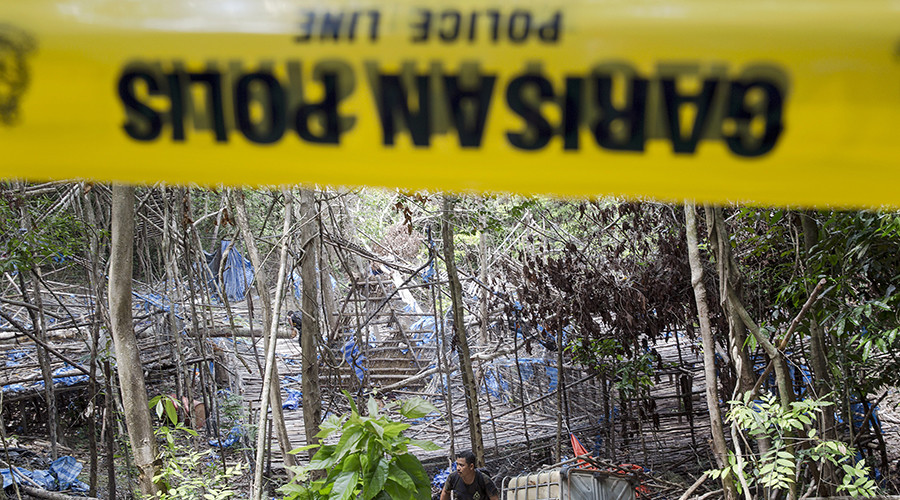
Malaysian police investigating human trafficking camps at the border with Thailand have discovered mass graves containing 24 bodies. Earlier over a hundred graves were found in the area.
The remains were uncovered on Saturday in the Bukit Wang Burma area in the heavily forested region covering northern Malaysia and southern Thailand.
“Following on from the operation in which we found ... bodies of illegal immigrants, 24 more bodies have been found and dug up,” police said in a statement.
The bodies most likely belong to refugees from Myanmar, members of the persecuted Muslim Rohingya minority, Police Chief Tan Sri Khalid Abu Bakar told the Malaysian Insider.
The new graves were found near the site some 500 meters from the border, where Malaysian police found 28 abandoned refugee camps in May. At that time, the police reported finding 139 graves, some of them containing more than one set of remains of suspected victims of human traffickers.
Similar grim finds were reported by Thailand’s police earlier in May and by Malaysian police in April.
A major human trafficking path goes across the Thai-Malaysian border. The criminals transport people from Myanmar and Bangladesh to southeastern Asia.
The latest police crackdown drove traffickers to abandon thousands of migrants floating in overcrowded boats, resulting in a regional humanitarian crisis.
Saturday, August 15, 2015
Police asked to probe UNHCR in Malaysia over issuing of refugee cards

SHAHIDAN: What the UNHCR office is doing is wrong because they did not inform the Home Ministry and the Immigration Department.
ALOR SETAR: Police were asked to investigate the United Nations High Commissioner for Refugees (UNHCR) office in Malaysia for issuing refugee cards without the consent of the Malaysian government.
Minister in the Prime Minister's Department, Datuk Seri Shahidan Kassim said what the UNHCR office is doing is wrong because they did not inform the Home Ministry and the Immigration Department.
"They (UNHCR) are like a 'government within a government'. Malaysia was not among the countries which signed the 1951 Convention on the Refugee Status or the 1967 Protocol.
"The UNHCR Office has no diplomatic status and they have to stop issuing refugee cards immediately.
"I urge the police to come in and investigate how these cards were issued just like that," he said.
Shahidan who is responsible for National Security Council (NSC) affairs, also want the detained immigrants deported to their home countries to avoid overcrowding of camps.
Shahidan said there were complaints from the public on the flooding of foreigners, affecting the nation's security and job opportunities.
"Any foreigner who wants to apply for refugee status have to follow the proper channels as defined by the laws of this country.
"The government does not want them involved in crimes, for example in Myanmar, to come to Malaysia obtain refugee cards through an easy interview process," he said after opening the Wanita Umno division delegates meeting in Alor Setar today.
Shahidan said in a recent case, 150 refugee families have invaded some lands in Rompin, where their actions were reported by the state of Pahang.
He called for the police and the Immigration Department to regard UNHCR refugee card holders as illegal immigrants and take appropriate action.
Meanwhile, statistics show that Malaysia was currently flooded with 130,000 holders of the refugee card issued by the UNHCR office in Kuala Lumpur, mostly from Myanmar and Bangladesh.
Minister in the Prime Minister's Department Datuk Seri Shahidan Kassim said the UNHCR should consult the Home Ministry and the Immigration Department before issuing the cards.
"The UNHCR office is doing it wrong by issuing the (refugee) cards without informing the Home Ministry and the Immigration Department.
"They (UNHCR) have no diplomatic status and should stop issuing the card immediately. I want the police to investigate how can the card be issued like that," he told reporters after opening the Alor Setar UMNO divisional delegates meeting here today.
He said Malaysia was not among the countries which signed the 1951 Convention on the Refugee Status or the 1967 Protocol.
Foreigners wanting to apply for refugee status have to go through procedures as required by the laws in the country, he added. Shahidan said Malaysia was currently flooded with 130,000 holders of the refugee card issued by the UNHCR office in Kuala Lumpur.
We do not want foreigners involved in crime in their respective country of origin to come to Malaysia and be given the UNHCR card through a simple interview, he added.
He also mentioned a case of illegal occupation of state land by 150 refugee families in Rompin and the matter had been reported to the Pahang government.
Malaysia could no longer accommodate foreigners and those caught breaking the law should be deported to their countries of origin immediately, he added.
– Bernama
Minister in the Prime Minister's Department Datuk Seri Shahidan Kassim said the UNHCR should consult the Home Ministry and the Immigration Department before issuing the cards.
"The UNHCR office is doing it wrong by issuing the (refugee) cards without informing the Home Ministry and the Immigration Department.
"They (UNHCR) have no diplomatic status and should stop issuing the card immediately. I want the police to investigate how can the card be issued like that," he told reporters after opening the Alor Setar UMNO divisional delegates meeting here today.
He said Malaysia was not among the countries which signed the 1951 Convention on the Refugee Status or the 1967 Protocol.
Foreigners wanting to apply for refugee status have to go through procedures as required by the laws in the country, he added. Shahidan said Malaysia was currently flooded with 130,000 holders of the refugee card issued by the UNHCR office in Kuala Lumpur.
We do not want foreigners involved in crime in their respective country of origin to come to Malaysia and be given the UNHCR card through a simple interview, he added.
He also mentioned a case of illegal occupation of state land by 150 refugee families in Rompin and the matter had been reported to the Pahang government.
Malaysia could no longer accommodate foreigners and those caught breaking the law should be deported to their countries of origin immediately, he added.
– Bernama
Monday, June 1, 2015
Refugees in Thai Border Camps Want Myanmar Government to Recognizer Their Education

Refugee schools in Mae La providing the children who live in the camp with primary and secondary education.
.
.
MAE LA – An old cartoon is circulating on social media. It depicts a tree, a schoolmaster and assorted creatures lined up including a goldfish, an elephant and a seal.
.
The schoolmaster says, “For a fair selection, everybody has to take the same exam – please climb that tree.” Beneath the cartoon is a quote from Albert Einstein: “Everybody is a genius. But if you judge a fish by its ability to climb a tree, it will live its whole life believing it’s stupid.”
.
Houng Hsar, a refugee from Karenni camp 1 in far northern Thailand, is metaphorically the goldfish who tried to climb a tree. A polite, self-assured 17-year-old, Houng Hsar faced a problem last year: If he completed high-school education in camp his graduation certificate would not be recognized in his home country, Myanmar, or his host country, Thailand.
.
As a consequence, he returned to Myanmar to try to enter the government education system and get a recognized high-school graduate’s certificate.”I went back to Myanmar last summer and tried to get into Standard 10 there,” he said. “The principal said I needed to take the tests in all subjects of Standard 9. But in almost every subject the curriculum was very different.
.
Therefore, I did not take the tests. I choose to come back [to the camp].”Curriculum is not the only challenge presented to returning refugee students. The majority of refugees are ethnic Karen who are not taught in Myanmar language, nor do they speak it in domestic or social environments. School-level entrance tests in Myanmar, however, are only in Myanmar language.
These requisites – having to sit entrance exams in an unfamiliar language based on unfamiliar curriculum – will, for many returning refugee students, be an insurmountable barrier to accessing government education systems. Those undertaking the process face being placed in age inappropriate classes, impacting a child’s learning, social and psychological development. Other refugee children will invariably forgo education altogether. This leads to child protection issues: Keeping children in school is acknowledged as a very good way to protect them from abuse.
A recently released study titled “Beyond Access” conducted by Save The Children Thailand confirms that returning refugee students are struggling not only to gain access to the government education system but also that they have no support even if they succeed. These challenges are compounded by issues related to teaching methods.
While refugee students are likely to have had some exposure to student-centered, participatory learning, education in Myanmar is predominantly by rote, even at tertiary levels. Thein Lwin, director of the National Network for Education Reform (NNER), said: “The system of government testing is reciting the exact same words from the textbooks in the government schools. The grading system depends on how much children can memorize.”
More fundamental issues regarding Myanmar’s education system are made clear in the Unicef 2013 Myanmar annual report. At 1.7 per cent, the ratio of government spending on education is one of the lowest in the world. The end result is that just over half of Myanmar’s children |complete primary education. The figure is even lower among ethnic groups.
Comparisons between refugee camp and Myanmar government education lead to a disconcerting hypocrisy. While the government is reluctant to recognize refugee education, observations from The Border Consortium (TBC), in its report ‘What Refugees Say’, note “The comparative low-cost access to and quality of |education opportunities in the refugee camps is a highly sought alternative to the expensive and low-quality opportunities in rural areas of southeast Burma.”
Sai Thip, a student from Shan State, said: “…we don’t have basic levels, like government school. As I cannot continue in Burma, it is better if I move to the refugee camp. If I improve or graduate here, maybe I can go back and help my community.”
This desire to become educated, return to Myanmar and help struggling, local communities is shared by many refugees. Naw Mu, a petite 11-year-old, said: “I would like to become a nurse, to heal patients. Children will be able to learn |better if they are healthy.” Other students want to be teachers because villages don’t have teachers, or engineers because building standards in Myanmar are poor.
K’ Paw Shee, headmaster of a camp-based high school, asserts that older and graduated refugee students can positively contribute to development in Myanmar.
Currently, however, camp-based high-school graduation certificates are not formally recognised in Myanmar when applying for tertiary education or jobs requiring high school completion. This affects their access to livelihoods.
These conditions for returning refugee students have ramifications in the broader context of refugee repatriation from the Thai-Myanmar border. The governing international humanitarian principle is that refugees return voluntarily and with dignity. Non-recognition of refugee |education, however, represents a serious impediment to any meaningful definition of a voluntary return.
The corollary of these factors begs the question, why does the Myanmar government not take a more reconciliatory approach to the issue of refugee camp-based education? Part of the answer lies in the historically interwoven, often acrimonious, relationship between Myanmar’s |government and education.
For almost 50 years (1962-2010), under successive totalitarian military regimes, education suffered in Myanmar. Bans on teaching in the mother tongue as a means of cultural and political oppression of |ethnic groups, the closure for more than a decade of tertiary institutions nationwide following the 1988 student-led demonstrations, the grotesquely inadequate military expenditure on education – these are examples of what led the once enviable Myanmar education system to become one of the worst in Asia.
This repression saw an increasing reliance upon parallel education systems. Ethnic governments established de facto education departments – the Karen, the Karenni, Kachin, Mon, Shan. These taught a non-military curriculum in the mother tongue. Monastic, Christian and Islamic faith-based schools provided further education as did after-school schools supplementing the inadequate Myanmar education system.Today, after four years of fledgling democracy, these parallel education systems, like refugee-camp education, are not recognized by the government. Instead the government, often in partnership with Myanmar-based international aid organizations, pursues its own education agenda.In September 2014 the National Education Law was adopted by Parliament. Thein Lwin of the NNER said: “The National Education Law is controlled by the National Education Commission. The government formed this National Education Commission. Government |ministers sit on the commission. In this law, democratic rights are deprived, |human rights are deprived, and freedom of education is also deprived.”Students, local non-government organizations, and civil society opposed the bill. Concern focused on curriculum review and decentralization, opportunities for native language instruction, restrictions on |student assembly, and the powers of the National Education Commission, which was widely perceived as a proxy for state control.Returning to Karenni Camp 1, Houng Hsar maintained his ambitions. “If I have enough education, I want to accomplish one of my dreams.”
His plan now is to travel 600km to a border town in Thailand. “I will try to get in to a school in Mae Sot or other schools,” he said. “After studying, I plan to work in an organization. After that, step by step, I plan to do politics.” This is his dream.
The ultimate question is who is going to help Houng Hsar and 30,000 other refugee students fulfill their dreams for a recognized education? Will it be UNHCR that lobbies for tangible substance to the notion of voluntary repatriation with |dignity? Will it be the Myanmar government acknowledging that time has come for transparent and inclusive reform of national education? Will the leadership of ethnic groups play their part placing education on the table at ceasefire discussions? It is incumbent upon each of these stakeholders to play its role. Currently, this is not happening. If it were, Houng Hsar would not be the goldfish who tried but failed to climb a tree. Instead he would be a student about to begin his final year of schooling in Myanmar, and with a very real prospect of a university education in Yangon ahead of him.
Timothy Syrota is an author, photographer and film director. He recently directed an advocacy film on behalf of Save the Children Thailand supporting the rights of refugees to have their education recognized. (timothysyrota@gmail.com)
Islamic nations give RM700,000 for Rohingya aid

SINGAPORE: The Organization of Islamic Cooperation has approved an initial grant of US$200,000 (RM730,000) in relief aid for Rohingya refugees fleeing Myanmar, and called for urgent search and rescue operations to save Rohingya refugees and Bangladeshi migrants at sea.
The grant was approved at a meeting of OIC foreign ministers in Kuwait last week.
It said the assistance would be channeled through local humanitarian NGOs working in the countries hosting the Rohingya refugees.
The OIC’s special envoy for Myanmar, former Malaysian foreign minister Syed Hamid Albar, urged governments and peoples of the region to provide immediate relief and shelter to the refugees.
He called for action on the root causes of the crisis by carrying out programmes to reduce poverty and provide development in Rakhine State, Myanmar, and in Bangladesh.
In a statement the OIC Special Envoy said the Islamic countries rejected Myanmar’s stand that Rohingya were not indigenous people but illegal immigrants from Bangladesh. The OIC held that the Rohingya are an indigenous community of Myanmar excluded from the ethnic minority list in the 1982 Citizenship Act.
It urged the Myanmar government to abide by its obligations under international law and human rights covenants.
Saturday, May 23, 2015
Community-building calls for humanitarian action
IT is surreal, is it not, that here we are talking about an Asean community, and yet are unable to address in concert the wave of Rohingya refugees arriving in Indonesia, Malaysia and Thailand from the Arakan coast of Myanmar, or are being turned back into the Andaman Sea to suffer an uncertain fate.
That changed a little when Prime Minister Datuk Seri Najib Tun Razak gave the humane instruction to the navy and maritime agency to not push them back and to in fact pick up those bobbing about in the sea.
(The last time Malaysia faced this kind of boat people crisis – involving the Vietnamese in the 1980s – then Prime Minister Tun Dr Mahathir Mohamad – threatened to shoot them; Foreign Minister King Ghaz attempted to explain this away by saying his prime minister said “shoo them” – but nobody was fooled).
Anyway, back to the present crisis. While there is some progress from the meeting in Putrajaya last Wednesday among the foreign ministers of Indonesia, Malaysia and Thailand, it is as nothing against the enormity of the humanitarian calamity and depth of the problem. Even then, Thailand was not able to agree NOT to push back to sea the refugees arriving in rickety boats, despite a cap on the numbers based on an estimation of those out at sea, and the caveat that those accepted onshore will be housed until resettlement in third countries within one year.
The elephant NOT in the room, of course, is Myanmar, from where most if not all of these refugees originate. The Malaysian foreign minister flew there on Thursday to engage Naypyidaw. Interestingly Myanmar which has been adamant about not attending any meeting to discuss the crisis originating from its shores, has relented a bit, largely because of international pressure to do so.
Hopefully some basic mechanism to stem the problem can be found. The deeper issue of the treatment of the Rohingya in Myanmar’s Rakhine state – in which everyone has been complicit, businessmen looking for opportunity since Myanmar’s opening up in 2011, right up to Nobel Peace Prize winner Aung San Suu Kyi – is however a long way from being addressed.
There are also the cruel and callous human traffickers taking advantage of people trying to escape persecution and poverty. They need to be tracked down in the countries from which they operate. There is finger pointing between Malaysia and Thailand on this, but let us not forget Bangladesh is also in the equation.
The problem is thus not an easy one to resolve. Even in high standard-setting Europe, there is an inability to handle the refugees arriving in Italy from North Africa. Navies are turning them back. There is no agreement on quotas among European Union (EU) member states for resettlement. There is therefore no cause for a European holier-than-thou attitude when inveighing against what is happening in South-East Asia.
However, there are some significant differences which make South-East Asia look bad in comparison. At least the EU members are talking to one another. Here in Asean, not only does Myanmar deny any responsibility for the Rohingya refugee problem, the rest of the member states are reluctant to tell it squarely and openly: look here mate that is absolute nonsense and let us get rid of this fiction.
What is it about Myanmar that Asean falls over itself to shield that recalcitrant state? Asean molly-coddled it when most of the rest of the world isolated the country. Indeed the regional grouping welcomed the country as a member state in 1997, saying contact not isolation will make the country’s leaders change. When change came in 2011, Asean celebrated with “I told you so”.
Last year Myanmar was awarded grand recognition when it became the chair of Asean. What has Myanmar given Asean in return? Isn’t it about time it did so?
That question should be the sub-theme of a regional conference that must be held soon to discuss the Rohingya sea people problem. It is not about reprimanding Myanmar, but about its taking responsibility to resolve the regional problem it has mainly caused – without even going into the R2P (responsibility to protect) obligation in respect of the Rohingya in Myanmar’s Rakhine state, which must ultimately be resolved.
Less than a month ago, on 27th April, Asean issued the Kuala Lumpur declaration on a people-centric Asean at the end of its summit. How good is the declaration – and Asean – when even before the ink has dried there is this violation of people for all the world to see?
Asean is diminished. At precisely the time it is about to pronounce establishment of a community at the end of the year, its credibility is undermined. Can Asean peoples have a sense of belief in what their leaders grandly commemorate when lives so wretched are so openly lost without effective regional attention?
In this crisis, Thailand calls for a meeting, Myanmar refuses to attend, Malaysia calls for a meeting but only among states at the receiving end – no Myanmar – and Thailand is missing from the podium and flag at the press conference at the end of it. The Thai foreign minister goes off after telling his counterparts his country cannot commit to accepting the sea people even temporarily because of “domestic laws” but does not meet the press to say so. Then his Prime Minister says Thailand will not accept the refugees.
Next the Malaysian foreign minister flies to Myanmar (the mountain coming to Mohamad). Then Myanmar relents a bit, largely because of international pressure. There is effort, but at sixes and sevens.
In this crisis so far, only the decisions of Malaysian Prime Minister Najib and Indonesian President Jokowi can be recognised as positive (not to forget also that of the Turks, from almost the other side of the world, who have quietly sent a ship to our regional – Asean – waters, to do the humanitarian task of picking up those who are dying at sea).
If Asean wants to be called a community – and an allegedly people-oriented one at that – it should at least have a clear structure of meeting and decision-making when there is a crisis and lives are at stake. It has many somnambulistic bodies and contradiction-in-terms task forces which never swing into action in a timely manner because clear decisions are never made.
It is not clear where the decision-making lies. It is the Asean way to leave it vague. That does not work in a crisis. As Asean chair, Malaysia should have the leaders address this issue of acting in a crisis, instead of just acting in well-choreographed events and summits.

Tan Sri Dr Munir Majid, chairman of Bank Muamalat and visiting senior fellow at LSE Ideas (Centre for International Affairs, Diplomacy and Strategy), is also chairman of CIMB Asean Research Institute.
Sunday, November 23, 2014
Q&A: Malaysia's refugees and asylum seekers
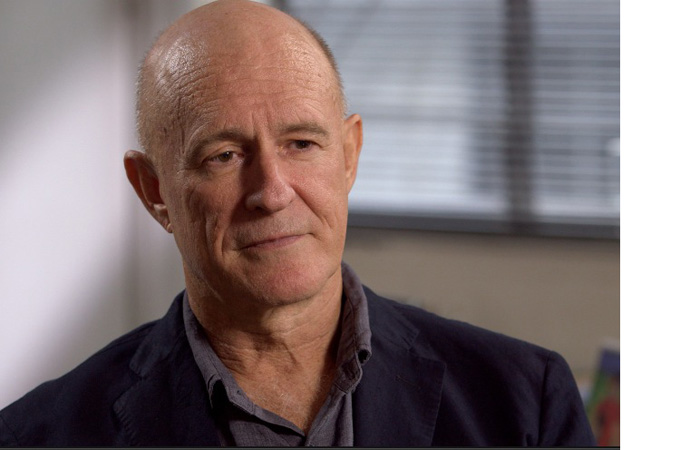
Richard Towle, UNHCR's representative for Malaysia, discusses the plight of 150,000 refugees [Al Jazeera]
Kuala Lumpur, Malaysia - Nearly 150,000 refugees and asylum seekers are registered with the UN High Commissioner for Refugees in Malaysia, which operates in the country even though it is not a signatory to key international conventions on refugees and migrants.
Most fled from Myanmar, but others escaped conflict in countries such as Sri Lanka, Syria, and Somalia. They make up one of the largest groups of so-called urban refugees in the world.
Every day some 1,000 people visit the UN compound, a warren-like collection of temporary buildings around an old colonial bungalow in Kuala Lumpur.
Al Jazeera: What's your assessment of how refugees are treated here in Malaysia?
Richard Towle: It's a fairly mixed report card. Refugees don't have legal rights in Malaysia, as they don't in Thailand or Indonesia. Refugees are treated as illegal migrants, and illegal migrants are at risk of all forms of vulnerability in society. They are liable to be arrested and detained and live in a grey or dark zone of society where there is a high degree of exploitation or abuse.
Al Jazeera: What is your biggest concern here in terms of the refugees: their rights, their ability to be protected?
Towle: I think if you asked a refugee that question, the resounding answer [would be] the lack of a future. They have no hope. They can't go home. They're unable to move anywhere else. Their lives are totally on hold.
Al Jazeera: They also face the risk of detention. What concerns do you have there?
Towle: We have established a strong relationship with the government to negotiate the release of people of concern to us from detention. Sometimes that happens quickly, and sometimes it takes a very long time. There are about 5,000 people of concern to our office currently in detention and, of that, there are a large number of women and children.
Al Jazeera: If Malaysia is detaining children, is it living up to its international obligations as a signatory to the UN Convention on the Rights of the Child?
Towle: Malaysia hasn't signed up to many of the international human rights treaties. It hasn't signed the 1951 Refugee Convention. But there are ways in which all people should be treated - fairly and decently - and we think it's not necessary in the interests of law enforcement to keep women and children and vulnerable people in detention. At a human level, detention [is] very damaging to psychosocial and indeed physical health.
Al Jazeera: People who've been released from detention have told us of beatings, abuse and deprivation. What is the UN doing about this?
Towle: We're aware of a number of stories of harsh and tough physical conditions inside immigration detention and police facilities. There have been a number of deaths in one of the detention centres over the past six to nine months in Malaysia, and that causes us considerable concern. We think that detention facilities should have an oversight body, which is able to access these places to look precisely at those sorts of questions.

How are people being treated? Are they getting access to food? Are they getting access to healthcare? Are they able to get visits from their loved ones and messages in and out of the place?
They may have transgressed some regulations and laws about migration status, but at the end of the day they're ordinary people and they're entitled to be treated in a humane and fair way.
Al Jazeera: Some of the refugees we spoke to said they'd been in detention for six months, some two years. One said as long as five. Why is it taking the UNHCR so long to get people freed?
Towle: Part of the answer is resources. There are probably 5,000 people in detention at the moment. We get access to some of them. We don't get access to all of them. If we brought all of our resources to bear tomorrow to get people out, we'd get a percentage out. It's a very long and labour-intensive exercise to go to some of these detention centres, to conduct an interview, to be satisfied they meet our criteria as refugees.
Al Jazeera: We're told that for some people coming to Malaysia today that the first opportunity for an interview is in 2017. Is this fair?
Towle: I don't think that's a fair characterisation of what's happening. We have a way of fast-tracking cases - unaccompanied children, victims of gender-based violence, for example, so we can prioritise and escalate. If somebody presents from a part of the community where they're not in a life-threatening situation and can cope on their own for a while, we won't be prioritising their interview because we don't have the resources.
Al Jazeera: But the mandate is clear - to protect asylum seekers. Considering the realities, is the UN failing refugees here in Malaysia?
Towle: The UNHCR is doing its best. We've got finite resources. They're not getting bigger. We don't have much support from the state. We have relatively weak civil society engagement. It is quite clear that UNHCR is not able to provide the level of support, and that's why we have to prioritise.
If the international community doesn't give us the tools to do the job effectively, then we have to do as best we can with what we have. That applies to Malaysia, Myanmar - even Syria.
http://www.aljazeera.com
Myanmese refugees made to pay US$1000 to stay in Malaysia
 |
Refugees and asylum seekers from Myanmar are paying up to US$1,000 for UNHCR cards granting them official refugee status in Malaysia, an Al-Jazeera investigation has found.

Officials have been recorded openly describing themselves as "thieves" for brokering the illegal trade of registration documents.
"All the money from this activity goes into the pockets of some top guys in the UN," a UN translator claimed in Al-Jazeera's current affairs programme 101 East. "We have been doing this … for a long time. We are thieves, and we look for thieves above us."
Presenter Steve Chao posed as a priest in order to visit squalid detention centres in Malaysia's capital Kuala Lumpur, where he interviewed dozens of refugees and asylum seekers, some of them Rohingya Muslims from Myanmar, for Malaysia's Unwanted, which aired last week.
Interviewees said they faced police harassment and exploitation, were barred from work or sending their children to school, and lived in abysmal conditions: some refugees were beaten, chained, handcuffed, and had not been fed for days.
Some 150,000 refugees and asylum seekers live in Malaysia - nearly all from Myanmar - but because Malaysia is not party to the UN's 1951 Refugee Convention or the 1967 protocol recognising refugees, they are vulnerable to abuse and foul play by authorities, rights groups say.
All UN High Commissioner For Refugees (UNHCR) services should be provided for free.
Malaysia's UNHCR mission - which sees more than 1,000 refugees and asylum seekers daily - is reportedly overwhelmed by the sheer number of those in need, with mission leader Richard Towle. "You make tough decisions all the time about triaging and prioritising who is the neediest of the people in an already needy group of people," he said.
A UNHCR Malaysia spokeswoman said the agency was aware of the claims and had a "zero-tolerance policy" on corruption. Resettlement operations were reportedly suspended earlier this year to investigate the claims.
The UN General Assembly's human-rights committee has approved a resolution urging Myanmar to allow its persecuted Rohingya Muslim minority "access to full citizenship on an equal basis".
The committee adopted the resolution by consensus, though Myanmar's ambassador objected to the UN's use of the term "Rohingya", saying it "will only pose a barrier on the road to solving this important issue".
Myanmar's 1.3 million Rohingya have been denied citizenship and have almost no rights. Authorities want to officially categorise them as "Bengalis", implying they are illegal migrants from neighbouring Bangladesh. Those who refuse become candidates for detainment and deportation.
The government's "action plan" would soon be released, Myanmese Ambassador Tim Kyaw told the committee.
The European Union-drafted, non-binding resolution is one piece of international pressure on the predominantly Buddhist country to change its approach. The resolution now goes to the UN General Assembly.
Attacks by Buddhist mobs have left hundreds dead and 140,000 trapped in camps, and other Rohingya are fleeing the country.
But last week, President Thein Sein told Voice of America radio that reports the Rohingya were fleeing alleged torture were a "media fabrication".
http://www.scmp.com/news/asia/article
Sunday, August 17, 2014
Help Burmese Migrants and Refugee Communities
What?
Volunteers help migrant schools and communities. And the qualified volunteer may help with health care work.
Why?
Burmese and other ethnic minority groups, Karen etc., migrants and refugees live in very simple and unhealthy conditions, escaping even harsher conditions in their homeland. Burmese migrants not only have very poor education opportunities but also suffer severe health problems.

Where?
The Mae Sot region by the Burma border. You stay in Mae Sot town, host family or guesthouse or in the mountains, at a school or with a host family.
Mae Sot is a town by the Myanmar border with the Friendship Bridge linking it to Myawaddi in Myanmar. Burmese, Karen, Thais mix with Chinese and other ethnic groups.
When?
All year round. Monthly volunteer training offered in Thailand to prepare volunteers
Volunteers – Who?
Dedicated volunteers willing to put in an effort are welcome, ready for simple living and an extraordinary and life changing experience!
What you can do as a volunteer
Teach English, focusing on practice and conversation
Computer training
Combined English and computer training
Child care
Health care
Projects and people we help

Volunteers go to local schools, very poor migrant learning centers and their communities in the Mae Sot Region and mountains.
We also invite young migrants to our Thailand Training Center to train them, together with overseas volunteers, so one day they can go back to help their friends who are not allowed to travel in Thailand.

How to apply
Contact us for more information and to discuss what you can do
visit our website : www.openmindprojects.org
Email: info@openmindproejcts.net
Call/WhatsApp: +66885640734
Sunday, August 3, 2014
Uncertainty, Concern Surround Thai Govt Headcount of Refugees

CHIANG MAI, Thailand — Concerns and uncertainty over the future of tens of thousands of Burmese refugees living on the Thai-Burma border continue to grow as Thai authorities proceed with headcount operations in all nine refugee camps.
Refugees, aid NGOs and the UN said Thai authorities are taking refugees off food distribution lists, tightening restrictions on their movement, and appear to be categorizing residents in order to facilitate their future removal from the camp.
A dearth of information surrounds the actions of the Thai military government, however, and much about the activities remains unclear as neither refugees, aid groups nor the UN have been informed about details of the plan.
The Thai junta, which seized power through a coup in May, announced in the Thai media in recent weeks that it wants to cooperate with Burma to repatriate the refugees by 2015, but it has not mentioned any details of the plan.
Recently, local Thai authorities began carrying out a headcount in the nine camps that have housed some 120,000 refugees for about two decades.
Last week, headcounts were carried out at Mae La, the biggest camp, in Tak Province, and at Ban Mai Nai Soi in Mae Hong Son Province, and smaller camps in Kanchanaburi and Ratchaburi provinces. Preparations are under way to begin the process in Mae Ra Ma Luang and Mae La Oon camps in Mae Hong Son Province soon.
Saw Honest, chairman of the Mae La camp, which is home to some 40,000 refugees, said Thai soldiers had called residents to assemble at the camp grounds and read out the names of households registered with the camp administration and The Border Consortium (TBC).
If refugees were not present, he said, their names were removed from the household registration cards and they would no longer be eligible for food and other aid distribution from TBC, a coalition of aid organizations supporting the camps.
Saw Honest said he believed that the Thai government had the authority to remove people’s UN refugee status if they were not present in the camp during the headcount, but it appeared that this had not happened so far.
“The [headcount] is the first step. But, we don’t know their intention in the next step,” he said, adding that Thai authorities had told him that the headcount was meant to “update the refugee population registration and they will keep this record as the updated one. It is like they want to clarify who has refugee and who has migrant status.”
He added that the headcount exercise was not affecting refugees who are applying for individual third country resettlement with UN help.
Naw Day Day Poe, deputy secretary of Mae La refugee camp, said, “We don’t know what exactly will happen after this [headcount] program, but things are getting serious.”
Thai military officials told news agency Reuters last week they were conducting the headcount in order to get an updated refugee figure and to ascertain how many refugees were leaving the camp in order to work—which has been prohibited by Thai authorities—or whether economic migrants were among the camp residents.
Many of the refugees regularly leave the camps to find ways to support their livelihoods.
Thai authorities have announced that they delisted some 3,000 camp residents as eligible for refugee support at several camps in Kanchanaburi and Ratchaburi provinces.
The UN High Commissioner for Refugees (UNHCR) said Thai provincial authorities were carrying out the headcount without its involvement, adding that the agency had been kept in the dark about its purposes.
“You’ll have to ask the authorities as we are not involved in the headcount and don’t know what they plan to do with the results,” said Vivian Tan, a UNHCR spokesperson.
“From what we can observe, the headcount is being conducted in an inconsistent and ad hoc way across different camps,” Tan said.
“In some camps, refugees are told that if they are not present for the headcounts, they will be taken off food distribution lists. In some other camps they have been told that they do not have to be physically present and that their families or leaders can account for them.”
Duncan McArthur, Partnership Director of TBC, said, “There are precedents of Thai authorities de-registering [UN] refugees for violations of Thai law, but the current purpose of the headcounts is unclear.”
Last week, Thai media reported that a senior junta member would attend a Thai-Burma Regional Border Committee on Aug 1-3 in Mergui, Tennaserim Division, to discuss refugee repatriation with the Burmese government.
The UNHCR has said that conditions in eastern Burma are not yet right for organized repatriation due to presence of unmarked mine fields and the lack of critical infrastructure, services and livelihood opportunities. It said both Burma and Thailand agreed with the UN that the return of refugees should be voluntary and safe.
The refugees, most of them Karen and Karenni minorities, fled ethnic conflict in eastern Burma in the past two decades or so. Thailand has allowed the refugees to stay on its soil and live in camps with support from UN and aid groups, but has long insisted their presence is “temporary” and has put restrictions on camp residents.
A particular concern during the Thai government’s repatriation push is the status of some 58,000 refugees, more than half of all camp residents, who do not have official UNHCR refugee status.
Those who fled Burma after 2005 were prevented from obtaining such a status, as the Thai government withdrew support for the UN registration process, although it did allow refugees to live in camps and register with NGOs for aid. Prior to 2005, the Thai Interior Ministry and the UN had jointly provided official refugee registration cards.
“The vast majority of unregistered refugees appear to have fled from the effects of conflict just like registered refugees before them. It is not clear how unregistered refugees will be treated on this occasion, but they remain more vulnerable to forced repatriation,” said McArthur of TBC.
Htee Wah, a refugee in Mae La Oon camp, said unconfirmed reports circulating among residents and NGO staff suggest that Thai authorities want to dismantle all but one of the refugee camps.
“We heard after the headcount process, refugees who are eligible for third country program will be asked to resettle in the West. Refugees who want to return home will be sent back,” he said. “Those who want to remain in Thailand will be kept in Mae La Ma Luang camp. After that, Thai authorities will shut down the rest of the refugee camps.”
Thai media have previously reported that the Thai government was planning to register refugees in the aforementioned three categories in order to facilitate their repatriation and dismantle or size down the camps.
Thai authorities are also tightening restrictions on movement of the refugees in order to limit opportunities to work outside the camp, said Tu Tu, an official from Karen Refugee Committee in Mae Sariang District, Mae Hong Son Province.
Thai authorities believe that some camp residents are migrants looking for job opportunities, while some refugees work outside of the camp illegally, according to Tu Tu, adding that authorities also allege that Burmese camp residents are involved in illicit cross-border activities such as timber and drug trade, and human trafficking.
Kyor Dah, a refugee in Mae La Onn camp, said, “It seems the Thai regime wants to clear up the refugee population in order to expel unregistered refugees and economic migrants who live in the camp and refugees who live outside the camps.
“If the refugee population decreases, it will be easier for them to shut down the camps,” he said.
“We are very much worried about the inspections by Thai authorities, as they are ordered by the military. Now they [the military] have power, so they can do everything that they want to. They can repatriate us or shut down the camps if they want.”
At Mae La Oon and Mae La Ma Luang camps Thai soldiers have begun patrols near the camps and regular inspections of camp residents’ refugee status and their belongings, Kyor Dah said, adding that in some cases motorbikes and cars without proper documentation were seized from residents.
“They said that refugees should be living like poor refugees. People who own properties are not like refugees,” he added. Many refugees rely on small remittances made by their relatives who resettled in third countries to buy such properties.
Friday, February 7, 2014
Fire destroys homes in Umphien refugee camp

Fire broke out at Umphien refugee camp on Monday 3 February. No residents were injured.
Eleven homes were set ablaze in a fire at Umphein refugee camp on the Thai border on Monday. Residents were forced to dismantle a further 50 homes to prevent the fire spreading, according to the camp’s security coordinator, who said the fire had been sparked by a child playing with matches.
A temporary shelter was erected to house the 60 people affected by the complete destruction of nine homes and damage to a further two. No residents were injured.
Umphien — with an estimated population of 17,000 — is the second largest of the refugee camps on the Thai border after the nearby Mae La, where fire claimed the homes of 120 people and injured three in December 2013. That same month saw accidental fire ravage a Rohingya refugee camp in Pauktaw, Arakan state. The people of Umphien themselves are no strangers to fire, 1,000 homes having been destroyed in a February 2012 blaze.
Wednesday, January 8, 2014
Fires in two refugee camps in Thailand leave 600 homeless; IRC responds
 |
SangOver 100 homes were destroyed in a fire that blazed through the Mae La refugee camp on Dec. 27. Photo: Suchart phaijit/IRC |
The International Rescue Committee is assisting some 600 Burmese refugees who were left homeless after fires broke out in two refugee camps in Thailand last week. At least one person was killed, several injured and over 100 houses were destroyed.
On December 27, a fire broke out in the Mae La camp in Tak Province near the border with Myanmar (also known as Burma). The camp is home to over 46,000 mostly ethnic Karen refugees. The next day a fire erupted in the Ban Mai Nai Soi camp, in Mae Hong Son province, which is home to some 13,000 mostly Karenni refugees.
“We are saddened by this tragedy which has displaced so many people,” said Christine Petrie, the director of IRC programs in Thailand. “This is a sad reminder of the refugees’ vulnerable living conditions. Families lost all their possessions in a matter of minutes.”

The charred ruins of homes in the Ban Mai Nai Soi camp. Refugees' houses are made from bamboo with thatched roofs, and fire can spread quickly. Photo: Supak Charoenpornkul/IRC
The IRC provides healthcare, water and other services to refugees in nine camps located on the Thailand-Myanmar border. After the fires, the IRC distributed mosquito nets, cooking utensils, hygiene articles and other essential items to displaced refugees, most of whom are now staying with friends and relatives.
“We are doing everything we can to swiftly respond to the needs of those who lost their homes," Petrie said. “An IRC health team is visiting each displaced family to provide counseling. Our legal assistance team is also working with the Thai authorities to help identify displaced families and to assist with interpretation and interviewing witnesses in order to reveal the cause of the fires.”
Refugees live in houses made from bamboo with thatched roofs and once a fire erupts, it can spread fast. Last March, a blaze at the Ban Mae Surin camp killed 37 people and left 2,300 people homeless.
“The next step will be to clear the debris and help the residents rebuild their homes,” Petrie said. “This was indeed a tragic end to 2013.”
Sunday, December 29, 2013
Public urged to be aware of bogus Rela personnel
KUALA LUMPUR: Foreign workers are to beware of bogus People's Volunteer Corps (Rela) personnel conducting unauthorised raids and arrests in the city centre.
MCA Public Services and Complaints Bureau chairman Datuk Michael Chong had received complaints from local vendors and businessmen regarding phony Rela personnel dressed in normal attire arresting foreigners near their workplace.
The so called ‘Rela personnel’ and another unidentified individual, were caught on a closed-circuit-television (CCTV) recording on Dec 6, escorting a foreigner into a van in a supposed ‘arrest’.
These fake Rela officers would go around foreign worker hot spots like Complex Kotaraya and question them on their legitimacy in working here by asking for paperwork or permits.
If failed to comply would subject to an ‘arrest’.
Michael spoke to Kuala Lumpur CID chief Datuk Ku Chin Wah and received information that the police have conducted sanctioned raids or Ops Sapu in the areas of Jalan Silang and Complex Kotaraya but had no help from Rela.
“We fully support the capture to decrease illegal workers in the city but it must be done by the right authority which is the police and not by phony Rela officers.
“Rela has no jurisdiction to conduct raids and arrest people, that is done solely by the police,” added Michael.
Foreign workers are urged to be vigilant and ask for identification if confronted by these suspicious individuals or call the Kuala Lumpur Rakan Cop Hotline 03-21159999 for more information.

A CCTV footage showing a man being escorted to a van by bogus Rela personnel. Pix by Asyraf Hamzah.

MCA Public Services and Complaints Bureau chairman Datuk Michael Chong (second from left) in a PC to address the arrest of foreign workers by a group of individuals masquerading as Rela personnel at Wisma MCA, Kuala Lumpur. Pix by Asyraf Hamzah
Subscribe to:
Posts (Atom)