Showing posts with label Myanmar Refugees In Thailand. Show all posts

Monday, November 21, 2016

Myanmar Refugee Doctor Wins Humanitarian Prize for Clinic in Thailand

London. When Cynthia Maung saw the suffering of fellow refugees who had fled Myanmar's crackdown on a pro-democracy uprising in the late 1980s and sought sanctuary in neighboring Thailand, she knew she had to do something about it.

Maung, a doctor, decided to rally other medical professionals in the refugee camps in northwestern Thailand to help her open a clinic in the border town of Mae Sot.

Starting in 1988 with only four beds, the clinic has developed into a fully-fledged health facility providing inpatient services, surgery and trauma care, dental care, vaccinations and HIV prevention.

It treats more than 75,000 patients a year.

"The number of patients that arrive at the clinic each year is on the rise," said Maung, who received an international award on Wednesday (16/11) in recognition of her humanitarian work.

"We also train health workers and provide outreach services for patients who require access to medical attention closer to their communities," she told the Thomson Reuters Foundation.

"But the biggest challenge we face is in dealing with the trauma suffered by the displaced and their concerns about food, health care and job insecurities," Maung said before she was due to receive the AidEx Humanitarian Hero of the Year Award in Brussels.

Maung, from the Karen ethnic group, said she was concerned about a military crackdown in western Myanmar which has forced hundreds of Rohingya Muslims to flee to Bangladesh, trying to escape violence that has brought the number of dead confirmed by the army to more than 130.

Some of the Rohingya were gunned down as they tried to cross the Naaf river that separates Myanmar and Bangladesh, while others arriving by boat were pushed away by Bangladeshi border guards and may be stranded at sea, residents said.

The bloodshed is the most serious since hundreds were killed in communal clashes in the western Myanmar state of Rakhine in 2012. It has exposed the lack of oversight of the military by the seven-month-old administration of Nobel Peace Prize winner Aung San Suu Kyi.

"Fighting along the borders is still going on. That has left thousands of people displaced as a result and there hasn't been much improvement in regions still controlled by the military," Maung said.

"... those especially from ethnic minorities remain very anxious about their future. They want to see if the government in Burma will be all inclusive."

Mae Sot in Thailand is home to thousands of refugees from Myanmar who have fled conflict and violence, as well as tens of thousands of migrant workers, many of whom are in low-skilled, backbreaking jobs.

"As long as there is a need for us to be here and there are refugees and migrant workers that need protection, medical care and support, we will continue to be here and do what we do," Maung said.

Reuters
http://jakartaglobe.id/

Saturday, September 10, 2016

Asean lacks coordination on refugees


Kota Kinabalu: There is lack of coordination among Asean member states as well as lack of political will among leaders to bring about a permanent solution on the problem of refugees.

This is also compounded by marriages and liaisons between locals and refugees.

"There is also the problem of Asean countries which have not ratified the Refugee Convention.

"There are issues of governance in the countries from where refugees flee. UN perspective on Advocacy on Refugees is not working in Asean – it only works with countries providing ODA or Official Development Assistance such as the European Union, United States of America, Japan and Australia.

"There are also problems in the enforcement of refugee rights," said MJ Paluga if the University of Philippines Mindanao with AM Raqragio.

"He said the Asean Human Rights Declaration (AHRD) 2013 and Refugees, Article 2 stipulates: "Every person is entitled to the rights and freedoms set forth herein, without distinction of any kind, such as race, gender, age, language, religion, political or other opinion, national or social origin, economic status, birth, disability or other status."

Malaysia does not even accord to some of its citizens that are not of Malay ethnicity, Muslim creed, as many permanent residents holding red ICs, as well as Article 22: the right to freedom of thought, conscience and religion.

There is no freedom of religion for Muslims other than Islam of the Sunni Shafie School in Malaysia or risk being labelled as deviant or unbelievers," he said.

"Under Article 35 on the right to development, even Malaysians in constituencies won by opposition do not get to enjoy public funding for development in some cases.

"What can we learn from ground realities? Institutional and international humanitarian-concern framings regarding the so-called 'refugee problem' should periodically calibrate itself to emerging phenomena from the ground so that our Asean Community response is more inclusive," said Paluga.

In 2015, Malaysia was estimated to have a labour work force of 14 million out of a population of 31 million citizens.

A reason for not adopting the UN Refugees charter was that it would be too expensive to accord them the treatment they deserve by law.

However, Paluga said there is also an Asean Human Rights Declaration (AHRD) 2013 and Malaysia is a member.

He was speaking at a session at the 10th International Malaysian Studies Conference at UMS.

"According to the United Nations High Commission for Refugees (UNHCR) roundtable on Nov 6, 2015, the Malaysia Trade Union Congress (MTUC) cited the Ministry of Human Resource estimate of undocumented migrants at around two million to the Ministry of Home Affairs estimate of undocumented migrants at around four million.

"The Ministry of Human Resource as of June 2015, estimated that there were 2,245,513 documented foreign workers.

"Unpublished figures from the Enforcement Division of the Immigration Department on the 2011 amnesty exercise registered 1,303,126 undocumented migrants.

"Hence, there are no definite authoritative figures to show the facts. In Sabah, the Royal Commission of Inquiry (RCI) report on illegal migrants is still pending for action.

Paluga noted that Myanmar does not want to have any discussion on refugees. The country once told former Prime Minister Tun Dr Mahathir to take all the Muslims if he was so concerned about them.

Foreign Minister Datuk Seri Anifah Aman, as the Asean Chair in 2015, stated that the long term solution would be for Myanmar to resolve the Rohingya crisis domestically," said Dagmar Oberlies in a presentation 'Human Rights Based Approaches – A Critical Review'.

http://www.dailyexpress.com.my

Sunday, August 21, 2016

138 Myanmar detainees in Malaysia set to return home


Kuala Lumpur, Aug 7 (IANS) The first batch of 138 Myanmar nationals detained in Malaysia is set to return home on Monday, official sources said on Sunday.

The detainees, who have been issued Certificate of Identity, under the arrangement with the Kanbawza's Brighter Future Myanmar Foundation will return to Myanmar on a Myanmar International flight from Kuala Lumpur, Myanmar's Foreign Ministry was quoted as saying by Xinhua news agency.

At present, 2,294 Myanmarese nationals are detained in 11 camps in Malayasia, the sources added.

In March 2015, a Myanmarese Navy warship carried back 102 illegal Myanmarese immigrants from Malaysia who were kept at detention camps.

More than 400,000 Myanmar immigrants are reportedly working in Malaysia, of whom about 300,000 are legal entrants, while about 40,000 are illegal. The rest are involved in various processes for refugee status.

Myanmar authorities are cooperating with Malaysian officials to protect their citizens working in the Southeast Asian country as they are often targeted victims of violence and murder there.

In September 2013, Myanmar started recalling its citizens detained in Malaysia for working illegally there.

Friday, April 1, 2016

Refugees Fear Forced Return To Myanmar After Historic Election

Sally Kantar Refugees Deeply

SALLY KANTAR
People leave an unofficial crossing in Karen State in Myanmar to enter Tak Province in Thailand, home to a sizeable population from Myanmar and the largest refugee camps.


Amid rumors of repatriation and forced returns, refugee advocates argue that militarization, confiscation of land and decreases in international aid would threaten the security of ethnic-minority refugee groups should they return to their home communities in Myanmar.

When she was just 14 years old, Naw Wahkushee, a member of the ethnic Karen nation, left her village in the east of Myanmar for the safety of a refugee camp in Thailand.

It was 1998, more than 50 years after the start of the first of Myanmar’s many revolutions for ethnic self-determination.


     style="display:block"
     data-ad-client="ca-pub-3556099351069683"
     data-ad-slot="2755055637"
     data-ad-format="auto">


Wahkushee now works as a human rights advocate for the Karen Women Organisation, a women’s political empowerment group on the Thai-Myanmar border. She is one of hundreds of thousands of people from Myanmar who have been forced to leave the country over the past six decades.

“There are people who have had to run for their life since they were born,” she said. “They want to sleep through the night, to do their farming without the military mortaring their villages.”

The exact number of ethnic groups in Myanmar remains contested. Officially there are more than 100 distinct groups, which comprise more than one-third of Myanmar’s population. These communities have been disproportionately uprooted in one of the world’s longest-running civil wars, which began shortly after independence from Britain in 1948.

After 50 years of military rule, Myanmar transitioned to a quasi-civilian leadership in 2010. Two years later, the government initiated a controversial peace process with the country’s nonstate armed groups, followed by a nationwide ceasefire agreement that was signed in October 2015 by the government and only eight of the country’s more than 20 ethnic armed organizations. Yet fighting has not halted. In areas of northern and eastern Myanmar, government offensives against nonsignatory groups have intensified.

Up to 140,000 refugees, mostly Karen and Karenni ethnic groups, live in Thailand’s nine camps. Millions more — including Burman, Chin, Kachin, Mon, Rakhine, Rohingya, Shan and Ta’ang — are displaced both internally and in neighboring countries that have not signed the 1951 or 1967 conventions on refugee rights.
SOE ZEYA TUN/REUTERS

The exact number of ethnic groups in Myanmar remains contested. Officially there are more than 100 distinct groups, which comprise more than one-third of Myanmar’s population.


Over the past several years, however, there have been growing rumors of potential repatriation and forced returns, particularly in the wake of the historic 2015 general elections that resulted in a landslide win for the National League for Democracy (NLD), the longtime opposition party led by Aung San Suu Kyi.

While many Burmese celebrated the election result, some within refugee communities have expressed fears that the transfer of power to an NLD government will serve as justification for neighboring Southeast Asian host countries forcibly to return refugees to their home communities in Myanmar.


     style="display:block"
     data-ad-client="ca-pub-3556099351069683"
     data-ad-slot="4231788833"
     data-ad-format="auto">


“There is a lot that has to be fixed before people can go back,” said Myra Dahgaypaw, a Karen refugee and former IDP who is now a policy advisor for the Washington-based U.S. Campaign for Burma. “What if the Thai government and UNHCR say they are ready to send everyone back? We have to keep advocating so they are not sent against their will.”

The UNHCR describes current conditions as “not conducive to voluntary repatriation,” but also spoke with camp residents about potential returns last year. In 2014 Thai authorities said they had reached a repatriation agreement with Myanmar. While no official moves have been made, the pressure on refugees has been palpable since Myanmar’s political reforms started.

Aid workers also point out that assistance to refugees in Thailand, as well as cross-border aid to an estimated 600,000 internally displaced people, is drying up. This has made it even more challenging for local humanitarian groups to support the vulnerable populations.

Governments and donors “say they are not forcing them back and that there is the option of voluntary return, but they are not feeding them,” said one longtime humanitarian worker on the Thai-Myanmar border, who asked to not be named.

For example, according to reports released by Thailand-based refugee support network The Border Consortium, until 2010 adults in the Thai camps were each eligible for 33lb (15kg) of rice per month as part of their rations. A sliding scale exists to protect those most vulnerable from cuts. Funds from abroad have decreased and adults in some camps are now eligible for only 9kg of rice per month. To feed an adult two meals per day requires approximately 15kg of rice per month. Reducing the staple rations means that refugees are forced to skip meals.

Refugee advocates say that a powerful and combustible mix of factors – including domestic politics, growing foreign investment, related land confiscation and increased military presence – complicate the questions of safe passage and repatriation.


SOE ZEYA TUN/REUTERS

Some people within refugee communities have expressed fears that the transfer of power to an NLD government will serve as justification for neighboring Southeast Asian host countries forcibly to return refugees to their home communities in Myanmar.


“The struggle in Burma is not only for democracy. It is for ethnic rights,” said Wahkushee, who feels that an NLD-led government will not necessarily satisfy the ethnic minority groups’ aspirations. “We have to support both struggles, otherwise the same situation will happen again.”

Even with an NLD majority in parliament, the country still operates under the highly restrictive 2008 constitution, which guarantees 25 percent of legislative seats to the military, promises legal immunity to government officers and offers no financial autonomy to the resource-rich ethnic states.

“We might have a chance to amend it little by little,” said Seng Zin, of the Kachin Women’s Association Thailand, which documents continued military abuses against the 100,000 Kachin displaced in northern Myanmar.


     style="display:block"
     data-ad-client="ca-pub-3556099351069683"
     data-ad-slot="8801589231"
     data-ad-format="auto">


But constitutional changes require more than a 75-percent majority vote in parliament. “If we have a chance to write a new constitution in parliament which gives guarantees to the people, it would be better,” she said.

Dahgaypaw’s skepticism of the NLD-led government is also due to constitutional provisions that give the military control of three critical ministries: Border Affairs, Defense and Home Affairs. She wonders if Suu Kyi and her party will be able to address the needs of the displaced.

“Can [the NLD] go to the IDP locations? To the places without state health and education? Are they going to be able to present ethnic voices in the parliament? I don’t think so,” she said.

Another continued threat to ethnic communities’ rights is the dramatic increase in investments in Myanmar’s wealth of mineral, gas, oil and hydropower resources. Foreign direct investment to Myanmar doubled in 2015, surpassing $8 billion.

Refugees wishing to return to their homeland are concerned by a lack of government and international transparency on these investments. They say they fear potential conflict.

“State governments cannot decide what, where or how big [development] projects take place,” said Shan environmental activist Sai Khur Hseng. “Conflict over resources is even more likely when they are located in areas controlled by different ethnic and religious groups.”

Wahkushee added: “You can expect more refugees, not just because of war, but because of investment.”

Notably, many of the estimated 1–3 million migrant workers from Myanmar living in Thailand are “unrecognized” ethnic Shan refugees who were displaced by land grabs or environmental degradation connected to development projects.

Land confiscation and development have coincided with military expansion, which Dahgaypaw says is “still happening” despite reforms and the government’s promises of peace. Much of Myanmar continues to experience an increased military presence largely due to the race to exploit land and resources.

Wahkushee sees “no evidence” that the Myanmar army will leave the ethnic areas. She points out that newly constructed roads now make it easier to transport troops and heavy artillery to army encampments.

Hinting at the rise of a long-term occupation, she said “if things reverse, this time, you will have nowhere to hide.”

This article originally appeared on Refugees Deeply. For weekly updates and analysis about refugee issues, you can sign up to the Refugees Deeply email list.

www.huffingtonpost.com


     style="display:block"
     data-ad-client="ca-pub-3556099351069683"
     data-ad-slot="2375109235"
     data-ad-format="auto">

Thursday, January 14, 2016

Recent visit confirms deportation fears


Myanmar (MNN) — Hopelessness is rising among refugees in Thailand as threats of deportation loom. According to Vision Beyond Borders (VBB), plans are underway to send thousands of ethnic minorities back to Myanmar (also known as Burma) in 2017.


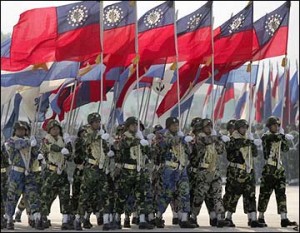
Burma Army

“They’re doing this based on the fact that [Myanmar’s] government is showing all these democratic reforms and changes. They [Thailand’s government] hope that this means the refugees will then be safe,” VBB’s Dyann Romeijn explains.

“All the information coming from the ethnic areas, where there’s still fighting, [shows] that they would not be safe,” she adds.

Myanmar’s leaders may have inched toward democracy, Romeijn explains, but the armed forces are a different matter.

“The Burma Army has gained so much power that it’s difficult to control them. The military…[is] not really answering to the government,” says Romeijn.

“[There are] not only ongoing atrocities against the people, but in some cases, it’s actually increasing. In the last two months of 2015, there were an additional 10,000 people displaced by the Burma Army attacking ethnic groups.”
The target of deportation threats

According to the U.S. State Department, an estimated 150,000 refugees from Burma live in nine refugee camps along the Thai-Burma border. Many of the refugee children have stories like Mila’s.


Representative photo
(Photo courtesy of VBB)

Mila* is a young girl living in one of the camps along the Thai-Burma border. She belongs to an ethnic group hated by Burmese militants who hunted for Mila and her family when they lived inside Burma’s borders.

“They had fled, and only her and one cousin ended up making it to the camps,” Romeijn shares. “Everybody else was killed while they were trying to flee.”

Mila’s cousin drowned last month, leaving Mila to face the world without a family. Would you please keep her in your prayers? Pray that Mila will find the immediate and eternal comfort of salvation through Jesus Christ, if she doesn’t already know Him.

Deportation threats have created an atmosphere of fear and uncertainty within refugee camps along the Thailand-Myanmar border. There’s been a noted “suicide spike” in the camps of late. While deportation threats aren’t the cause of all suicides, they’re certainly a contributing factor.

A VBB short-term missions team visited one of these refugee camps in recent days. Along with confirming deportation fears, Romeijn says the team learned of 36 suicides committed since August.

The trickle-down effect of fear and despair is making a lasting impression on young hearts and minds.

“Many of [the children] wrote us notes,” Romeijn shares, referring to the residents of achildren’s home supported by VBB. Through the children’s home, kids are learning how to read and write in English.

“[They wrote:] ‘Please don’t forget me,’ and ‘I will never forget you.’ I love you’, and ‘I can tell you love people,’ and things like that. It’s heartbreaking, and you can just hear their plea to not be forgotten.”


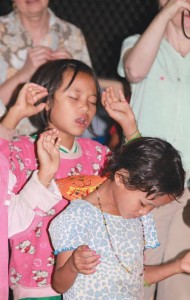
Refugee kids worshipping the Lord.
(Photo courtesy VBB)

The camp Romeijn and her team visited currently holds more than 18,000 refugees from Myanmar. Of those, over 125 are children; 90 kids have no living adult relative.

Vision Beyond Borders’ partners are trying to get these vulnerable kids to safety before the Thai government drives refugees out in 2017, Romeijn says. A piece of land has been purchased in Myanmar, and plans are underway to construct a new children’s home for the refugee kids coming from Thailand.


     style="display:inline-block;width:300px;height:600px"
     data-ad-client="ca-pub-3556099351069683"
     data-ad-slot="3851842438">


The cost to bring children from Thailand to Myanmar is expected to run somewhere around $5,000. Click here to help.

“Ahead of [the exodus] they want to get these kids out so that if the army is going to attack people…these orphans would not be attacked.”

* Name changed for security purposes.

www.mnnonline.org

Thailand’s Migrant Worker Woes Exposed in Koh Tao Murder Case


Migrant workers in Thailand are discriminated against, scapegoated, vulnerable to exploitation, and human rights abuses. One illustration of this is the tragic murder of tourists Hannah Witheridge and David Miller British which took place on September 15, 2014 on Koh Tao Island. On December 24, two Myanmar migrant workers Zaw Lin and Wei Phyo, were found guilty by the Samui Provincial Court and were sentenced to death. Both men could be put to death. Though Thailand has not executed anyone since 2009, there are more than 450 prisoners on death row.

The murder investigation was criticized due to the alleged torture of both Myanmar migrant workers and mishandling of evidence by Thai police. Koh Tao is a famous tourist destination and the island is especially popular among backpackers and scuba divers. The police and authorities had been under immense pressure to solve the case quickly because it threatened the country’s tourism industry.

Migrant Workers Rights Network (MWRN) has been part of the team helping the two Myanmar migrants in the Koh Tao murder case. Their work has led to the awareness of systematic and serious violations of labor rights and protection of migrant workers on Koh Tao and its neighboring islands of Koh Samui and Koh Phangan. On Koh Tao, MWRN found cases of migrant workers who were physically abused by law enforcement officials. Migrants were taken to the police station for extortion and abused by hotel supervisors during working hours.

Andy Hall, international Advisor to MWRN and apart of the Koh Tao defense team, told The Diplomat on January 5 in an interview that the “conditions in the [Thai] tourism industry are very abus[ive] towards migrants.” “There is systematic abuse…it’s a complete mess,” he went on to add.

Meanwhile, Dr. Pornthip Rojanasunand, a Thai forensic scientist and head of the Thai Forensics Institute, testified that there was mishandling of the DNA evidence. She told judges the DNA samples found on the murder weapon, a hoe, did not match the defendants’.

A source that wished to remain anonymous also told The Diplomat that Thai DNA experts have questioned weather the police lab responsible for testing had its ISO17025 certification (general requirements for the competence of testing) at the time of analysis of the forensic samples. The source went on tell The Diplomat that the British government and the investigation team was not properly “briefed on the nature of the DNA and forensics paperwork and irregularities behind them.”

“The Thai authorities cannot just wish away the uninvestigated allegations of torture by police and serious concerns about the DNA evidence used to convict these two men and sentence them to death,” Phil Robertson, the deputy director of Human Rights Watch’s Asia division, told The Diplomat in Bangkok.

The verdict of the Koh Tao case was met with criticism and protest. The street protest in Myanmar kept the embassy closed on January 5, with a statement released saying that it “remain closed due to ongoing demonstrations.”

Hacker group Anonymous released a video on January 3 condemning the Koh Tao verdict. The 40-minute video accuses the Thai police of “scapegoating” 22-year-old Zaw Lin and Win Zaw Htun. In the video, Anonymous called on tourists to boycott Thailand. The Thai police website was also hacked and shutdown on January 5, an act allegedly perpetrated by a Myanmar hacktivist group coordinating with Anonymous.

In their video, Anonymous said that the group “has learned that the Thai police have accused innocent people before, and would rather blame foreigners or migrants for such crimes so as to protect their tourism industry”.According to the Bangkok Post, hacked websites showed an image of a white mask and said, “Blink Hacker Group, Failed Law, We want Justice and Greetz Myanmar Black Hats”.

Myanmar’s ambassador to Thailand Win Maung appointed the Lawyers Council of Thailand (LCT) to launch an appeal in a higher court. The government of Myanmar has also offered to fund the council, even though LCT does not take money for pro bono cases. Min Aung Hlaing, the head of Myanmar military, urged Thailand to “review the evidence.”

“This is now coming closer to home as those in the international community and media who have been raising serious doubts about this verdict have now been joined by key leaders in Burma, including the NCPO’s erstwhile ally, Burma army commander Gen. Min Aung Hlaing,” Robertson told The Diplomat.

More broadly, this case, and others like it, shows the lack of justice and agency migrants have in Thailand. There are over four million migrants living in Thailand today, with the majority from Myanmar, Cambodia, and the Laos. Migrants make up around 10 per cent of Thailand’s workforce including construction, agriculture, manufacturing, fishing and tourism. Yet some 400,000 migrants are at risk of deportation and trafficking in Thailand.

While the environment in Thailand has long been dangerous for migrants, it has become even more so under the current government National Council for Peace and Order (NCPO). Thai premier Prayut Chan-o-cha was furious when asked about protests in Myanmar against the verdict, according to The Nation.

The NCPO has had harsh polices toward migrant workers in Thailand. In 2014, after the NCPO took over in a coup d’état, the Migrant Working Group (MWG) released a joint statement calling for the government to “stop the crackdowns, arrest and suppression of migrant workers.” Adisorn Kerdmongkol, a representative for MWG, told The Diplomat in an interview that the government should let migrants form labor unions (Thai law does not let migrants form unions themselves to collectively organize or voice grievances).

The Thai government is also blocking content that is critical of the authorities handling of the murder case. For example, the website and articles by Andrew Drummond, a British independent journalist covering Southeast Asia, on the Koh Tao murder case and others has been censored by the Ministry of Information and Communication Technology.

The Koh Tao murder case clearly shows clearly that Thailand has a long way to go when it comes to upholding migrant worker labor rights and protection. “It is deeply disturbing that this case came to trial without an independent investigation of the two Burmese men’s claims that they were tortured by police into ‘confessing,’” Champa Patel, Amnesty International’s director for Southeast Asia and the Pacific, told The Diplomat.

“It’s also important to remember that this case is just the tip of the iceberg – torture in detention in Thailand is rife….It is high time for Thai authorities to make a genuine effort to stamp out this abhorrent practice” Patel added.

John Quinley III is a Bangkok-based researcher focused on human rights, refugees, migrants, and development in Southeast Asia, particularly Myanmar and Thailand.

http://thediplomat.com

Monday, December 28, 2015

The two Myanmar Death Sentence Case : Koh Tao Murder Case fundraiser Reports


MWRN Justice: Koh Tao Murder Case fundraiser today supported an important visit by three Thai defense lawyers and one Thai/Myanmar translator to meet and check the wellbeing or Zaw Lin and Wai Phyo, the Koh Tao murder case convicted men, in Nakhon Si Thammarat Central Prison. The convicted men moved to the high security prison suddenly on Saturday 26 December early in the morning at 4am in a high security and unannounced confidential operation.

Defense lawyers and a translator met both guys for one hour in a specialist visiting room for lawyers today at 12pm and spoke to them through a telephone separated by a panel (n.b. the only other visitors allowed are embassy staff and relatives, with relatives having to speak via video conference only - we will work on trying to get additional visitors recognized by the prison soon). Visits by relatives to the guys in Zone 6/2 of the prison can take place only on Tuesdays and Thursday of each week.

Zaw Lin and Wai Phyo reported today being held together under tight security and in a very challenging situation. They are shackled and detained in a room, both restraint measures applied 24 hours a day. We understand the shackles will remain in place for four months and the 24/7 in room detention for one month. The guys even have to eat food in the detention room and cannot join other prisoners. Zaw Lin and Wai Phyo are detained alongside 61 other high security prisoners in the evening time but they said the room is very spacious, much more spacious than in Koh Samui Prison.

Although both of the guys were scared and stressed on departure from Koh Samui Prison to Nakhon Si Thammarat Prison because of rumors of potential poor treatment, now on arrival the boys have become much more relaxed and said both the staff in the prison and all the prisoners are very nice to them and provided them a lot of encouragement and support. Both prisoners seemed very happy and in good health with their spirits high.

Zaw Lin and Wai Phyo were absolutely delighted to see the 3 lawyers and translator Sar today and thanked them so much for taking the time to visit. They also thanked everybody who is still supporting them including lawyers, MWRN and our fund, embassy staff, former Samui prison visited and people looking after their mothers (n.b. both mothers arrived to visit the guys in the afternoon today too).

Zaw Lin and Wai Phyo have access to a television so they have been given so much encouragement and are excited by seeing the protests underway in support of overturning their conviction on the TV all the day. After a stressful arrival they are now more relaxed and feeling more comfortable also.

Zaw Lin and Wai Phyo were able to bring all their property with them from Koh Samui Prison but are a little sad that their books, articles and letters had to be left behind in the quick rush to move (n.b. MWRN are following up this issue with Koh Samui Prison authorities). Zaw Lin and Wai Phyo said they really missed their friends at Koh Samui Prison and were sad they didn't have a chance to say proper goodbyes.

Zaw Lin and Wai Phyo asked our team to give the following message to the general public: 'Thank you to everyone who has supported us. We are innocent and we were not involved in this horrific crime, we didn't kill. We want freedom. We are both confident the truth of this case will come out during the appeal process and we are confident we will eventually be released on appeal to finally get our freedom. With everyone's encouragement we will stay strong until the end.'

Zaw Lin and Wai Phyo said they will meditate every day and pray to the Buddha for
freedom but also for the peace and happiness of all those in the world, including the victims in the Koh Tao murder case.

Today our team deposited 2000 baht of our fund money into each of the guys prison accounts (see photo of reciept) which is the maximum amount that can be deposited in one day.

Wednesday, September 16, 2015

Volunteers help refugees from Burma create community


She thought she made a mistake. Takwae Htoo was in her 20s, a single mother in an unfamiliar place after her home country had been ravaged by civil unrest. “We had nothing,” she said. “It was just me and my baby alone. I did not speak English. I did not know anybody.” Takwae Htoo is a refugee from Burma, renamed Myanmar by the current government, a country that has been ruled by a military junta since the 1960s. She was originally placed in Texas a decade ago. Now, she calls Chapel Hill home. She is a housekeeper at UNC, attends English classes through the Orange County Literacy Council and works part time at a farm run by refugees and volunteers. She married another Burmese refugee who settled here too, and her children go to school in Carrboro.

Sey Mor practices identifying the President and Vice President at a citizenship class at the Refugee Support Center of Carrboro. Sey Mor is a refugee from Burma living in Carrboro. By Stephanie Lamm The U.S. Committee for Refugees and Immigrants has placed more than 4,000 refugees from Burma in North Carolina. Fewer than 300 were originally placed in Chapel Hill and Carrboro; however, more than 1,000 refugees from Burma have since found homes here, according to the Refugee Support Center in Carrboro. Refugees from Burma belong to many different ethnic groups, including Burmese, Karen and Chin. They speak a variety of languages, most commonly a dialect of Karen.

Many refugees placed around the country move to Orange County due to the area’s wealth of refugee assistance organizations — most run by volunteers. Volunteer organizations assist refugees in gaining citizenship, learning English and finding work and housing. When the honeymoon ends Eh Paw came to Carrboro from a refugee camp in Thailand three years ago with her 3-month-old son who was having seizures every day. While searching for a job and taking care of her two older children, she traveled to and from UNC Hospitals daily to take care of him. “My baby is very sick,” Eh Paw said. “They sent me to America so he could receive medical care that is better than in the camp.” Eh Paw now considers herself lucky — she understands English, her son’s condition is under control and her husband joined her in Carrboro six months ago. Most importantly, she can move about freely. Raised in a refugee camp, Eh Paw had to ask the camp supervisor for permission to leave. Eh Paw works as a translator at the Refugee Support Center in Carrboro, which helps refugees from Burma with everything from applying for public housing to filing for child support. Flicka Bateman is the director of the center, which relies on volunteers to help refugees with legal services, language skills and a variety of other needed programs.

She said her organization provides long-term support. “It’s hard to explain exactly what we do because we do so many different things,” Bateman said. “If you think of it as a hierarchy of needs, we usually step in after the placement organization meets the families’ most basic needs. We work with public housing, we place them with jobs, help them set up a bank account, find schools for their kids and connect them with other resources in the community.” Refugee placement organizations like the Lutheran Immigration and Refugee Services and Church World Service provide support for the first three to six months, but after that, refugee families must turn to a variety of organizations to meet their needs. “We usually meet people once the honeymoon period ends and they become anxious and start questioning whether refugee placement here was a good idea,” Bateman said. Takwae Htoo was originally placed in Texas, but Orange County’s community of volunteer-based organizations has provided her with a more stable life. “They paid rent for six months. After that, nothing,” Takwae Htoo said. “Things are not as hard here. 

We have people to help us.” Learning the language Takwae Htoo said of the challenges refugees face, learning English is the greatest. Takwae Htoo’s oldest child, now a junior in high school, was 5 years old when they came to the U.S. She said she is proud of how quickly he picked up English, but she is disappointed she cannot help him with his homework. At East Chapel Hill High School, students founded the Refugee Outreach Club, which tutors refugee children. Elsa Steiner, a sophomore at UNC and one of the founding members of the Refugee Outreach Club, said teachers often do not have the time or resources to make sure refugee children succeed in school. “When teachers assign homework, especially in the lower grades, sometimes they assume that the parents can help, but that’s not the case for many of these children,” Steiner said. Casey Smith, another founding member, said the Karen and Burmese communities face a lack of resources within the schools to learn English, and she and other co-founders took on the challenge of providing support where the school system could not. “It’s not like Spanish or even Arabic where there are translators and resources for people who want to work with the Karen community,” said Smith, now a junior at Wesleyan University. “Unless they learned in the camps or unless they were very young when they came here, it could take many years before they speak enough English to get by on their own.” Smith’s mother, Lori Carswell, teaches Takwae Htoo’s English class through the Orange County Literacy Council. “I didn’t expect to become so involved, but when it’s something like this, it’s so rewarding to watch them grow,” Carswell said after teaching a recent session of her English class at the Chapel Hill Public Library. Cultivating Community On her days off, Takwae Htoo and her husband work a small plot of land at Transplanting Traditions, where 28 refugee families are given plots of land to grow and sell crops for supplementary income. 

Customers for Transplanting Traditions prepay for food grown by the farmers before the harvest season. Crops are also sold at the Chapel Hill and Carrboro Farmers’ Market, teaching farmers how to market their goods. Kelly Owensby, director of Transplanting Traditions, said the organization expects to bring in $60,000 by the end of 2015 — money that will go directly to the refugee farmers. All of the farmers at Transplanting Traditions worked as farmers back in Burma. Steiner, who volunteered with the organization, said it’s empowering for refugees to find work in an industry they are familiar with. “Transplanting Traditions makes them feel like they can provide for their family without having to learn a new skill,” said Steiner. “This is something they knew how to do back in their country. They can take on leadership roles and collaborate with other families. There are numerous mental health benefits in addition to providing them with a livelihood.” Owensby agreed that the benefits of the program include far more than supplementary income. “We’ve seen a decrease in stress and better mental and physical health in the families we work with,” Owensby said. Transplanting Traditions is entirely run by volunteers. The organization also offers educational and enrichment programs for teenagers and children — for example, its cultural preservation initiative, which records the stories and cultural traditions of refugees. “Our goal is to improve refugees’ lives through food security and supplemental income,” Owensby said. “But we also try to take a holistic approach to serving the community. Transplanting Traditions plans to expand the farm by 50 percent — to 7.5 acres — by next summer. And Transplanting Traditions recently partnered with People Offering Relief for Chapel Hill Carrboro Homes, which provides 111 refugee families with $100 in fresh produce each month. The farm donates $1,000 worth of food grown by its farmers, including specialty produce typically grown in Southeast Asia, to PORCH, which is a volunteer-based hunger relief organization. Debbie Horwitz, the founder and director of PORCH, said the Food for Families program, which began in 2010, was designed with these refugee families in mind. Most families are referred to the program by a school social worker. “We found that local pantries often weren’t meeting the needs of the refugee community,” Horwitz said. “They aren’t used to the food grown here. It’s important that they have access to fresh produce native to where they are from. With our partnership with Transplanting Traditions, we can provide that for them.” About half of all Burmese and Karen refugee families in Chapel Hill and Carrboro are served by PORCH, including more than 300 children. Food donated through PORCH is delivered by volunteers. 

They also deliver clothing, books, computers, strollers, mattresses and other donated items as they are available. “It forms a bond between our volunteers and the refugee community,” Horwitz said. “When people see how gracious our families are they often want to find new ways to help. You can’t just see the need these people are in and walk away without wanting to donate more of your time.” Steiner, who has continued her work with the refugee community since high school, said it’s important that volunteer organizations pick up where government services leave off. “People who work with refugees talk about how there’s a bell curve of resettlement,” Steiner said. “When people first come over they are overjoyed, and they thought the worst was over. Then they begin to realize that they will probably live in poverty the rest of their life, but at the same time they don’t want to seem ungrateful. Eventually things get steady and they find the support they need, but things are really hard for a while.” For Takwae Htoo, the hard times are over. She’s found success in her new home through the help of volunteer-based organizations. “We love it here,” she said. “We’re free here.”

Thursday, August 27, 2015

UNHCR launches biometrics system for Myanmar refugees


UNHCR biometrics identify 110,000 Myanmar refugees in Thailand The UN High Commissioner for Refugees (UNHCR) has revealed details of a biometric system it has deployed in Thailand to register Myanmar refugees. The system has created biometric records for nearly 110,000 refugees since January, says the UN body, enabling it to also issue smart ID cards. UNHCR's new biometrics identity management system (BIMS), developed in cooperation with Accenture, is designed for registering and verifying the identities of displaced persons around the world. 

The system captures and stores fingerprints, iris data and facial images of individuals, providing those who are often undocumented with their only personal identity record. BIMS leverages the Unique Identity Service Platform (UISP), a software offering developed by Accenture, which works in conjunction with UNHCR’s existing case management system. "Biometrics will help refugees in the future as it ensures that once they've been through the system and enrolled with their fingerprints and irises, we'll always know who they are," said Sam Jefferies, UNHCR's Associate Biometrics Deployment Officer in Geneva. "If they lose their documentation, they can always come back to us." Bringing staff and technology to some of Thailand's most remote areas proved to be a logistical challenge. It involved transporting satellite equipment to camps with no phone or internet access, and moving delicate gear and over 75 UNHCR staff across rivers and over hundreds of kilometres of winding mountain roads along the Thai-Myanmar border in the span of 13 weeks. 

At the end of the verification exercise in Thailand, the refugees each received a smart card with their family's bio-data and photographs – securely encrypted and retrievable with UNHCR card readers even in remote places with no internet access. "With these cards we don't need to travel around with heavy equipment like a server," said UNHCR Representative Girard. "In the event of voluntary return, our teams in Myanmar will have a card reader in their backpack when they visit the field to document what has happened to returnees, and if they have received reintegration assistance. We will also pass on that information to other humanitarian actors and the authorities on the ground so that they can plan and deliver services in places where they are needed." John Smith, a refugee who works for the Karen Refugee Committee in Tham Hin camp in Ratchaburi province, said, "This verification is very important for me and for others who are refugees. 

The card can be decisive for our life in the future. If we have a chance to go back [to Myanmar], it will be good evidence for us to show to UNHCR or the Thai government. I tell the others to keep their smart card in a safe place, with their most precious things." - See more at: http://www.planetbiometrics.com/article-details/i/3223/desc/unhcr-launches-biometrics-system-for-myanmar-refugees/#sthash.cw1N2ckA.dpuf

Monday, June 1, 2015

The Netherlands NGO applauds Malaysia's assistance to Rohingya refugees


PADANG BESAR: The Malaysian Government's efforts in assisting the plight of Rohingya refugees to date, has received the thumbs-up from a Netherlands non-governmental organisation (NGO).

Salaamah Wal Adaalah president, Nourdeen Wilderman said he and his team were impressed with the treatment accorded by the Malaysian Government to the refugees at the Belantik Detention Depot Centre in Kedah.

"It looks very good and very nice, we are not able to enter but we saw from the outside, we were really impressed, they are looking good," he told Bernama and TV3 when met on a visit with the NGO at a mass grave believed to be that of Rohingya refugees discovered at Ban Ta Lok here recently.

The discovery of the mass grave located about 40 minutes' drive from the Malaysia-Thai border in Padang Besar was also believed to have led to the discovery of another mass grave at Wang Kelian, Malaysia, about two weeks later.

Nourdeen, who has been dealing with Rohingya issues for more than 10 years, applauded the moves and attention given by the Malaysian Government in handling the issue.

He however, said serious action needed to be taken by all countries in handling the Rohingya issue, and the need to focus on the begining of the issues, that is, the ethnic cleansing by Myanmar.

"It's like a virus. First, you have the ethnic (Rohingya) cleansing, then the influx of refugees (Rohingya) in Bangladesh, then you have people (the refugees) who are dying in boats. Then, because they have became weak, you have people who see (the opportunity to) market (them), and then the human traffickers.

"At the end of the day, we see here mass graves. What you see here behind us, is what happened when you hoped that the problem will eventually solve itself," he added.

Nourdeen and three other members of the NGO plan to be in Malaysia for a week, and have been here for the last four days, visiting several significant places related to the Rohingya issue.

They did a quick stop in Padang Besar, Thailand for about three hours yesterday, before returning to Malaysia.

Salaamah Wal Adaalah is an NGO that is supported through charity and endowment and only focuses on the Rohingya issue.

Apart from delivering aid to Rohingya refugees worldwide, the NGO had been touring to create awareness on the issue.

To date, 35 bodies, believed to be victims of human trafficking activities, had been exhumed since the discovery of graves in Bukit Wang Burma, Wang Kelian, Perlis last Monday.

The bodies were exhumed from 139 graves discovered by the authorities at 28 transit camps set up by human trafficking syndicates along the Perlis-Thailand border.

On May 10, a total of 1,158 Bangladeshi illegal immigrants and Rohingya refugees were reported to have landed in Langkawi.

About 10,000 more are said to be still at sea and attempting to land in nearby countries. –Bernama

Rohingya hope to seek better life in Malaysia


By Eileen Ng
Associated Press

KUALA LUMPUR, Malaysia (AP) — Malaysia has been a sort of promised land for Rohingya Muslims fleeing persecution in Myanmar. The tens of thousands who endured perilous journeys to get here find more work opportunities than in Indonesia and a more Muslim-friendly environment than in Thailand.

But in the 25 years since Hamid Hussein Abul Khair arrived, that promise has been worn away by the statelessness and poverty that have never left him.

Rohingya face a tenuous existence here, unable to legally work because Malaysia, like Thailand and Indonesia, doesn’t recognize asylum seekers and refugees and hasn’t signed the U.N. Refugee Convention. They mostly scrape by on dirty or dangerous jobs shunned by Malaysians, live in squalid conditions and have no access to free health care and state-run schools.

For many Rohingya, even living on the margins of Malaysian society is a step forward.

But those who have been here for years yearn for something better — at least for their children.

“God willing, we can make a living here. We are thankful to Malaysia but what future do we have? My children can’t get citizenship, they have no formal education and they can’t get proper jobs,” Hamid, 54, said in his austere apartment on the outskirts of Kuala Lumpur.

Denied citizenship by Myanmar and chased off their land in repeated outbreaks of communal violence, the 1.3 million Rohingya there have been identified by the U.N. as one of the world’s most persecuted minorities. Some 140,000 have been displaced from their homes, and many live in camps. Myanmar regards them as illegal migrants from Bangladesh, even though many have lived in the country for generations.

The desperation of the Rohingya has been highlighted in recent weeks by boatloads of people from Myanmar and Bangladesh stranded in Malacca Strait waters after their traffickers abandoned them near the end of risky 1,700-kilometer (1,000-mile) voyages amid a clampdown by local authorities. Some 3,500 came ashore in Indonesia, Malaysia and Thailand, but many of those now at shelters say their goal was to get to Malaysia.

Nearly 46,000 Rohingya in Malaysia have been registered as refugees by the U.N. refugee agency UNHCR, and there are an estimated 40,000 more whose status has yet to be assessed. Obtaining a U.N. refugee card generally protects people from arrest.

The economic prosperity, Islamic culture and the large population of Rohingya in Malaysia are all pull factors.

“Malaysia is a modern Muslim urban society, with a booming construction business and economy. As a place of income, it’s many times better than where they come from. In terms of security, although it’s not easy with risks of arrests and exploitation, it’s still significantly better than what they have left behind,” said Richard Towle, the UNHCR representative in Malaysia.

Refugees from Myanmar make up the biggest chunk of the more than 150,000 asylum seekers and refugees in Malaysia, one of the highest numbers in Asia, according to the UNHCR. The country has no refugee camps, so they live as “urban refugees” in shantytown settlements, cramped low-cost flats or isolated houses where they work on construction sites, restaurants, factories and plantations.

Nurjan Nur Mohamad, an 18-year-old Rohingya woman who arrived in Malaysia two months ago after a dangerous boat journey, said that while she is afraid of getting arrested, she is also extremely relieved to have left behind the threats and violence of Myanmar.

“I live in fear of the police here, but there is peace and I get enough food. It’s so much better than in the village,” she said. She hopes she and her new husband can win refugee status from the UNHCR to get some protection.

When he first arrived in Malaysia at age 29, Hamid also was constantly afraid of getting caught by police. He took up various odd jobs and then set up a small food stall selling roti canai, a popular Indian flatbread, and potato samosa. Later, his wife joined him in Malaysia and they had four children. Life became more tolerable when they were recognized as refugees by the UNHCR, but the future was — and is — still murky.

He worries most about his children. The younger two attend a community school for Rohingya refugees funded by a local Muslim group. They learn to speak the Malay language, Islamic studies and other subjects. His 11-year-old son wants to be a doctor and youngest daughter a professor, he said.

Hamid and his family have put in for resettlement in the U.S. or a third country through the UNHCR, but haven’t heard anything back. He holds out hope that his children might be granted citizenship in Malaysia.

“I have spent half of my life here. I love Malaysia but after 25 years, what do I get? It’s OK for me, I am growing old but what about my children? I don’t want them to suffer like me,” he said. “Our hope now is to go to America where they can be citizens and get higher education.”

Hamid’s views are echoed by many Rohingya families in Malaysia, who initially didn’t view resettlement as an option but now see it as the only way for their children to escape an impoverished future.

Globally, only 80,000 refugees are resettled each year, with the U.S. taking about 70 percent of them. Refugees from Myanmar make up the largest group, followed by Iraq, Congo and Somalia. But many of those from Myanmar are ethnic Chins who are Christians and English-speaking.

Apart from the U.S., most other countries are not eager to take in Rohingya Muslims amid concerns that they could not integrate successfully because of religious values, community structures and language issues, said Towle of the UNHCR.

“Rohingya have not featured very significantly in numbers in resettlement programs apart from the last few years but the numbers are increasing,” he said.

Towle urged Malaysia to consider giving Rohingya protected status and work permits, which could help plug gaps in the workforce.

“If you allow people who are going to be here anyway the right to work, you will flush them out of the gray economy and they will be more dignified contributors to Malaysia,” he said.

But Malaysia fears that allowing refugees to stay permanently will just encourage more to come.

Hamid said his family cried when they watched scenes of the scrawny Rohingya boat people on television. He said he has told his relatives in Myanmar not to come to Malaysia, mainly because of the risks of the sea journey and mistreatment by traffickers.

“Many people have died at sea due to being beaten, starvation or illness. It’s suicidal to come here,” he said. “It’s better to die in your homeland than at sea.” (end)

Friday, November 2, 2012

Help from afar brings a degree of inspiration

Burmese refugee and Melburnian Thein Naing teaches refugee students on the Thai-Burma border.
A TOWN on the Thai-Burma border populated with thousands of refugees from nearby camps might seem an unlikely place for a university graduation ceremony.
But for Thein Naing it was among the most remarkable moments of his career in education.
Mr Naing, himself a Burmese refugee, watched as four students received their degrees in Mae Sot earlier this year. ''It was very emotional,'' he says.
The students were the first Burmese refugees to complete degrees through a project by Open Universities Australia, which is offering online courses from Australian universities to residents of refugee camps.
Mr Naing is now helping dozens more refugees to earn Australian university degrees in fields such as community development, healthcare and media studies.
He now jets between his home in Melbourne and the Thai-Burma border, where he works as an academic support co-ordinator for Open Universities' Burma project.
''When the [university] graduates received their degree certificates, many people were encouraged that there is hope and even in this refugee environment they do have supporters,'' he says. ''It's hard work. I'm quite proud they've completed these Australian tertiary degrees.''
Mr Naing was a student activist in Rangoon protesting for democracy during mass rallies in 1988. On September 18 that year the Burmese military reportedly killed thousands of people.
Mr Naing fled to the jungle with fellow students where they continued their political activism while living in bamboo huts and suffering bouts of malaria.
''We tried to survive on whatever food we could find. We had very limited support from the international community then.''
Soon after arriving on the border, Mr Naing began teaching at a school for fellow refugees, putting to use the training he had received from a British non-government organisation.
In 1995 he came to Australia on an AusAID scholarship. Mr Naing settled in Melbourne and studied biology before going on to complete a master's degree in education.
He lives in Surrey Hills with his wife and son, who is studying graphic design at Swinburne University. But Mr Naing still spends much of the year on the Thailand border.
He says the online degree program offers a rare opportunity for Burmese refugees to gain a university education.
Some of the students work for community-based organisations, which provide them with access to the internet so they can study, Mr Naing says.
''I'm quite optimistic with international support we can push forward for … human rights,'' he said.

Burmese men, survivors of land mine and torture, killed in wrong-way I-10 crash

The other wives slept through the night, but she was always awake by 3 a.m., ready to greet her husband as he arrived from his trek from a chicken processing plant in Live Oak.
On this morning, he hadn’t come home at 3. At 4 a.m., there was still no word.
Say Ku Paw, panicked and in tears, awakened other women: What’s happened to our husbands? Where are they?
Two of the husbands would never make it home.
At 2:28 a.m. on Oct. 12, a car driving the wrong way on Interstate 10 in Baker County struck a minivan heading east.
Inside the minivan were 10 recent refugees to the United States, nine from Burma, one from Bhutan. All were on the way to their homes in Jacksonville, on the return leg of a 190-mile round-trip to jobs at the chicken processing plant.
Say Ku Paw’s husband, Kaw Lay, 37, had survived stepping on a land mine near a refugee camp in Thailand. But he was killed in the I-10 crash.
Ta Nu, 47, was a rice farmer who survived four days of torture by Burmese soldiers who beat and bound him. He too was killed in the crash.
Nu’s daughter, 20-year-old Nge Thay, was driving the minivan. She remembers seeing bright lights headed toward her, remembers the impact.
She tears up telling how she saw her father in the front seat next to her, once the crumpled van came to rest in the median. She thought — hoped — that he was unconscious.
Elaine Carson of World Relief, a refugee resettlement agency, said the city’s Burmese population crash is reeling from the crash.
This, she said, is what they’re saying: “We came here, left behind such a dangerous situation, our lives were at risk. We came here, worked hard, did everything we could, and this is what happened. There is no such thing as safety, total, absolute safety, no matter where we live.”
This week, Paw, 36, sat cross-legged on the floor of her apartment on St. Augustine Road, giving most short answers through interpreter Merry Wah.
She and her husband met in a refugee camp in Thailand and came to America two years ago. “To get a better life,” she said.
She has four children. The youngest is 5, the oldest are 8-year-old twins. She’s taking classes in English, but has stayed home with the children. Her husband supported them at the chicken processing plant: It was a good job, she said.
And her children? “They’re good,” was all she said.
When asked if she knows what she will do next, Paw simply shook her head: No.
At the Old Kings Road apartment where Ta Nu lived, his 8-year-old son, Gee Lay, returned home from school on Monday with two Burmese friends, one 7, one 9. They plopped down on the floor and began doing their homework, high-spirited but quiet. When they spoke, it was in perfect English.
Gee’s mother said her son had taught her some of the language, but she had a hard time remembering what she has learned.
In 2001, Htah Kon and her husband, Nu, fled their home in a riverfront village in Burma after soldiers killed and tortured some of the men. They ended up in a sprawling refugee camp in Thailand.
“Burma was not a safe place,” Kon, 45, said through interpreter Irene Emi. This Sunday will mark her family’s second anniversary in America.
Her husband liked to chew betel nuts and drink with his friends, but he didn’t do that much after the children — now 8 to 20 — came along.
At the chicken processing plant, he worked deboning chickens. His daughter, Thay, worked there too, in the packing department.
Thay was driving the minivan, as usual, the night of the crash. She had a seat-belt on and suffered just minor injuries. Her father, too, was wearing his seat belt, though that didn’t save him.
Seven other men in the van were injured. One, Hla Sein, is still hospitalized.
The driver of the car, a 47-year-old Ocala woman, was injured but survived. Capt. Keith Gaston of the Florida Highway Patrol said no charges have been filed as the investigation continues.
Nu liked America, his family said. He liked that he didn’t have all the rules here that he had in the refugee camp. His children could go to school. He could make money and buy things he liked or needed.
Emi, the interpreter, listen as Nu’s widow told how she wants to stay in America. She would like to go back to visit Burma, Emi said, but has plans before that: “She wants her children to grow up here.”

matt.soergel@jacksonville.com, (904) 359-4082
 
 Jacksonville.com

UN says plan is needed to move refugees

100,000 still live in camps along border

Bangkokpost

The United Nations High Commissioner for Refugees (UNHCR) has urged stakeholders to start preparing for the repatriation of more than 100,000 refugees living along the Thai-Myanmar border.
James Lynch, UNHCR's regional representative, yesterday highlighted the need to start discussing legal, socio-political and logistical issues regarding repatriation, even though the return of refugees to Myanmar is yet to materialise.
"This is the first time for the refugees to think of the possibility of returning home," Mr Lynch said. "Conditions for the repatriation may not be in place," he said, raising issues such as landmines, shelters and a lack of a peace agreement among the region's many ethnic groups.
"But we still should think about the preparations," he said, adding that refugees will return to their original countries.
At present, there are 84,000 registered and 67,000 unregistered refugees in nine refugee camps along the Thai-Myanmar border. Some 78,000 people have been resettled to a third country, mostly to the United States, since the resettlement programme began in 2005.
Mr Lynch said he hoped the UNHCR would be able to outline repatriation pre-requisites with the Thai and Myanmar governments by next year.
He said the Mae Fah Luang Foundation, which signed an agreement to gather basic information about the displaced people, will begin their documentation later this year at Tham Hin camp in Ratchaburi, one of the nine temporary shelters.
He expects the Tham Hin profiling to be completed by April or May. The information gathered will include a census of refugees' origins, skills and education.
Myanmar officials should also come to Thailand to speak to refugees about their return, he said.
Mr Lynch said peace and reconciliation in Myanmar is the key to successful repatriation. He has been in contact with the Myanmar government, opposition leader Aung San Suu Kyi and ethnic leaders.
Myanmar has set aside areas inside Kaya (opposite Mae Hong Son), Kayin (opposite Tak), and Mon (opposite Kanchanaburi) states for internally-displaced persons as well as refugees, he said.
Myanmar authorities have also established garment factories to provide employment opportunities, he added.
"They also issue a citizen scrutiny card for the returnees," he said. "It's a voluntary repatriation."
The political process would need to ensure the safety and dignity of the returnees, he said.
Despite the UNHCR's optimistic assessment, the Myanmar exile community in Thailand remains sceptical about the chances of a speedy repatriation.
"The international community is too optimistic about the situation inside Myanmar," said Bangkok-based scholar Zin Linn.
The Karen National Union (KNU) and Kachin Independence Organisation are learning from each other and they will not easily strike a deal with the Myanmar government until they receive a political solution they want, Zin said.
"Nothing is certain for the refugees if they return home _ accommodation, education, healthcare or employment," he said.
"The KNU-Myanmar peace talk only started because of a big push from the Thai investment project in Dawei. It cannot be realised without concessions being made by the KNU and the government. But the prospect of refugee repatriation remains bleak."

Tuesday, September 18, 2012

Refugees may go home in 2013

Refugees cross a wooden bridge at the Mae La refugee camp, located near the Thai-Myanmar border, some 550 kilometres northwest of Bangkok. Photo: AFPRefugees cross a wooden bridge at the Mae La refugee camp, located near the Thai-Myanmar border, some 550 kilometres northwest of Bangkok. Photo: AFP


BANGKOK – About 120,000 Myanmar refugees in Thailand may return home within a year, the kingdom’s National Security Council said last week, following recent talks between the two nations.
Tens of thousands of people, many from the Shan and Karen ethnic minorities who have fled war, are housed in camps along Thailand’s border, but the end of outright military rule in Myanmar has raised hopes they will return.
Myanmar “is clearing landmines along the borders, preparing to build shelters and other infrastructure... to be ready within one year”, the NSC said in a statement on September 13, citing its secretary general Wichean Potephosree.
Mr Wichean, who visited Nay Pyi Taw last week, discussed the issue with U Aung Min, a minister in the President’s Office, who told him the former military-ruled country will also provide training and jobs for the returning refugees.
Myanmar also wants Thais “to invest in building industrial estates” on its soil to employ the tens of thousands of potential returnees, the statement added.
The NSC’s comments came as Human Rights Watch released a report condemning Thailand for failing to meet international standards on the treatment of refugees.
The kingdom has not ratified the 1951 Refugee Convention and has no law to protect refugees, leaving them vulnerable to exploitation, police harassment and arbitrary detention, the HRW report said.
“Thailand places Burmese (Myanmar) refugees with the unfair choice of stagnating for years in remote refugee camps or living and working outside camps without protection from arrest or deportation,” said Bill Frelick, HRW’s refugee program director.
“Refugees from other countries are barely tolerated and Thai authorities sometimes arrest and detain them indefinitely,” he added.
After a new quasi-civilian government replaced the long-ruling junta in Myanmar last year, Thailand announced that it wanted to shut the border camps, but HRW praised Bangkok for not rushing to close the facilities.