Showing posts with label Aung San Suu Kyi. Show all posts

Tuesday, April 11, 2017

Over half of 118 deaths in Malaysian immigration camps from Burma


A general view of Bukit Jalil immigration detention centre in Kuala Lumpur, Malaysia, on 28 March 2017. (Photo: Reuters)


More than 100 foreigners died in the past two years in Malaysia’s immigration detention centers from various diseases and unknown causes, according to documents from the government-funded National Human Rights Commission reviewed by Reuters.

The toll, which has not been previously disclosed, is based on Malaysian immigration department data provided to the commission, which is known by its Malay acronym Suhakam. There were 83 deaths in 2015, and at least 35 in 2016 up to 20 December.

It is unclear whether the death rate is higher than in neighboring countries. Government officials in Indonesia and Thailand told Reuters they do not disclose such numbers. The rate is higher than in major industrialized nations such as the United States, which in the last financial year recorded 10 deaths in its immigration detention system, which has many more detainees than Malaysia’s.

More than half of the 118 dead are from Burma, the source for tens of thousands of refugees coming to Malaysia, including Rohingya Muslims escaping persecution by Burma’s authorities and its majority Buddhist population. The number of Rohingya fatalities in the camps is unknown.

Malaysian Prime Minister Najib Razak has been a harsh critic of the Burmese government and its de facto leader Aung San Suu Kyi after a crackdown in October by Burma’s security forces led many Rohingya to flee across its borders amid multiple allegations of mass killings and gang rapes by troops. He has called for foreign intervention to stop the “genocide” in Burma.

Najib’s office did not return calls seeking comment

“The numbers are too many and are shocking and it calls for the overhaul of the system,” said Jerald Joseph, one of eight commissioners at Suhakam, which was established by the Malaysian parliament through an act in 1999 and is due to publicly announce the numbers next week in its annual report on human rights issues in Malaysia.

He described conditions at the centers, some of which he has visited, as “appalling” and said the deaths should be investigated as a criminal matter. The illnesses that led to some of the deaths may have been caused or exacerbated by poor sanitation and food, physical abuse and a lack of medical attention, said Joseph, who was speaking on behalf of the commission.

Brutal conditions

Malaysia’s home ministry, which oversees the immigration department, said it was trying to improve the conditions in the centers but that its budget was constrained.

“I agree there is some overcrowding and the conditions are not ideal. We are always trying to improve the procedures, health conditions and management of these sites. The problem is we hit a budget brick wall,” said deputy home minister Nur Jazlan Mohamed in an interview.

He said there wasn’t enough funding to upgrade facilities, provide adequate healthcare and hire and train enforcement officers. Jazlan blamed overcrowding on the “never ending the flow of people seeking better future in Malaysia.”

The living conditions inside the Malaysian camps are grim — overcrowded, unhygienic and brutal— according to interviews with 13 former detainees, and 12 others who have regularly visited the centers, including people from government agencies and rights groups.

Those who had been detained say they did not get adequate food, water or healthcare, that many inmates developed skin and lung infections, and the sick are usually not isolated, leading to the spread of contagious diseases.

All of the detainees interviewed also allege they were beaten by guards at the camps or witnessed others being beaten. One former Rohingya inmate of the Lenggeng camp in the southwestern state of Negeri Sembilan told Reuters in an interview that he witnessed detainees being beaten and then saw them die when the resulting injuries were not treated. “When we asked for medicines, we were beaten,” he said.

Reuters could not independently verify his account or the similar accusations made by other detainees. They all declined to be identified for fear of reprisals.

Asked about the claims of beatings, Jazlan said he needs more evidence to establish if it was prevalent. “I hope critics won’t rely on detainees’ testimony and come up with proper evidence,” he said.

Detainees from Burma fared worse

Of the 118 people recorded as dying in 2015-16, 63 were from Burma, and people from that country have fared worse than those from elsewhere, the documents from Suhakam and data from the Malaysian government’s Enforcement Agency Integrity Commission (EAIC) show.

During 2016, for example, there were 14,180 Burmese nationals detained and at least 14 of them died, while there were only five fatalities among 34,586 Indonesian inmates. The documents and data don’t explain this discrepancy and Reuters was unable to independently confirm the reason for it.

People from Burma, including Rohingya Muslims, tend to stay in the detention centers longer as they try to persuade the United Nations High Commissioner for Refugees (UNHCR) to issue them with identification cards that allow them to stay in Malaysia temporarily, rights groups and former detainees said. People from other countries are often undocumented migrant workers who are deported home relatively quickly.

Malaysia, which has not signed the UN Refugee Convention, treats refugees as illegal migrants with few rights.

Asked about the deaths of Burmese nationals in Malaysian detention centers, Zaw Htay, who is the spokesman for Burma’s state counselor, Suu Kyi, said that “we haven’t heard about these cases.” He also said that “a lot of Bengali people in Malaysia say they come from Myanmar to get UNHCR cards.”

“Bengali” is a derogatory term used by many in Burma to refer to the Rohingya that suggests they come from Bangladesh, even though many Rohingya have lived in the country for generations.

     style="display:block"
     data-ad-client="ca-pub-3556099351069683"
     data-ad-slot="1278322433"
     data-ad-format="auto">

Lung infections

The documents reviewed by Reuters give causes of death for 68 detainees. Pneumonia and lung infections led to 19 deaths, at least 10 were the result of various heart-related conditions, and five died from the bacterial disease leptospirosis, which is often spread through the urine of infected animals, including rodents.

Sepsis, or septic shock, a condition usually triggered by other illnesses, claimed 21 victims, including some who were suffering from pneumonia or leptospirosis, various forms of tuberculosis led to three deaths, and one Filipino woman committed suicide.

The 13 detention centers in Malaysia held a total 86,795 detainees for various periods during 2016, according to the EAIC.

Malaysia isn’t the only country in Southeast Asia that has faced criticism for the conditions in its prisons.

In its human rights report for 2016, the US State Department said Indonesian and Thai facilities, including those used to detain immigrants, are overcrowded. It said government figures showed that 548 prisoners died “in custody” in Indonesia between January and June of 2016, and 762 died in “official custody” in Thailand in the year to September 2016. However, there was no breakdown between those who died in ordinary jails and those who died in other forms of incarceration, such as immigration detention facilities.

No cause was given for 50 deaths in Malaysia. They are classified in the documents as “no report” or “pending autopsy” or “undetermined” or “awaiting the report from hospital” or “unascertained.” One center in Kuala Lumpur had 13 deaths in 2016, but no reasons were stated for any of them.

When asked about the lack of reasons given for so many deaths, Jazlan said he will look into it.

The documents do not specify the reasons for the lower death rate in 2016, though a Reuters analysis of them and related data shows that there was a 27 percent drop in the number of people detained at the end of 2016 from a year earlier.

Sunday, September 18, 2016

Malaysia's DPM Zahid Arrives In New York For UNGA


NEW YORK: Deputy Prime Minister Datuk Seri Dr Ahmad Zahid Hamidi arrived here to represent Malaysia at the 71st session of the United Nations General Assembly (UNGA).

The commercial aircraft carrying Ahmad Zahid, who is also Home Minister, and his entourage touched down at the John F. Kennedy International Airport at about 9.25 pm Saturday (9.25 am Sunday in Malaysia).

This is his fourth visit to the United States since appointed deputy prime minister in July last year, and his maiden appearance as head of the Malaysian delegation at UNGA.

On hand to welcome him were Foreign Minister Datuk Seri Anifah Aman, as well as Malaysian officials based in New York and Washington.

     style="display:block"
     data-ad-client="ca-pub-3556099351069683"
     data-ad-slot="2755055637"
     data-ad-format="auto">

Ahmad Zahid's working visit to New York City is until Sept 25.

Besides Ahmad Zahid, the Malaysian entourage attending the UN gathering and related events, includes Anifah, as well as senior officials from the Deputy Prime Minister's Office, Foreign Ministry and Home Ministry.

Last month, Ahmad Zahid chaired the United Nations Security Council Open Debate on Non-Proliferation of Weapons of Mass Destruction (WMD) at the UN headquarters.

Among the highlights of the deputy prime minister's visit this time is delivering the national statement for Malaysia at the General Debate on Sept 24.

Prior to that, Ahmad Zahid is scheduled to participate in the High-Level Meeting to address large movements of refugees and migrants at the General Assembly on Sept 19.

He will also join other leaders at the High-Level Meeting on the situation in Syria at the UN Security Council on Sept 21.

     style="display:block"
     data-ad-client="ca-pub-3556099351069683"
     data-ad-slot="2375109235"
     data-ad-format="auto">

In October last year, Prime Minister Datuk Seri Najib Tun Razak, at the 70th session of UNGA, announced that Malaysia would open its doors to 3,000 Syrian migrants on humanitarian grounds over a period of three years to help ease the refugee crisis.

It was reported that Malaysia was aiming to give temporary shelter to 500 Syrian migrants by the end of this year.

Ahmad Zahid is also scheduled to hold bilateral meetings with his counterparts on the sidelines of the 71st UNGA to discuss matters of mutual interest.


- Bernama
     style="display:block"
     data-ad-client="ca-pub-3556099351069683"
     data-ad-slot="5708522030"
     data-ad-format="auto">

Sunday, August 21, 2016

In Malaysia, 128,800 people effectively slaves, survey finds


KUALA LUMPUR, Aug 11 — Over 128,000 workers in Malaysia are employed in slave-like conditions and treated like livestock, according to the Global Slavery Index 2016.

The survey ranked Malaysia 50th out of 167 countries measured, with nearly a half per cent of the over 30 million population working in exploitative conditions described as “modern slavery”.

“[Modern] slavery refers to situations of exploitation that a person cannot refuse or leave because of threats, violence, coercion, abuse of power or deception, with treatment akin to a farm animal.

“For example, their passport might be taken away if they are in a foreign country, they may experience or be threatened with violence or their family might be threatened,” said the Walk Free Foundation that commissioned the report.

In the region, Malaysia was behind Singapore (130th, 9,200 people) in the number of workers considered to be modern day slaves, but ahead of Vietnam (47th, 139,300), the Philippines (19th, 401,000), Thailand (16th, 425,000) and Indonesia (10th, 736,100) The country with the most enslaved workers was India, with over 18 million, followed by China (3.3 million) and Pakistan (2.1 million). Luxembourg has the fewest at 100.

Over 45 million people across the 167 countries were in modern slavery.

Malaysia was also rated “CCC” in terms of government action to modern-day slavery, which is categorised as “limited response” as well as “limited support” for victims. The 10-tier ranking ranges from “AAA”, the best, to D, the worst.

According to the report, the majority of modern-day slaves in Malaysia — as with other richer Asian countries — were women and young girls who migrated work as domestic helpers.

“Inhumane treatment of domestic workers including starvation and sexual abuse was reported in 2015, as well as indicators of forced labour including extortionate recruitment fees, confinement to the place of employment, excessive unpaid overtime, withholding of wages and confiscation of identity documents,” the report said.

The spotlight fell on human smuggling in Malaysia and the surrounding region during a refugee crisis last year, when an estimated 6,000 to 20,000 migrants fleeing ethnic persecution in Myanmar and poverty in Bangladesh were left adrift in the Andaman Sea and the Straits of Malacca.

In what was dubbed a massive humanitarian disaster by the United Nations, the boat people were believed abandoned by their traffickers with little food or water.

Malaysia was previously ranked in the lowest Tier 3 of the US annual Trafficking in Persons (TIP) report, but was upgraded to its current Tier 2 “watch list” despite the discovery of 139 graves and 28 human trafficking camps at Wang Kelian, Perlis, along the Thai border.

Lawmakers in both countries expressed suspicion at the time that Malaysia’s upgrade was to facilitate its participation in the Trans-Pacific Partnership; the Tier 3 status would have prevented the US from entering a trade deal with Malaysia.

http://www.themalaymailonline.com

Myanmar begins repatriation of 2,000 migrants from Malaysia


KUALA LUMPUR, Aug 10 ― Beginning this week, the Myanmar government will be beginning the process of taking home some 2,000 of its people who have been detained for months in Malaysia, Myanmar Times reported today.

The whole process could take up to a month with at least 10 chartered flights, each carrying 130 migrants on board, according to the report.

“We have plans go through this repatriation process more than 10 times, chartering flights with more than 130 on board each time,” Myanmar’s labour and immigration ministry permanent secretary U Myo Aung was quoted saying.

Migrant workers from Myanmar were detained by Malaysian authorities, reportedly for various offences, including expiration of their visas.

However, the newspaper also reported criticisms against the Myanmar embassy for allegedly taking too long to approve visa extensions for the migrant workers, which led to their detention by authorities here. As such, they were unable to return even after their citizenship had been confirmed.

The Myanmar official was also reported saying its government planned to help the workers secure jobs after repatriation, though it was unclear if it would be in Myanmar or elsewhere.

The repatriation process is being funded by private donors such as MAI Airlines and KBZ Brighter Future Myanmar Foundation.

The process was supposed to start in July, but was cancelled due to lack of funding.

Last year, tens of thousands of Myanmar and Bangladesh nationals were left stranded at sea by human traffickers in Southeast Asian waters. More than 1,000 of them landed in Malaysia’s northwestern island of Langkawi.

The subsequent investigation into the human trafficking syndicate led to discovery of 139 sites mass graves at the north of Malaysia, near the Thailand border, where Myanmar refugees, mostly from the minority Muslim Rohingya community, were believed to have been held

http://www.themalaymailonline.com

Friday, April 1, 2016

Refugees Fear Forced Return To Myanmar After Historic Election

Sally Kantar Refugees Deeply

SALLY KANTAR
People leave an unofficial crossing in Karen State in Myanmar to enter Tak Province in Thailand, home to a sizeable population from Myanmar and the largest refugee camps.


Amid rumors of repatriation and forced returns, refugee advocates argue that militarization, confiscation of land and decreases in international aid would threaten the security of ethnic-minority refugee groups should they return to their home communities in Myanmar.

When she was just 14 years old, Naw Wahkushee, a member of the ethnic Karen nation, left her village in the east of Myanmar for the safety of a refugee camp in Thailand.

It was 1998, more than 50 years after the start of the first of Myanmar’s many revolutions for ethnic self-determination.


     style="display:block"
     data-ad-client="ca-pub-3556099351069683"
     data-ad-slot="2755055637"
     data-ad-format="auto">


Wahkushee now works as a human rights advocate for the Karen Women Organisation, a women’s political empowerment group on the Thai-Myanmar border. She is one of hundreds of thousands of people from Myanmar who have been forced to leave the country over the past six decades.

“There are people who have had to run for their life since they were born,” she said. “They want to sleep through the night, to do their farming without the military mortaring their villages.”

The exact number of ethnic groups in Myanmar remains contested. Officially there are more than 100 distinct groups, which comprise more than one-third of Myanmar’s population. These communities have been disproportionately uprooted in one of the world’s longest-running civil wars, which began shortly after independence from Britain in 1948.

After 50 years of military rule, Myanmar transitioned to a quasi-civilian leadership in 2010. Two years later, the government initiated a controversial peace process with the country’s nonstate armed groups, followed by a nationwide ceasefire agreement that was signed in October 2015 by the government and only eight of the country’s more than 20 ethnic armed organizations. Yet fighting has not halted. In areas of northern and eastern Myanmar, government offensives against nonsignatory groups have intensified.

Up to 140,000 refugees, mostly Karen and Karenni ethnic groups, live in Thailand’s nine camps. Millions more — including Burman, Chin, Kachin, Mon, Rakhine, Rohingya, Shan and Ta’ang — are displaced both internally and in neighboring countries that have not signed the 1951 or 1967 conventions on refugee rights.
SOE ZEYA TUN/REUTERS

The exact number of ethnic groups in Myanmar remains contested. Officially there are more than 100 distinct groups, which comprise more than one-third of Myanmar’s population.


Over the past several years, however, there have been growing rumors of potential repatriation and forced returns, particularly in the wake of the historic 2015 general elections that resulted in a landslide win for the National League for Democracy (NLD), the longtime opposition party led by Aung San Suu Kyi.

While many Burmese celebrated the election result, some within refugee communities have expressed fears that the transfer of power to an NLD government will serve as justification for neighboring Southeast Asian host countries forcibly to return refugees to their home communities in Myanmar.


     style="display:block"
     data-ad-client="ca-pub-3556099351069683"
     data-ad-slot="4231788833"
     data-ad-format="auto">


“There is a lot that has to be fixed before people can go back,” said Myra Dahgaypaw, a Karen refugee and former IDP who is now a policy advisor for the Washington-based U.S. Campaign for Burma. “What if the Thai government and UNHCR say they are ready to send everyone back? We have to keep advocating so they are not sent against their will.”

The UNHCR describes current conditions as “not conducive to voluntary repatriation,” but also spoke with camp residents about potential returns last year. In 2014 Thai authorities said they had reached a repatriation agreement with Myanmar. While no official moves have been made, the pressure on refugees has been palpable since Myanmar’s political reforms started.

Aid workers also point out that assistance to refugees in Thailand, as well as cross-border aid to an estimated 600,000 internally displaced people, is drying up. This has made it even more challenging for local humanitarian groups to support the vulnerable populations.

Governments and donors “say they are not forcing them back and that there is the option of voluntary return, but they are not feeding them,” said one longtime humanitarian worker on the Thai-Myanmar border, who asked to not be named.

For example, according to reports released by Thailand-based refugee support network The Border Consortium, until 2010 adults in the Thai camps were each eligible for 33lb (15kg) of rice per month as part of their rations. A sliding scale exists to protect those most vulnerable from cuts. Funds from abroad have decreased and adults in some camps are now eligible for only 9kg of rice per month. To feed an adult two meals per day requires approximately 15kg of rice per month. Reducing the staple rations means that refugees are forced to skip meals.

Refugee advocates say that a powerful and combustible mix of factors – including domestic politics, growing foreign investment, related land confiscation and increased military presence – complicate the questions of safe passage and repatriation.


SOE ZEYA TUN/REUTERS

Some people within refugee communities have expressed fears that the transfer of power to an NLD government will serve as justification for neighboring Southeast Asian host countries forcibly to return refugees to their home communities in Myanmar.


“The struggle in Burma is not only for democracy. It is for ethnic rights,” said Wahkushee, who feels that an NLD-led government will not necessarily satisfy the ethnic minority groups’ aspirations. “We have to support both struggles, otherwise the same situation will happen again.”

Even with an NLD majority in parliament, the country still operates under the highly restrictive 2008 constitution, which guarantees 25 percent of legislative seats to the military, promises legal immunity to government officers and offers no financial autonomy to the resource-rich ethnic states.

“We might have a chance to amend it little by little,” said Seng Zin, of the Kachin Women’s Association Thailand, which documents continued military abuses against the 100,000 Kachin displaced in northern Myanmar.


     style="display:block"
     data-ad-client="ca-pub-3556099351069683"
     data-ad-slot="8801589231"
     data-ad-format="auto">


But constitutional changes require more than a 75-percent majority vote in parliament. “If we have a chance to write a new constitution in parliament which gives guarantees to the people, it would be better,” she said.

Dahgaypaw’s skepticism of the NLD-led government is also due to constitutional provisions that give the military control of three critical ministries: Border Affairs, Defense and Home Affairs. She wonders if Suu Kyi and her party will be able to address the needs of the displaced.

“Can [the NLD] go to the IDP locations? To the places without state health and education? Are they going to be able to present ethnic voices in the parliament? I don’t think so,” she said.

Another continued threat to ethnic communities’ rights is the dramatic increase in investments in Myanmar’s wealth of mineral, gas, oil and hydropower resources. Foreign direct investment to Myanmar doubled in 2015, surpassing $8 billion.

Refugees wishing to return to their homeland are concerned by a lack of government and international transparency on these investments. They say they fear potential conflict.

“State governments cannot decide what, where or how big [development] projects take place,” said Shan environmental activist Sai Khur Hseng. “Conflict over resources is even more likely when they are located in areas controlled by different ethnic and religious groups.”

Wahkushee added: “You can expect more refugees, not just because of war, but because of investment.”

Notably, many of the estimated 1–3 million migrant workers from Myanmar living in Thailand are “unrecognized” ethnic Shan refugees who were displaced by land grabs or environmental degradation connected to development projects.

Land confiscation and development have coincided with military expansion, which Dahgaypaw says is “still happening” despite reforms and the government’s promises of peace. Much of Myanmar continues to experience an increased military presence largely due to the race to exploit land and resources.

Wahkushee sees “no evidence” that the Myanmar army will leave the ethnic areas. She points out that newly constructed roads now make it easier to transport troops and heavy artillery to army encampments.

Hinting at the rise of a long-term occupation, she said “if things reverse, this time, you will have nowhere to hide.”

This article originally appeared on Refugees Deeply. For weekly updates and analysis about refugee issues, you can sign up to the Refugees Deeply email list.

www.huffingtonpost.com


     style="display:block"
     data-ad-client="ca-pub-3556099351069683"
     data-ad-slot="2375109235"
     data-ad-format="auto">

Monday, March 21, 2016

Empowered via aquaponics


KLANG: The Elshaddai Refugee Learning Centre (ERLC) will have six aquaponics systems to help them create sources of income, thanks to a RM20,000 donation from the German embassy.

Aquaponics is a self-sustaining method that combines fish farming with gardening in a completely waste-free system.

The waste from the fish provides an organic food source for the plants, which in turn, give a natural filter for the fish to live in.

German Ambassador to Malaysia Holger Michael said the produce from this project would be sold to nearby churches to supplement ERLC’s operation cost.


     style="display:block"
     data-ad-client="ca-pub-3556099351069683"
     data-ad-slot="2375109235"
     data-ad-format="auto">


“Besides, this project aims to provide healthy food for the students while giving them hands-on knowledge in environmental science, botany and biology,” he said after visiting the centre and the aquaponics project corner yester-day.

He said the embassy would provide annual mini grants to organisations all over Malaysia in various areas such as education.

During the visit, the children attending ERLC were also given sports equipment such as sportswear.

ERLC founder Andrew Ng said the aquaponics project was also a way to teach the older refugee children to be environmental friendly farmers.

“It helps them develop skills that will augur well for their future, apart from generating the much needed income to fund the learning centre,” he said.

Founded in 2008 and registered under the United Nations High Commissioner for Refugees, ERLC is the most diverse refugee school in Malaysia, providing education to over 400 students aged between four and 17 from nine countries.

There are 28 volunteer teachers at the ERLC to handle the 19 classes ranging from kindergarten to Form 2.

The school also offers projects in science, music, arts and crafts, among others, in its curriculum.


     style="display:block"
     data-ad-client="ca-pub-3556099351069683"
     data-ad-slot="5708522030"
     data-ad-format="auto">

Wednesday, March 16, 2016

Thai Actress: ‘The Cause of Refugees Deserves Wider Attention’


Thai actress and model Priya “Pu” Suandokmai talks with refugees from Burma on the Thai border. (Photo: UNHCR)

Well-known Thai actress and model Priya “Pu” Suandokmai has joined a United Nations High Commissioner for Refugees (UNHCR) fundraising project that highlights the plight of Burma’s displaced in Thailand. The campaign, called “Namjai (Generosity) for Refugees,” aims to assist over 100,000 Burmese refugees currently living in nine camps on the Thai-Burma border. The Irrawaddy’s Saw Yan Naing interviewed Pu about her interest in refugee issues and how she became involved in the UNHCR’s project in Thailand.


     style="display:inline-block;width:300px;height:600px"
     data-ad-client="ca-pub-3556099351069683"
     data-ad-slot="3851842438">


What made you want to join the UNHCR’s ‘Namjai for Refugees’ campaign?

I have known the UNHCR for two years now. It started when I read the news about refugees’ situation globally. I felt a lot of compassion for them—I only wish to help them better their lives. The traumatic experiences they have faced are incredibly sad, and as humans we need to help one another. That’s why I Googled organizations that were taking care of refugees and the UNHCR came up, so I decided to email them.

Since then, I have joined UNHCR activities like charity fashion shows and a campaign promoting [awareness of] refugee children with disabilities. So when they proposed a new initiative to raise funds for refugees from Myanmar living in Thailand, I had no hesitation about joining the campaign.


Thai actress and model Priya “Pu” Suandokmai visits a refugee family from Burma in the Mae La camp on the Thai-Burma border. (Photo: UNHCR)


     style="display:block"
     data-ad-client="ca-pub-3556099351069683"
     data-ad-slot="2755055637"
     data-ad-format="auto">

What is your role in the ‘Namjai for Refugees’ campaign?

Eight celebrities team up into four groups to use their talent to create artwork that will raise funds for refugees in Thailand. I asked my friend Sanshai—a designer extraordinaire—to be on my team and to design a special T-shirt that would [bring attention to] the voices of refugee women. Sanshai and I help promote the campaign through our networks and fans so that the UNHCR can receive enough funding to support refugees. When the campaign ends, we will showcase our design work and hopefully give out this special T-shirt as a token of appreciation to donors who supported our team.

How did you become interested in the plight of refugees?

Last year, I was following the news of refugees and that’s when I decided to personally contact the UNHCR. I was deeply saddened—I could no longer not take action. I feel that [because of] my position, I have the ability to make changes in the world and that is an incredible thing. I have lived a very privileged life and I have more than enough time and effort to share toward bettering [others’] lives.

What motivates you to visit Burmese refugees on the Thai border and learn about their lives?

I have always read about the refugee camps in the north of Thailand and it was an honor to have the opportunity to visit Mae La camp and meet the families there. I met the kindest people who have been through the most traumatic experiences, but have pushed through and shown bravery, strength and gratitude. After my visit, I had a better understanding of what they need and how we can help them. This was an unforgettable experience that keeps me motivated to advocate for their rights.


     style="display:block"
     data-ad-client="ca-pub-3556099351069683"
     data-ad-slot="4231788833"
     data-ad-format="auto">


How did you feel after learning specifically about the challenges facing refugee women and children?

Despite the persecution and trauma that some of these people went through, they have shown me nothing but kindness and gratitude. I have been helping the UNHCR raise funds to help a boy called Johnity. Meeting him personally and seeing him improve through rehabilitation has been so heart-warming. I feel that everyone, regardless of race, ethnicity or religion, should be entitled to human rights. Learning about the lives of the refugees has motivated me to continue my work with them.

How do you believe that your popularity can improve understanding of refugee issues among Thai audiences?

As public figures, we have the ability to make our voices and opinions heard in order to make the changes we wish to see in society. I feel if I can use my voice to make the voices of refugees heard, then together we can raise awareness. I believe people are compassionate, but sometimes what they need is more understanding.

There are still ongoing wars in northern and eastern Burma that have recently displaced thousands more refugees. What would you like to say to the parties that wage war in Burma and cause people to flee their homes? 

I’d like to talk about conflict in general. I have learned from the UNHCR that the number of refugees and people forced to flee from their homes has reached 60 million [globally], which is the highest since World War II. This is alarming and shows how urgently we need to find peace and the political will to end conflict and war. The recent development in Myanmar is promising. I hope that peaceful solutions can be found in the near future.


     style="display:inline-block;width:300px;height:600px"
     data-ad-client="ca-pub-3556099351069683"
     data-ad-slot="3851842438">


What are your plans for future advocacy projects?

My plan is to continue advocating for refugees’ rights both in Thailand and around the world. By engaging with the UNHCR, I realize the tremendous task this organization has to undertake. I am committed to using my reputation to make a difference in the lives of refugees through fundraising, advocacy and public relations. The cause of refugees deserves wider attention from global citizens.

Sunday, February 28, 2016

ELECTRO-FUSION PRODUCER DAVID STARFIRE'S NEW ALBUM FEATURES (AND HELPS) BURMESE REFUGEES


Los Angeles–/San Francisco–based producer David Starfire has been fusing Eastern and Western music for more than a decade, mixing breakbeats, bhangra, psy-trance and more on such futuristic albums as Bollyhood Bass and Ascend. But even for such a devoted acolyte of global grooves, his latest project, Karuna, takes cultural cross-fertilization to new extremes.

Karuna, out March 1, marks the first time a Western electronic artist has created an entire album in collaboration with musicians from Burma (also known as Myanmar). Even more remarkably, all of the musicians on the album are refugees from a civil war that has dragged on for decades; most of the refugees are part of oppressed ethnic groups such as the Karen and the Shan. They are now based in camps and towns in northern Thailand, a remote corner of Asia to which Starfire traveled in order to meet with and record such performers as stroh violinist Len Pong, Karen harp players Doo Plout and Chi Suwichan, vocalist Gonlao and temple drummers Wat Pa Pao and Wat Tung Salee.

     style="display:block"
     data-ad-client="ca-pub-3556099351069683"
     data-ad-slot="6805308834"
     data-ad-format="auto">

The album, which Starfire funded through Kickstarter, also features contributions from many notable non-Burmese artists, including William Close and the Earth Harp Collective, hammer dulcimer player Jamie Janover, violinists Govinda and HÄANA, and even visionary artist Alex Grey, who recites an excerpt from his book Art Psalms on the track "The One."

Karuna will be available via Starfire's Bandcamp page on March 1, but you can hear the track "Tenaku," featuring Doo Plout and William Close, exclusively below. Proceeds from the album's sale will go toThai Freedom House, a nonprofit learning and resource center for Burmese refugees and other minority groups living in northern Thailand. 

     style="display:inline-block;width:200px;height:200px"
     data-ad-client="ca-pub-3556099351069683"
     data-ad-slot="2191272837">


We asked Starfire a few questions via email to learn more about how this unique project came together.

How did you first become aware of the plight of Burmese refugees and get involved with helping their cause?
I visited northern Thailand in 2012 and my partner was involved with Burmese refugees as part of her Ph.D. research. It was then that I became aware of the situation in Burma. Most people don't realize that there has been a civil war since 1962 that is still ongoing. There are refugees that are 30-plus years old that grew up in a refugee camp and that is the only world that they know. It's really a terrible situation and I felt that I had to do something to help them.

What was your visit to the refugee zones in Thailand like? Can you describe that part of the world?
It's like another existence in itself; the refugees are somewhat content being there, maybe because they know the alternative to going back is rising persecution or even death. They are very poor, but still in good spirits and have food and shelter provided by NGOs, but the conditions are not very sanitary. There are towns like Mae Sot, where it's right on the border and many refugees live there, but live there illegally. Actually most refugees live illegally in Thailand and work in construction camps and in kitchens. It's kind of like [how] immigrant workers are here from Mexico; the difference is that they can go back to Mexico without fear.

David Starfire with Len Pong, one of the Burmese musicians featured on Karuna.

The Confluence Group

  • Were most of the musicians on the album familiar with Western electronic music? Was this the first time for any of them, working on project like this? 
Some of the musicians that I worked with were somewhat familiar with electronic music but didn't know any names of artists. There were some musicians that didn't know any artists at all, and some knew of only Michael Jackson and Bob Marley. This was the first time that the musicians had worked with an electronic artist and, for some, their first time ever being recorded. On the other side of the coin, most westerners haven't heard Burmese music or know about their instruments, and I hope that this album will shed some light on their culture.


  • How long have you known Alex Grey, and how did you approach him to do vocals on "The One"? 
I've known Alex Grey for 10 years now and we are good friends. I performed at the last Halloween party at CoSM[the Chapel of Sacred Mirrors, Grey's art sanctuary in upstate New York] and talked to him about the project and was hoping he could get involved. He had recently recorded "The One" for an audio book for Art Psalms and let me use it for this album. I'm so blessed and honored that he wanted to be a part of this project and grateful for our friendship.

  • How did you record William Close's Earth Harp on "Tenaku"?
William and I have been working on recordings for the past couple of years and there will be a track on his new album. He was familiar with the project and I asked him if he would be interested in playing on one of the songs and he said that he was happy to be a part of the project. When we were working for recordings for his album, we spent some time recording "Tenaku" for my album. Tenaku is the name for the harp played by Karen people of Burma and is the lead instrument on that song by a young musician and activist named Doo Plout.

     style="display:inline-block;width:200px;height:200px"
     data-ad-client="ca-pub-3556099351069683"
     data-ad-slot="2880773634">

Besides buying the album, what else can fans do to help Burmese refugees and Thai Freedom House?
Yes, 100% of the profits are going to Thai Freedom House to educate Burmese refugee children, and giving back to communities is part of my ethos. If someone visits Chiang Mai, Thailand, they can volunteer there and they can also donate supplies and money directly at this link. Also they have a cafe called Freebird Cafe that has delicious Burmese food and all the money goes to Thai Freedom House.

Luminous Movement is hosting an album release party for David Starfire at Zanzibar in Santa Monica on Wednesday, March 2. Tickets and more info.

Thursday, February 4, 2016

Aung Sang Suu Kyi's National League for Democracy facing impossible expectations from Myanmar public


Aung Sang Suu Kyi's National League for Democracy facing impossible expectations from Myanmar public

By South-East Asia correspondent Liam Cochrane


The housing compound for Myanmar's new parliamentarians is a bucolic, lime-green painted oasis in the middle of the country's bizarre capital, Naypyidaw.

Whether politicians are high-flying Yangon businesspeople or hail from a remote village in the mountains, they each get the same humble room, with concrete floors and no hot water.

The simplicity provides a welcome contrast to the gaudy, gargantuan and mostly empty hotels — built from scratch by paranoid generals in 2005 — that dot the capital.

     style="display:block"
     data-ad-client="ca-pub-3556099351069683"
     data-ad-slot="2755055637"
     data-ad-format="auto">


It's within this shady compound that the new members of Myanmar's historic Parliament received briefings and got to know each other this week, ushering in a new political era.

"It's good, there's a lot of young candidates, a lot of young ladies, so maybe we can work together," said Nan Moe, a female MP from the Ta'ang National Party.

Many MPs from ethnic-based parties turned up to Monday's swearing in of the lower house in traditional dress, providing a colourful show of how things are changing.

"The previous parliamentarians were from the same background, men after retirement [with a] military background," said one female NLD member, who asked to remain anonymous because she wasn't authorised to speak to the media.

"Now this new group is very diverse: We have men, women, young, old, different professions, from different areas.

"This is a strength of this Parliament, at the same time the challenge — we will have to understand each other."


'No quick wins in politics'

The National League for Democracy (NLD) party, led by Aung San Suu Kyi, swept elections in November, winning around 80 per cent of available seats.

The landslide victory — an echo of the 1990 result that was annulled by Myanmar's brutal military junta — gives the NLD political power, but also burdens the party with huge, perhaps impossible, expectations from the public.


"There's no way to meet the people's expectations, we will have to manage the people's expectations," said the NLD member.

The Parliament being sworn in this week is the first democratically-elected body since 1962 in Myanmar.

Decades of sanctions, thuggish economic mismanagement and political repression mean there is a lot to do to put the country back on track, and the NLD appears keen to make the most of the low hanging fruit.

"We will have to sincerely communicate to the public [that] these are the quick wins which can be obtained during this time, [others] are for the medium-term, long-term … we will have to make people understand the real situation," the MP said.

She named infrastructure development, trade facilitation, creating favourable investment climate, and encouraging vocational training as possible "quick wins".

"[There'll be] no quick wins in politics, only economic development!" she laughed.


Deep ethnic divisions remain

The medium-to-long-term priorities usually cited are peace with the country's various armed ethnic groups and amending or re-writing the Constitution.

The peace process is underway, with eight armed groups signing a ceasefire in last year.

However a further 13 rebel groups refused to sign, including some of the biggest and toughest fighting units.

Deep rifts remain between some ethnic minorities and the Bamar majority, which also dominate the NLD.

     style="display:block"
     data-ad-client="ca-pub-3556099351069683"
     data-ad-slot="3258779634"
     data-ad-format="auto">

Ms Suu Kyi's party has been careful to demonstrate inclusiveness early, nominating ethnic Arakan, Kachin and Karen candidates for Parliamentary speaker roles.

Lasting peace will take time, but so may Constitutional change.

Currently the 2008 Constitution prohibits anyone with foreign children becoming President, a clause thought to have been written specifically for Ms Suu Kyi and the sons she had with her late British husband.

The Nobel laureate has said she will "rule from above" the President and NLD insiders say she will put off any immediate moves to amend the Constitution in the interests of a smooth transition of power.

That transition is a cumbersome and slow process.
Muted excitement for the victors

Later this month, a President will be elected — one of three vice Presidents nominated by the upper house, lower house and military, which holds on to a 25 per cent unelected bloc in Parliament.

That President will then form a Government and formally take over with a speech on March 31.


In some ways that glacial transfer of power, from early November to late March, may help take the sting out the humiliating defeat dished out to the military, and Ms Suu Kyi appears to be avoiding an iconic "we won" moment.

It's clearly historic times in Myanmar but the mood is more sombre than may be expected.

In fact, several MPs told the ABC they were not excited about the prospect of a new Parliament.

Proud, reflective and determined perhaps, but not at all giddy over their own triumph.

     style="display:block"
     data-ad-client="ca-pub-3556099351069683"
     data-ad-slot="1642445639"
     data-ad-format="auto">

"No, no," said the NLD's jovial spokesman Win Htein, with a wry smile, when journalists prodded him for exclamations of excitement.

"This is the accumulation of our struggle for the past 30 years."

On the front porch of her MP accommodation, one NLD member said the buzz of history-in-the-making was for others to enjoy.

"It's an exciting period for the people [of Myanmar], because we are going to perform our part and we are going to carry the heavy responsibility ahead."

Source : abc.net.au

Tuesday, December 15, 2015

Suhakam: M’sia needs proper refugee system in place

Khaw Lake Tee says a proper state-governed system is needed to manage inbound refugees and prevent human rights abuses.


KUALA LUMPUR: The country needs a proper system to govern the registration of inbound refugees and to prevent human rights abuses from occurring, said Human Rights Commission of Malaysia (Suhakam) vice-chairman Khaw Lake Tee.

“The non-recognition of refugees by Malaysia has made the community more marginalised,” noted Khaw in her speech at a roundtable by the United Nations High Commissioner for Refugees (UNHCR) here today.

She said that Suhakam had received complaints about cases where UNHCR cardholders were detained by immigration authorities because of the lack of documentation.

“Related to detention were allegations of abuse of power by police and immigration officers, as well as the unsatisfactory conditions of immigration deportation centres where refugees are held,” she said.

“In such instances, only UNHCR can verify the UNHCR cards and make requests for their release,” she pointed out, adding that Suhakam had also received reports from complainants that they did not receive any feedback after they had made their applications to the UNHCR.

Khaw noted that the lack of a proper system to govern the arrest, detention and deportation of refugees had given rise to the question of whether refugees yet to be deported should still be detained by the immigration authorities.

She commented that the UNHCR itself had proposed that the Malaysian government consider registering refugees under its own state machinery.

Khaw nevertheless commended the Malaysian government for agreeing to consider implementing alternatives to detention (ATD) for children in immigration detention, citing a working group comprising relevant government agencies, NGOs and Suhakam that was established in 2014 to implement this project.

“(This) would certainly accord protection to children, especially unaccompanied children and children seeking asylum. Although it is slow in its implementation, such a commitment from the government should be applauded. The Commission hopes that ATD will be expanded to all refugees and asylum seekers in the future.”

Khaw said that Suhakam was informed last year by the immigration department that refugees were arrested on the grounds of law enforcement, a “responsibility towards the Malaysian community”, and that most of the illegal migrants had already been infected with communicable diseases before entering the country.

Sunday, October 11, 2015

Playing a part in the Syrian refugee crisis

BY WORLD VISION MALAYSIA

Published: 11 October 2015 10:06 AM


A tent settlement where Syrian refugees live. – Pic courtesy of World Vision Malaysia, October 11, 2015.In the settlements in Bekaa Valley, Lebanon. everyone has a story tell – of families separated, daughters kidnapped, sons imprisoned or killed and, the saddest of all, a future lost for them and perhaps their children too.

“Before the war my son used to come here to work at the orchards of the landowner. So we came here when the war broke out," said a refugee Ali.

"The landowner allows us to use this land. Sometimes two or three of us will work in the fields gathering fruits. There is not much work – maybe once in 10 days,” he said.


It is estimated that about US$600 million (RM2.5 billion) is needed each year for the basic needs of refugees and internally displaced persons being hosted in Lebanon, Jordan and Turkey. As the crisis prolongs, the world’s attention wanes, overtaken by more current events.


According to World Vision Lebanon (WV Lebanon), the World Food Programme used to give out US$30 vouchers to each person per month. This was calculated to be sufficient for a person to buy enough food to get the minimum calories and nutrients to survive each month.

The amount was then reduced to US$19 and then again to US$13.50 up to a maximum of five persons per family. The vouchers are used to purchase basic necessities. With the high cost of living, the amount is insufficient.

World Vision, on the other hand, works to provide water, sanitation and hygiene to the settlements. It has installed latrines and water tanks and is providing sewage desludging services.

The organisation also runs on-site schools to reach out to children who are not attending schools. Work is also being done with parents to emphasise the importance of education for children.

However, insufficient funding and budget cuts are impacting many of the efforts.

Every child has the right to play but for many of these refugee children, play is a makeshift activity. – Pic courtesy of World Vision Malaysia, October 11, 2015.

“We had to stop some of the schools programmes as we didn’t have funding. Currently, more than 70% of school aged Syrian children in Lebanon have no access to education,” said Patricia Mouamar, WV Lebanon communications manager.

For many of the children at the settlements, even their most basic right to play is compromised. Young girls swing from improvised swings hanging from dilapidated structures while boys gather to play football without a ball!

Violence and the use of violence as a form of communication starts young. Used pipes are turned into toy guns and pebbles bullets.

These home-made weapons pack quite a punch as young boys chase each other, re-enacting the fighting they had seen in Syria and declaring that they want to return home to fight.

“Not doing anything is not an option. The situation can be a breeding ground for Isis and other influences,” said Rein Dekker, WV Lebanon national director.

The global refugee and migrant crisis is not going away anytime soon. Given the increasingly borderless nature of the world, it can no longer be seen as a Middle-east or a European problem.

World Vision Malaysia is raising funds to help alleviate the refugee crisis. We urge you to join us in addressing this humanitarian crisis by donating to the Syrian Refugee Crisis. To donate, please visit www.worldvision.com.my. – October 11, 2015.

- See more at: http://www.themalaysianinsider.com

Saturday, October 10, 2015

DPM: Malaysia to accept professional, semi-skilled Syrian refugees


Ahmad Zahid (left) the signning visitor’s book with his wife Datin Seri Hamidah Khamis while the Malaysian Ambassador to the United States, Datuk Dr Awang Adek Hussin (right) looks on. — Bernama photo

WASHINGTON DC: Malaysia is to give preference to professional and semi-skilled people in accepting the 3,000 Syrian refugees it has agreed to bring to Malaysia over the next three years.

Deputy Prime Minister Datuk Seri Dr Ahmad Zahid Hamidi said the Home Ministry was working out the procedure for these refugees to move to Malaysia.

“This is Malaysia’s commitment to the international community,” he said, elaborating on the announcement by Prime Minister Datuk Seri Najib Tun Razak on the acceptance of the Syrian refugees when addressing the 70th session of the United Nations General Assembly in New York on Oct 1.

Referring to the Syrian boy who drowned in the Mediterranean Sea as part of the Syrian refugee crisis, Najib said the world community should not just sit back and watch what was going on.

It is estimated that more than four million Syrians have fled as refugees from the civil war in their country.

Ahmad Zahid said Malaysia was more committed now than during the war in the Balkan states when the country accepted 200 refugees from Bosnia Herzegovina.

He spoke to Malaysian journalists soon after he began a working visit Wednesday to the United States administrative centre.

“The visit is at the invitation of the United States government,” said Ahmad Zahid, who is also the home minister.

He is scheduled to sign the Homeland Security Presidential Directive 6 (HSPD-6) with US Secretary of State John Kerry, the final procedure for Malaysia to be granted exemption of visa for Malaysians visiting the United States.

An announcement on the facility is expected to be made by US President Barack Obama during his visit to Malaysia scheduled for next month.

Ahmad Zahid said all Malaysians eligible to visit the United States would enjoy the visa exemption.

He said Malaysia had already complied with most of the matters on the checklist towards visa exemption, and the rejection rate for visa applications shall not exceed three per cent compared to the existing 4.2 per cent.

However, he said, this was more of a technical hitch related to knowing how to fill the application form than a security issue.

The deputy prime minister said this matter could be addressed with the cooperation of the US Embassy in Kuala Lumpur through the holding of awareness programmes for tour agents and the public on the visa application procedure.

Ahmad Zahid, who is on his third visit to the United States since October last year, is scheduled to hold discussions with various authorities in Washington, such as the State Department, Homeland Security Department and organisations such as the CIA and FBI.

On the first day of his visit, Ahmad Zahid held meetings with the CIA and FBI.

The deputy prime minister held discussions separately with CIA director John O Brennan and deputy director Mark F. Giuliano, on among other things cooperation in addressing the threat of extremism, on cyber security and cyber crime, including cross-border crime.


Ahmad Zahid said that besides exchanging information and intelligence information, the US could share with Malaysian enforcement agencies its expertise in software and training on cyber crime and cyber security.

He also said that amendments would be made to Malaysian laws to provide for monitoring of the cyberspace and social media in the country.

Ahmad Zahid invited the CIA and FBI to attend the Putrajaya International Security Dialogue on Oct 21-22 as well as the International Conference on Deradicalisation in Malaysia in January next year. — Bernama

Thursday, October 1, 2015

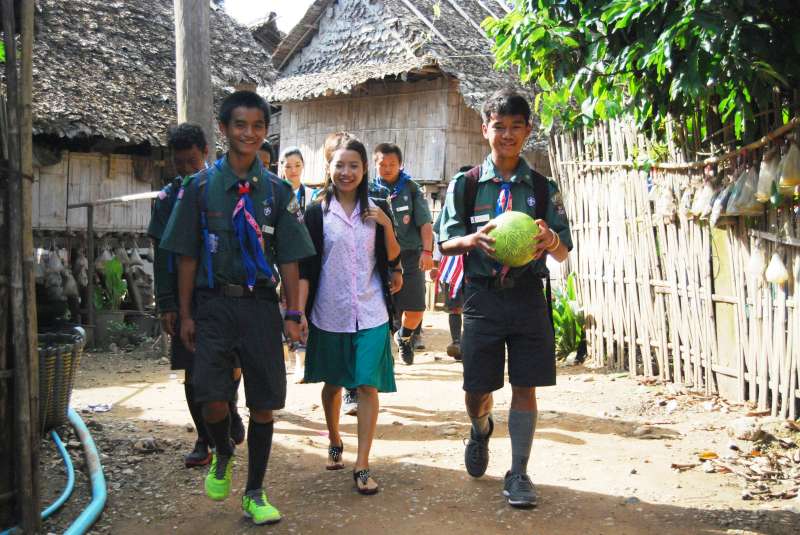
For these scouts, "camping" means coming home


29 September 2015

© UNHCR/K Suntayodom

Reunited after seven years, resettled refugees Lwel Say (left), Lwel Gay Htoo and their aunt Tha Dah Wah stroll through Mae La camp where they were born and bred.

MAE LA CAMP, Thailand, Sept 29 (UNHCR) – They live by the motto, Be Prepared, as members of the Utah Boy Scouts of America Troop. But nothing could have prepared them for the rush of emotions that greeted them in Mae La refugee camp.

The 18 Myanmar refugee boys had flown with their scout leader from Salt Lake City in the United States to Japan for the World Scout Jamboree before arriving in Bangkok for a seven-hour bus ride to reach this camp in western Thailand's Tak province. They were visibly tired but excited as they scoured the crowd for familiar faces – loved ones they had not seen since leaving the camp in UNHCR's resettlement program almost 10 years ago.

The faces of Brothers Lwel Say, 16, and Lwel Gay Htoo, 14, lit up when they found their aunt, Tha Dah Wah, 24. "I'm very excited, very happy and I want to cry," she said. After seven years apart, the boys were now taller than her, but the younger one still clung to her hand as they walked through the camp.

The brothers have come a long way – not just in terms of distance but also experience. Born in exile, Mae La camp was the only world they knew. Daily life revolved around school, play and evening lessons with their teacher-mother. They wore old clothes full of holes and considered themselves lucky to wear flip flops where other kids ran around in their bare feet.

"We used to ask our parents – how will our future be? They always said they didn't know," said Lwel Gay Htoo.

Back then, ethnic conflict in south-eastern Myanmar seemed intractable and the refugees faced the prospect of spending a lifetime in Thailand's camps. In 2005, UNHCR started a group resettlement program to give some of them a new lease on life.

"My parents decided to register for the resettlement program because they hoped for better education for me and my brothers and sisters, so we would have better lives," said Eh Nay Ler, 17, another member of the visiting team.

© UNHCR/P Tonjunpong

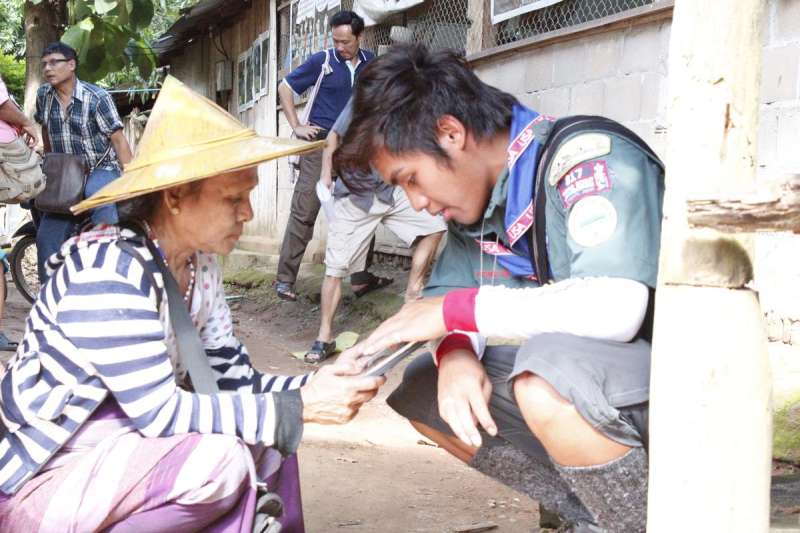
Resettled refugee Eh Nay Ler shows his grandmother in Mae La camp photos of his life in the United States.

Life in the United States was not easy at first. Many struggled with the new environment, culture and language. The Lwel brothers improved their English by watching cartoons while Eh Nay Ler persisted by listening to his teachers. These young men eventually joined the Utah Boy Scouts – comprising some 100 resettled Myanmar refugees – through which they volunteer weekly and help the homeless in their new community.

"Resettling in America gave is a new, fresh start in life. It's given us freedom, rights, better education and welfare that would have been impossible if we still lived in the camp. Without the resettlement program, I could have married early or gone bad," said Lwel Say, who admitted to being "totally stubborn" and "spoilt" in the past.

Eh Nay Ler agreed: "I am very thankful for the life I've been given. Without support from UNHCR, the resettlement country and donors, I would probably be picking corn for a living with my grandmother."

Despite their gratitude, the boys clearly missed the relatives they left behind, including grandparents who felt they were too old to travel and extended family members who had either opted to stay or were unregistered and thus not eligible for resettlement under Thai regulations.

The Lwel brothers' aunt chose to stay for a university scholarship in Thailand, after which she plans to teach in the camp.

This spirit of giving back is not lost on the resettled boys. Lwel Say hopes to come back to Mae La to be a teacher when he graduates from high school in two years.

Fellow Scout Hay Soe, 16, waxed nostalgic when he visited his old school in the camp: "One day I will come back here and be a teacher. I will teach math or science because I love these subjects and I want to work for refugees in Thailand."

Nearly 100,000 Myanmar refugees have been resettled to third countries such as Australia, Canada, Denmark, Japan and the United States since 2005. Some 110,000 remain in nine camps along the Thailand-Myanmar border.

By Korapin Suntayodom & Pathamawan Tonjunpong,

In Mae La camp, Thailand

Sources : UNHCR