Thursday, October 8, 2015

Suu Kyi meets with Catholics in Myanmar's Kachin state


Ethnic areas represent key political battleground ahead of November elections


A boy stands next to political flags after attending a rally and speech by Myanmar's opposition leader, Aung San Suu Kyi, near Myitkyina, the capital of Kachin state, on Oct. 2. (Photo by Ye Aung Thu/AFP)

By John Zaw, Mandalay

Myanmar's opposition leader, Aung San Suu Kyi, has reached out to Christian leaders in conflict-stricken Kachin state in a bid to win over voters critical of her silence on key issues affecting the Christian stronghold.

During a 45-minute meeting held Oct. 2 at St. Columban's Cathedral in Myitkyina Diocese, Suu Kyi addressed the importance of unity, collaborating for the future of the country, and the long-delayed national peace process.

"Suu Kyi wants [to be] all inclusive for the change of the country," said Bishop Francis Daw Tang of Myitkyina, who attended the meeting. "And I see her as a good leader as she has sacrificed for the country and she is also an international figure."

In addition to the bishop, leaders from the Kachin Baptist Church and the Myitkyina Council of Churches also attended the meeting, which was part of Suu Kyi's Oct. 2-5 campaign tour to the heavily Christian state.


The tour is part of Suu Kyi's bid to win over local voters who have often been critical of her refusal to take an anti-government stance on Naypidaw's long-running battle with ethnic Kachin rebels — a conflict that has displaced more than 100,000 people since 2011.

Ahead of Nov. 8 national elections, Suu Kyi's courting of Catholics and other Christians shows that many Myanmar politicians realize the influence faith leaders have on potential voters in remote parts of northern Myanmar, which could shape up to be a key election battleground.

Suu Kyi earlier visited Kayah state, which also has a large Christian population, in September.

During her meeting with Catholic and Christian leaders Oct. 2, Suu Kyi said she would try to address problems with the controversial Myitsone Dam project, which is wildly unpopular with many people in Kachin.

Bishop Daw Tang said he wondered how Suu Kyi's National League for Democracy would handle this and other controversial issues in the state.

"I have a concern about how the new government, whether [a National League for Democracy] government or something else, can carry out the projects that have already been contracted with links to the military, such as the Myitsone Dam project."

Myanmar's outspoken Cardinal Charles Maung Bo of Yangon has also highlighted concerns with the Chinese-funded project, encouraging voters to choose candidates and parties that "safeguard the country's nature and natural resources," in a September plea.

Political reforms

Critics have long accused Aung San Suu Kyi of avoiding a strong commitment to Myanmar's diverse ethnic groups that surround the more populous center of the country. In Kachin, critics say she and her party have failed to speak out about fighting in the state, which erupted in June 2011 following the breakdown of a 17-year cease fire between Myanmar's military and Kachin rebels.

Christina Kai Ra, a catechism teacher from Kachin state's Sai Taung township, attended the Oct. 2 meeting with Suu Kyi and raised the issue of the people who have been displaced by the conflict.

"We are disappointed about her silence on the Kachin conflict and her failure to visit displacement camps," she told ucanews.com Oct. 5.

She said Suu Kyi responded indirectly to her question, suggesting she sympathized with displaced people in Kachin and is willing to reach out to them.

Sam's Club Holiday Hub

Despite her disappointment, Kai Ra said she would likely vote for Suu Kyi's party for seats in the Upper and Lower houses in parliament, but side with ethnic Kachin candidates at state level.

Suu Kyi's National League for Democracy is contesting this year's election after boycotting the 2010 polls. However, the party won dozens of seats in 2012 by-elections.

Many observers see the November election as a test of the quasi-civilian government's commitment to political reforms. For ethnic minorities, the election could represent a major opportunity. Two-thirds of the 90 registered political parties represent minority groups from Myanmar's seven ethnic-based states.

Myanmar escalates pressure on activists ahead of elections


A guard closes a gate leading to Myanmar's Insein prison following a prisoner release in Yangon in October 2014. Observers say the country has intensified pressure on activists in the lead-up to the highly anticipated Nov. 8 elections. (Photo by Ye Aung Thu/AFP)

Rights groups and faith leaders in Myanmar are calling on the government to immediately release almost 100 political prisoners, including Christians, amid a renewed crackdown on peaceful activists ahead of November elections.

Advocates for prisoners of conscience in Myanmar say there are at least 96 political prisoners behind bars and hundreds more awaiting trial. At least five of the 96 people are Christians — three Kachin and two Karen people, who were arrested for alleged links to ethnic rebel groups.

Father Thomas Htang Shan Mong, director of the bishops' conference's Justice and Peace Commission, said the church should be more outspoken on the political prisoner issue, because locking up activists contravenes basic social justice principles.

"Scores of political prisoners remain behind bars," Father Htang Shan Mong said in an interview on Oct. 8. "[This] shows that the country has yet to move forward to democracy and sounds the alarm to civil society groups that they need to push for amending the draconian laws that attempt to silence activists."

Lama Yaw, a spokesman for the Kachin Baptist Convention, said many people in his predominantly Christian state have been displaced because of conflict between government forces and the Kachin Independence Army. Often, the displaced Kachin are arbitrarily arrested and accused of links to the rebel group.


"The arbitrary arrests … of activists and civilians across the country is returning to the old ways of dictatorship and it is totally against democratic values and principles," Lama Yaw told ucanews.com.

In December 2013, authorities in Myanmar declared there were no political prisoners in the country — a claim that rights groups greeted with deep skepticism.

The Assistance Association for Political Prisoners, a Thailand-based advocacy group, believes there are 96 political prisoners, including the five Christians, and more than 450 others awaiting trial.

Aung Myo Kyaw, a spokesman for the group, said the upcoming Nov. 8 elections have only intensified the government's actions, with authorities continuing to lock up activists in the months leading up to the poll.

"It is a great opportunity for the government to release all remaining political prisoners ahead of the election so that these people can participate in the historic polls," Aung Myo Kyaw said. "If the government really wants to move forward to democracy, no political prisoner should be behind bars."

Amnesty International, the London-based rights group, also believes repression has "drastically picked up pace" in the last two years.

In an Oct. 8 statement, the group said at least 91 prisoners of conscience are still stuck behind bars — far more than what Amnesty had counted in 2013. The group has documented "a marked surge" in repression as the election draws near, with authorities charging activists with a range of offences and keeping them in pretrial detention.

"Myanmar authorities have clearly been playing a long game ahead of the elections, with repression picking up pace at least nine months before the campaigning period started in September," Laura Haigh, the group's Myanmar researcher, said in the statement.

"Their goal has been straightforward: take undesirable voices off the streets way ahead of the elections and make sure they're not heard."

Why do we only like refugees if they’re pretty?


OCTOBER 7 — Our dear Prime Minister Datuk Seri Najib Razak got quite a lot of flak online after he announced in New York that Malaysia was going to give shelter to 3,000 Syrian refugees.

Hold up, Malaysian denizens asked: What about the Syrians who are already here? The Afghans? The Rohingya? 

Since when did Malaysia start making a distinction between refugees and so-called “illegals.”

Here’s what you need to know: Malaysia has never signed the 1951 Refugee Convention, which gives protection and accords certain rights to refugees. 

A refugee under the terms of said convention is defined thus:

“A person who owing to a well-founded fear of being persecuted for reasons of race, religion, nationality, membership of a particular social group or political opinion, is outside the country of his nationality and is unable or, owing to such fear, is unwilling to avail himself of the protection of that country; or who, not having a nationality and being outside the country of his former habitual residence as a result of such events, is unable or, owing to such fear, is unwilling to return to it.”

The Malay word for refugee is simply “pelarian” — stemming from the word “lari” or run. Sadly, it is often used as a derogatory term here, because it’s not just the government who doesn’t recognise refugees — it’s us, too.

Being a refugee means that to stay in your home country means almost certain death, and the only chance at having some sort of life is to run.


Just look back in history and there are plenty of names of people who had to run — from wars, civil unrest or persecution. 

Refugees who unluckily end up in Malaysia often come here with nothing but the clothes on their backs. What do they find? Locals who shun them. Employers who mislead and abuse them. Policemen who harass them for bribes and immigration officials who will either deport or detain them.

The truth is, it isn’t just Malaysia or Malaysians who have distaste for refugees. Even Angelina Jolie, the UNHCR’s celebrity spokesperson, has said that her own attempts at fundraising from the Hollywood set for refugees proved so futile, she said she would have been better off giving her own money than trying to solicit it from that crowd.

Part of the reason for that is the notion of scarcity; the prevailing fear and paranoia that refugees would take from us what we need for our own people. We do not want these outsiders; we see them only as burdens and never as people.

Except of course, if they’re pretty. During the Bosnian war, plenty of Caucasian-looking Bosnians found temporary refuge in Malaysia and they were treated like beautiful, living curios. One NGO was even proposing “breeding” them with locals to produce beautiful children. How dehumanising is that; to treat human beings as though they were no different from livestock or exotic pets.

Perhaps Najib wants brownie points for helping Muslim brethren, but in that regard, why then are Palestinians who escape to Malaysia not given shelter? Why are they treated little differently from other undocumented migrants?

I guess it’s easier to care about Palestinians or Syrians when they’re on the news, but not when they’re on our doorsteps asking for food and shelter.


What I’d like to see is for agencies to stop bringing in foreign workers, for Malaysia to ratify the refugee convention and for Malaysians in general to start seeing refugees as people who, through no fault of their own, desperately need aid.

I know that’s as likely as us finding out where that donation came from, but you can’t blame this ex-UNHCR staffer from hoping. So please, before you say an unkind word about “illegals”, “Banglas” and “bloody foreigners”, turn on the news and remind yourself that the world can be a terrible, horrible place. 

It’s up to us to try and make it a little less so.

* This is the personal opinion of the columnist.

- See more at: http://www.themalaymailonline.com

Wednesday, October 7, 2015

Refugees watch election with interest, trepidation


Outside of Nai Soi village in northern Thailand, more than 14,000 refugees from Kayah State debate elections going on just across the border. While there will be no voting for those in Thailand’s largest refugee camp – most lack ID cards – that doesn’t mean they don’t have opinions about the coming polls.


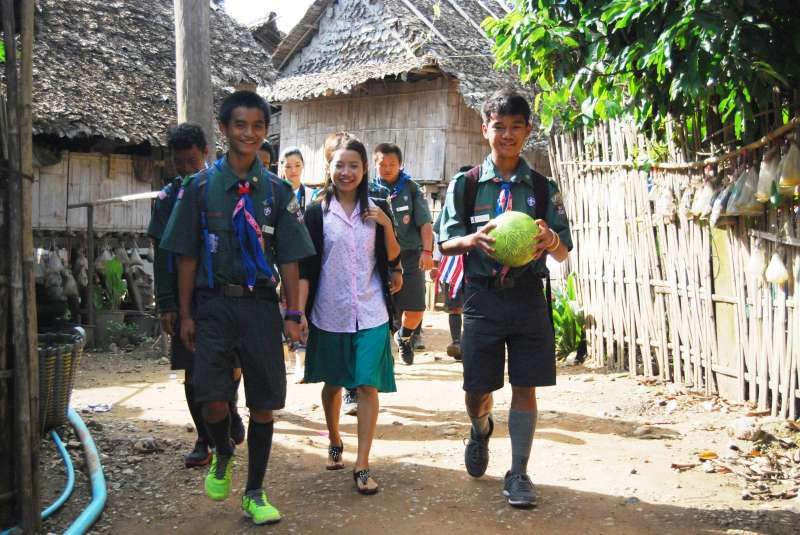
Young Karenni walk in through a refugee camp near Nai Soi village in Thailand. Photo: Carole Oudot / The Myanmar Times

People started settling in the Ban Mai Nai Soi refugee camp in 1992 and it was officially opened in 1996, according to the Karenni Refugee Committee. Most of the camp residents fled Kayah State due to clashes between the Tatmadaw and ethnic armed groups fighting for independence. The Karenni National Progressive Party signed its second ceasefire agreement with the government in 2012. The first, signed in 1994, collapsed after less than three months.

“I was born in Shadaw township and I came to the camp with my family 20 years ago,” said Ko Su Reh, 22, “The fighting between the Burmese and the Karenni armies forced us to move from place to place.”

His story is common among the refugees, who were uprooted, often multiple times, due to intense conflict. Many of the younger refugees have spent their whole life at the camp, knowing only a 5-kilometre perimeter around Nai Soi.


Trusting the Myanmar government doesn’t come naturally here. The refugees expect and hope that the ruling party will be defeated in the polls by the National League for Democracy, but they don’t anticipate their troubles will be over after an opposition victory.

Most fear that if NLD wins and the political situation in Myanmar is stable, their camp will be shuttered, and they will be forced back into a country they associate with violence and hardship.

“I think if the NLD wins, good changes will come, but it will take a long time before they have consequences in Kayah State,” said Ko Than Tun Oo, 20, who joined the refugee camp in 2011.

He added that before the refugees are funnelled back into Kayah State, they want to see a plan to ensure their well-being and livelihoods agreed to by the local administration. Most of all, Ko Than Tun Oo said, they demand a national ceasefire and genuine peace to be in place before they are repatriated.

“In July, the UNHCR presented their resettlement operation plan, but we think it is too soon [to return],” said Ko Luiz Martin, secretary of the KRC. “A lot of people panicked. The Thai government said the refugees will not be forced to leave, but that within two years, we will have to be gone. U Aung Min from the Myanmar Peace Center also said Myanmar was ready to welcome back the refugees.”


But as clashes continue to flare in Myanmar, the credibility of the ceasefire agreement, which will not be signed by all armed ethnic groups, remains in doubt. Given the fleeting agreements made in the past, many of the residents do not store much faith in the latest peace deal.

Returning is also difficult to conceptualise for those who no longer have a home to go back to.

“In the camp, it’s hard – everyone is struggling for survival. But what will we do if we go back?” said Ko Anthony, 30. He fled Myanmar in 2010, afraid to be arrested after campaigning against the 2008 constitutional referendum. Fear of political persecution upon being repatriated is also common among the refugees.

“Most of the refugees are accused of having connections with armed groups branded as unlawful. They fear they could be arrested if they go back home. Since most of the people here come from eastern Kayah State, devastated by the civil war, their villages don’t exist anymore. There are still landmines and the threat of land-grabs,” said Ko Luiz Martin.

Increasingly, however, Thailand appears to be playing a resentful host. In 2005, Thailand stopped officially registering and admitting new refugees to the camps. While waves of unofficial entries have continued, the newer arrivals have no status, no identification, and cannot officially seek asylum or apply for resettlement. They also cannot obtain official employment, and without the protection of any recognised status are vulnerable to exploitation.

“We feel like birds trapped in a cage,” said Ko Neh Reh. “A lot of young people, fed up with their limbo situation, dropped out from school. Violence and alcohol abuse are increasing in the camp.”

Meanwhile, living standards deteriorate every year. The food rations provided by supporting NGOs are never enough to match the rising refugee population and donor interest has waned. This month, the refugees will only get 9 kilograms (20 pounds) of rice per person, compared to the 20kg a head provided in the 1990s.

“Rations have declined because of donors’ change of interest. Since 2012, their new strategy is to focus on the development inside Myanmar. The camp is growing, but increasingly, it is forgotten,” said Ko Luiz Martin.

He added that to supplement their food, around 15 percent of the refugees work illegally in the nearby Thai farms. If they are caught by immigration officials, they could be deported and charged for illegal entry. At least for now, Thai authorities have mostly appeared willing to look the other way, but no one knows how long that leniency will continue, and whether the results of the elections will end it.

What will be the status of Syrian refugees in M’sia?


It is very clear, with the tremendous amount of conflict in Syria, with thousands of them fleeing around the world for their lives, we certainly welcome the announcement of our prime minister in accepting 3,000 refugees from Syria over the next three years, but the question arises as to what will be their status in Malaysia? What are the protective mechanisms in place for them? Will they be given preferential treatment like the Bosnian refugees in the 1990s?

This is indeed a political statement, not at all related to humanitarian purposes.

Every other international community is taking on some responsibility in responding to this conflict, therefore Malaysia wants to be part of this effort to show concern about Syria and the Middle East, which is really admirable but there other concerns in the home ground that needs serious attention and action such as issues of the Rohingyas, Myanmar, Bangladesh, Palestinians and Sri Lankan refugees in Malaysia.

These refugees in Malaysia have no protection, they do not have the right to work, the children have no right to education, no right to healthcare, as such they fall prey to human traffickers, they become victims of modern day slavery. It is so crucial to look into these issues before more refugees are brought into Malaysia just to show concern, perform public relations exercises to look good at the international arena,

We have a problem and we need to look for solutions critically so all refugees are given protection.

Almost all refugees, very especially the Rohingyas, are very clearly fleeing from an oppressive regime where they are being slaughtered as part of ethnic cleansing. Where would they flee? Being Muslims, they would feel safe and protected here in a Muslim country. They are however not protected but rejected in Malaysia.

However, we believe that it would be different for the Syrians, because they are have been welcomed by the Malaysia government, therefore they would certainly be given some kind of preferential treatment along with a special status, as they did for Bosnian refugees.


Recognition , identity and rights of refugees from any counties are fundamental in stopping all forms of gross violations of rights as such, the Malaysian government must make public and clarify the objectives, procedures and policy for the registration of refugees and how will it impact on their continued stay in the country; what will be the new opportunities and benefits for the refugee community; and how will it impact on their resettlement process.

If there is any form of registration by the government, it must be to increase the protection of the rights of refugees .

And this must be done not just for the Syrian refugees but also for all the refugees in Malaysian , as we believe in equal treatment irrelevant from where they are fleeing from.

The rights framework is absent in this entire process, and thus it is totally rejected as a ‘good’ initiative.

Before any such initiative are made, Malaysia must change the legal framework, ratify the Convention on Refugees and show its commitment to rights protection with humanitarian support for all refugees.


GLORENE A DAS is director, Tenaganita Women’s Force.

https://www.malaysiakini.com

Advocates raise alarm for next influx of boat refugees in Malaysia


International aid agencies have had difficulty gaining access to a detention center in Malaysia, where hundreds of Myanmar and Bangladeshi migrants have been held in reportedly substandard conditions since the Andaman Sea migration crisis in May.

As the "sailing season" is set to begin again with the approaching end of the monsoon season in the Bay of Bengal, there are fears that Malaysia will be unprepared for the next influx.

At least 1,150 migrants and refugees, rescued near northern Malaysia's Langkawi island in May, were taken to the Belantik detention center in Kedah state.

Both the U.N. Refugee Agency and the International Organization for Migration requested access to the facility. However, only the refugee agency has been allowed in to the center, and that permission wasn't granted until August — three months after the May crisis began.

Sources have told ucanews.com that gaining access and basic information has been difficult, even for large international agencies. The precise number of people being held at the center has been difficult to confirm as well. Malaysia was believed to have taken in about 1,150 migrants and asylum seekers in May, but about 500 Bangladeshis have since been returned, according to sources.

Mohammad Harun Al Rashid, regional coordinator of the nongovernmental organization Caram Asia, which works on health and migration, said his organization previously had access to the center, but that has since been stopped.

"Now the situation is not so good," he said. "According to [detention center] workers, the situation is still bad."

The medical relief organization, Mercy Malaysia, had access to the detention centre shortly after the May arrivals. At that time, the group's president, Ahmad Faizal Mohd Perdaus, warned of poor conditions in the facility.

"It is overcrowded in there," he told Malaysian media. "The risk of communicable diseases is quite high." Reports at the time suggested the centre had a capacity of 950, but more than 2,000 migrants were being held within the cramped space.


A man stands near a pit during the reburial of remains believed to be those of Rohingya asylum seekers found at a human trafficking camp in northern Malaysia in May. (Photo by Manan Vatsyayana/AFP)


'He thought it was hell'

Rights advocates who have helped migrants recently released from immigration detention centers throughout Malaysia also spoke of worrying conditions.

Sayed, a Bangladeshi volunteer living in Kuala Lumpur who helps undocumented workers and recently released detention centre inmates return home, told ucanews.com that there is often little food and clothing given to detainees.

"If people in the camps want to make a phone call, I had one detainee tell me he was made to pay 50 ringgit (US$11) every time," said Sayed, who asked that his full name not be used as he works with people at risk of arrest and detention.

"Their families have to send the 50 ringgit via mobile credit to the guards," he said. "If the guards do not get it, they make life hell for the people who call."

Sayed spoke of a Bangladeshi who spent 90 days in detention because he took a job as a janitor, violating the terms of his student visa.

"Every morning, he would pray to Allah to die so he could be removed from hell," Sayed said. "He thought it was hell."


The U.N. Refugee Agency, which did not have access to the Belantik detention center until August, said its staff are working to assess whether people still detained in the center need protection and are advocating for their release.

Vivian Tan, a spokeswoman, said detaining refugees and asylum seekers should always be a last resort.

"Many of them have fled terrible conditions and suffered further during the journey," she told ucanews.com. "Confining them for long periods of time in often crowded conditions can only exacerbate the trauma they have been through."

The International Organization for Migration, too, has offered its help with migrants and asylum seekers still detained in Belantik. However, the Malaysian government has declined, according to Jeffrey Labovitz, the group's chief of mission in Thailand.

With little information available about conditions in Malaysia's immigration detention centers, people who advocate for migrants and asylum seekers say the coming sailing season represents a major concern.

Caram Asia's Al Rashid warned of a lack of coordination between key international agencies, including U.N. organizations.

"If an influx comes in, I don't know what they will do," he said.

"What is happening is the U.N. agencies are consulting with the government and the [nongovernmental organizations] are trying to shout and know what is happening. It is not effective. The government is not sitting down and working together and there is little coordination between agencies."

http://www.ucanews.com/


Tuesday, October 6, 2015

NGO: Putrajaya cherry picking on refugees


Malaysia must change the legal framework, ratify the Convention on Refugees and show its commitment to rights protection with humanitarian support for all refugees.


KUALA LUMPUR: Tenaganita wants the Federal Government to come up with a Rights Framework for all refugees and not just cherry pick for political expediency. It wants the United Nations High Commission for Refugees to take note of this point as well. “The rights framework is absent in this entire process of taking in 3,000 Syrian war refugees, and thus it is totally rejected as a ‘good’ initiative.”

Before any such initiative is made, it added in a statement, Malaysia must change the legal framework, ratify the Convention on Refugees and show its commitment to rights protection with humanitarian support for all refugees.

The NGO has a bundle of questions for Putrajaya on the 3,000 Syrian war refugees which the Federal Government has agreed to take and other questions relating to the thousands of refugees already in the country. “What will be the status of the Syrian war refugees in Malaysia?” asked the NGO. “What are the protective mechanisms in place for them? Will they be given preferential treatment like the Bosnian refugees in 1990’s?”

There are other concerns on the home ground that need serious attention and action such as issues relating to the Rohingya, Myanmar, Bangladesh, Palestinian, and Sri Lankan refugees in Malaysia, said the NGO. “These refugees in Malaysia have no protection, they do not have the right to work, and the children have no right to education, no right to healthcare.”

“They fall prey to human traffickers and they become victims of modern day slavery. It is so crucial to look into these issues before more refugees are brought into Malaysia just to show concern, and perform public relations exercises to look good in the international arena.”

The NGO warned that Malaysia has a serious problem on the refugee front and needs to look for solutions critically so all refugees are given protection. “Almost all refugees, especially the Rohingya are very clearly fleeing from an oppressive regime which is slaughtering them as part of ethnic cleansing.”


“Where would they flee? Being Muslims, they would feel safe and protected in a Muslim country.”

They are however not protected but instead rejected in Malaysia because of prejudice against them, said the NGO. “However, we believe that it would be different for the Syrians, because they are being welcomed by the Malaysian Government. Therefore, they would certainly be given some kind of preferential treatment along with a special status, as for the Bosnian refugees.”

Recognition, identity and rights of refugees from any country are fundamental in stopping all forms of gross violations of rights, said Tenaganita. “The Malaysian Government must make public and clarify the objectives, procedures and policy for the registration of refugees and how will it impact on their continued stay in the country.”

“What will be the new opportunities and benefits for the refugee community; and how will it impact on their resettlement process. If there is any form of registration by the government, it must be to increase the protection of the rights of refugees.”

All this must be done not just for the Syrian refugees, said the NGO, but also for all refugees in Malaysia, “as we believe in equal treatment irrespective of where they are from”.

http://www.freemalaysiatoday.com


Sunday, October 4, 2015

US Court Summons Thein Sein Over Rohingya Rights Violations


Burma’s President Thein Sein, right, is pictured alongside US President Barack Obama as they participate in a group photo at the East Asian Summit in Nusa Dua, Bali, on Nov. 19, 2011. (Photo: Reuters)

WASHINGTON — A federal court in the United States has issued a summons for President Thein Sein and several Burmese ministers to respond to allegations of human rights violations committed against the stateless Rohingya Muslim minority.

The summons was issued by the United States District Court for the Southern District of New York following a lawsuit filed by the Burma Task Force USA, a coalition of 19 Muslim American organizations.

Thein Sein and several members of his cabinet will be in the United States this week to attend the 70th United Nations General Assembly in New York. Burma’s Foreign Minister Wunna Maung Lwin is scheduled to meet with US Secretary of State John Kerry on Friday.

Filed on behalf of three plaintiffs, all US resident Rohingya refugees who claim to have experienced torture, discrimination and displacement, the lawsuit seeks compensatory and punitive damages.

The case was submitted under the Alien Tort Claims Act (ACTA) and the Torture Victim Protection Act (TVPA), and charges Thein Sein and his ministers with crimes against humanity, extra-judicial killing, torture, mental and physical trauma.

“Much of the media is focused on the migrants from Syria, and understandably so, but how many hundreds of thousands of Rohingya refugees have been fleeing persecution in Burma?” asked Shaik Ubaid of the Muslim Peace Coalition, a member of the Burma Task Force.

“UN Development Goals cannot be achieved when a segment of the population of Burma is rendered stateless,” added Adem Carroll, New York Director of Burma Task Force. “A peaceful future depends on an embrace of pluralism and a rejection of the politics of fear.”

This is not the first time that a head of state has been issued a summons by a US court on allegations of human rights abuses. In late 2014, Indian Prime Minister Nerendra Modi was called to respond to a lawsuit regarding religious riots in 2002. His predecessor, Manmohan Singh, was summoned in 2013 for violations during counter-insurgency operations in the 1990s.

In both cases, the US government told the courts that the accused had diplomatic immunity as heads of state. The State Department is expected to respond similarly to the charges against Thein Sein and his cabinet.

UN body welcomes offer to take in Syrian refugees


United Nations refugee agency UNHCR welcomes Malaysia's announcement that it will take in 3,000 Syrian refugees, but also hopes for more efforts to assist the thousands already on Malaysian soil.

Its representative in Malaysia Richard Towle said there are about 154,000 refugees from various countries in Malaysia who require assistance.

"Now is a good time to look at this," he said.

This includes providing means for the refugee community to be assisted in a "more legal way".

He said this is better than leaving them to the "rather dark area of society".

Prime Minister Najib Abdul Razak told the UN General Assembly on Thursday that Malaysia will accept 3,000 Syrian refugees over a period of three years.

Towle said UNHCR has no details yet over how this will happen.

There are 970 Syrian refugees registered with UNHCR in Malaysia as at August.

Malaysia is not a signatory to the UN convention to protect refugees, despite being a transit point for thousands every year.

Refugees, including the 50,000-plus Rohingya residing in Malaysia, are considered illegal migrants and are barred from formal employment.

Some have resorted to using fake documents to secure a livelihood, a move Towle said UNHCR does not support.

Sailing season soon


Malaysia came under international scrutiny in May when boats laden with hundreds of distressed persons from Myanmar and Bangladesh washed up on Malaysian shores, after people smugglers abandoned their human cargo amid a crackdown.

Towle said the same crisis is about to hit home again, with "sailing season" around the corner.

"We do understand more boats are coming from these countries.

"We need to strategise and plan. We have learnt a lot from what happened in May," he said.

Malaysia took in several hundreds who arrived during the May crisis and housed them in holding camps in Kedah, where at least one has died from disease.

This followed the grizzly discovery of mass graves near camps used by people smugglers, along the Malaysian-Thai border in Perlis. - M'kini


Special ID cards to be issued to Syrian refugees


KUALA LUMPUR - Malaysia will be issuing special identification cards for the 3,000 Syrian refugees it will be accepting into the country.


Deputy Prime Minister Datuk Seri Dr Ahmad Zahid Hamidi said the Home Ministry, via the Immi­gration Department, would faci­litate the arrival of the refugees based on current laws.

"Usually, the UNHCR will work with the International Organisation of Migrants (IOM) to issue cards for the refugees who enter Malaysia.

"This time, we will issue iKad for the refugees which, among others, will have security elements embedded into the card for the use of the Immigration Department," he told a press conference after the Special ASEAN Ministerial Meeting on the Rise of Radicalisation and Violent Extremism (SAMMRRAVE) here yesterday.


Prime Minister Datuk Seri Najib Tun Razak announced at the UN General Assembly in New York on Thursday that Malaysia would open its doors to 3,000 Syrian migrants over the next three years to help alleviate the refugee crisis. About four million Syrians have fled to neighbouring countries since the start of the civil war there in 2011.

Dr Ahmad Zahid said Malaysia's move to accept Syrian refugees was based on humanitarian considerations.

"Malaysia has experience with this, when we accepted refugees from Bosnia, and we were not only praised for it, but the gesture paid off eventually," he said.

"Many Bosnian refugees who studied here during that period are now holding major positions in ­various fields back in Bosnia and Herzegovina.

"They contribute to Malaysia's efforts to bringing up our good work on the international level."

Asked when the Syrian refugees would be arriving and where they would be placed, Dr Ahmad Zahid said it would be discussed with Najib first.


"We have not gone into the details yet. We are thinking of working with the private sector to help place them, give the refugee children an education and also to provide temporary jobs until they are able to return to Syria," he said.

On racism, Dr Ahmad Zahid warned that it could lead to ethnic cleansing if not deterred.

He said while racism only existed in small groups, radicalism, militancy and extremism were more widespread.

- See more at: http://news.asiaone.com

Saturday, October 3, 2015

Syrian refugees in Malaysia will get special ID card


KUALA LUMPUR: Malaysia will be issuing a special identification card for the 3,000 Syrian refugees it will be accepting into the country.

Deputy Prime Minister Datuk Seri Dr Ahmad Zahid Hamidi said the Home Ministry, will facilitate the arrival of the refugees based on current laws through the Immigration Department.

"Usually the UNHCR will work with the International Organisation of Migrants (IOM) to issue cards for the refugees that enter Malaysia.

"This time, we will issue iKad for the refugees. The iKad will have security elements embedded into the card for the use of the Immigration Department," he told a press conference after the Special Asean Ministerial Meeting on the Rise of Radicalisation and Violent Extremism (SAMMRRAVE) here Friday.

At the United Nations General Assembly in New York yesterday, Prime Minister Datuk Seri Najib Tun Razak had announced that Malaysia would open its doors to 3,000 Syrian migrants over the next three years to help alleviate the refugee crisis.

About four million Syrian refugees have fled into neighbouring countries since the start of the civil war there in 2011.

Dr Ahmad Zahid said Malaysia's move to accept 3,000 Syrian refugees over the next three years was based on a humanitarian basis, without regard for religious or political stands.

"Malaysia had experience with this before when we accepted refugees from Bosnia, and we were not only praised for it, but the gesture paid off eventually,” said Dr Ahmad Zahid.

He added that many Bosnian refugees who studied here during that period are now holding major positions in various fields, back in Bosnia and Herzegovina.

"They contributed to Malaysia's efforts to bringing up our good work on an international level," he said.

Asked when the Syrian refugees will be arriving and where will they be placed, Dr Ahmad Zahid said that will be discussed with Najib first.

"We have not gone into the details yet. We are thinking of working with the private sector to help place them, give the refugee children an education and also to provide temporary jobs until they are able to return to Syria," he said.

- TheStar

Malaysia To Offer Shelter, Jobs, Education To Syrian Refugees


AS a Muslim nation that will “not turn its face away”, Malaysia will open its doors to 3,000 Syrian migrants over the next three years to help with its refugee crisis, said Datuk Seri Najib Tun Razak.

The Prime Minister said Muslim countries were partly responsible for the marginalised Syrians fleeing their country, causing social and economic stresses in Europe.

About four million Syrian refugees are estimated to have fled into neighbouring countries over the last four years and are struggling with hardship and poverty.

Malaysia is one of the few Muslim countries taking the lead to aid Syrian refugees besides providing shelter for refugees from elsewhere.

“This is why Malaysia has taken, over the years, many people fleeing war, starvation and persecution,” he said at the 70th session of the United Nations General Assembly in New York on Thursday.

Najib said new international solutions were needed to deal with the plight of the Syrians.

Malaysia will offer shelter and jobs temporarily to 3,000 Syrian refugees as well as education access for their children while in this country.


Deputy Prime Minister Datuk Seri Ahmad Zahid Hamidi said accepting the refugees showed the compassion of the government over the fate of Syrian refugees.

"What is important is tp provide shelter for them and their families, and we will also look at various ways to provide education for their children.

"We will use our experience in dealing with refugees so that we can provide temporary shelter, education and jobs to them until there is peace in Syria, after which they can return to their country," he told reporters after the Asean Special Ministerial Meeting on Radicalism and Extremism.

Prime Minister Datuk Seri Najib Razak, in his speech at the 70th General Assembly of the United Nations on Thursday had announced Malaysia's willingness to accept 3,000 Syrian refugees within the next three years to help in the refugee crisis involving Syrian citizens.

Najib said Muslim nations were partly responsible for the well-being of the Syrians who were displaced from their country in large numbers, which had also caused economic and social stress in Europe.

Ahmad Zahid, who is also Home Minister, said Malaysia had experience in providing assistance to the people of countries in turmoil including Bosnia-Herzegovina and had been praised internationally.

"Then, we had Bosnian students studying at the International Islamic University, Malaysia. They are now key leaders in Bosnia in politics and the corporate sector as well as in their professions," he said.

As such, Ahmad Zahid said, Malaysians regardless of race and religion, should support the Prime Minister's plans to help the people of Syria.

He said the Home Ministry through the Immigration Department will arrange e the entry of the Syrian refugees under existing Immigration regulations.


He said the ministry will also collaborate with the International Organisation for Migration and the United Nations High Commissioner for Refugees (UNHCR) to issue refugee cards with security features to them.
Asked when the refugees will arrive in Malaysia, Ahmad Zahid said he will discuss the matter further with the Prime Minister as soon as Najib returns from overseas.

He added that the location for the shelter areas for the Syrians had also not been finalised.

- BERNAMA

Friday, October 2, 2015

PM Najib calls for new solutions to address extremism, refugee crisis


Kuala Lumpur (dpa) - Malaysia will take in 3,000 Syrian refugees in the next three years as its share in alleviating the current refugee crisis, Prime Minister Najib Razak said Friday.
Hundreds of thousands of Syrian migrants have fled Syria since the beginning of the year amid the war in the Middle-Eastern country.

"Malaysia will do its share, and open our doors to a further 3,000 Syrian migrants over the next three years," Najib said in a speech at the United Nations General Assembly.

"New international solutions are needed to deal with the migration crisis," he said. "The millions fleeing are people - like us. They should concern us all. We must respect our common humanity."

At present there are a little over 153,000 refugees in predominantly Muslim Malaysia, according to the United Nations High Commissioner for Refugees.

The refugees in Malaysia comprise over 143,000 migrants from Myanmar, more than 3,000 Sri Lankans, 1,230 Pakistanis, 1,100 Somalis, 970Syrians, 860 Iraqis, 490 Iranians, 490 Palestinians and the rest from other countries, the UN agency said.

Thursday, October 1, 2015

Thailand seizes assets of officials suspected of human trafficking


Internally displaced Rohingya boys shiver in the rain in a makeshift camp for Rohingya people in Sittwe, Myanmar. (File, AP)

Bangkok - Thai authorities seized over $1.5m in assets from officials charged with human trafficking, the government said on Tuesday.

The assets included homes, boats, cars and land belonging to officials charged in absentia with trafficking, the government's public relations department said.

One of the missing suspects had turned himself in, it said. The army captain was wanted on charges of trafficking Rohingya refugees from Myanmar to Malaysia using Thailand as a transit point.

More than 150 warrants have been issued against officials suspected of involvement with the trafficking ring to date, with 89 detained including a general.


The trafficking network came to light earlier this year after investigators discovered mass graves of refugees at a trafficking camp in southern Thailand.

The ensuing outcry and crackdown stranded thousands of migrants in boats off Thailand, Malaysia and Indonesia, as traffickers refused to land.

The Rohingya Muslims say they suffer discrimination in predominantly Buddhist Myanmar, which does not recognise them as one of the country's official ethnic groups, and considers them illegal Bengali immigrants. 

In August, the Anti-Money Laundering Office seized saving bonds, land deeds and cash totalling $1.1m from the same smuggling ring.

For these scouts, "camping" means coming home


29 September 2015

© UNHCR/K Suntayodom

Reunited after seven years, resettled refugees Lwel Say (left), Lwel Gay Htoo and their aunt Tha Dah Wah stroll through Mae La camp where they were born and bred.

MAE LA CAMP, Thailand, Sept 29 (UNHCR) – They live by the motto, Be Prepared, as members of the Utah Boy Scouts of America Troop. But nothing could have prepared them for the rush of emotions that greeted them in Mae La refugee camp.

The 18 Myanmar refugee boys had flown with their scout leader from Salt Lake City in the United States to Japan for the World Scout Jamboree before arriving in Bangkok for a seven-hour bus ride to reach this camp in western Thailand's Tak province. They were visibly tired but excited as they scoured the crowd for familiar faces – loved ones they had not seen since leaving the camp in UNHCR's resettlement program almost 10 years ago.

The faces of Brothers Lwel Say, 16, and Lwel Gay Htoo, 14, lit up when they found their aunt, Tha Dah Wah, 24. "I'm very excited, very happy and I want to cry," she said. After seven years apart, the boys were now taller than her, but the younger one still clung to her hand as they walked through the camp.

The brothers have come a long way – not just in terms of distance but also experience. Born in exile, Mae La camp was the only world they knew. Daily life revolved around school, play and evening lessons with their teacher-mother. They wore old clothes full of holes and considered themselves lucky to wear flip flops where other kids ran around in their bare feet.

"We used to ask our parents – how will our future be? They always said they didn't know," said Lwel Gay Htoo.

Back then, ethnic conflict in south-eastern Myanmar seemed intractable and the refugees faced the prospect of spending a lifetime in Thailand's camps. In 2005, UNHCR started a group resettlement program to give some of them a new lease on life.

"My parents decided to register for the resettlement program because they hoped for better education for me and my brothers and sisters, so we would have better lives," said Eh Nay Ler, 17, another member of the visiting team.

© UNHCR/P Tonjunpong

Resettled refugee Eh Nay Ler shows his grandmother in Mae La camp photos of his life in the United States.

Life in the United States was not easy at first. Many struggled with the new environment, culture and language. The Lwel brothers improved their English by watching cartoons while Eh Nay Ler persisted by listening to his teachers. These young men eventually joined the Utah Boy Scouts – comprising some 100 resettled Myanmar refugees – through which they volunteer weekly and help the homeless in their new community.

"Resettling in America gave is a new, fresh start in life. It's given us freedom, rights, better education and welfare that would have been impossible if we still lived in the camp. Without the resettlement program, I could have married early or gone bad," said Lwel Say, who admitted to being "totally stubborn" and "spoilt" in the past.

Eh Nay Ler agreed: "I am very thankful for the life I've been given. Without support from UNHCR, the resettlement country and donors, I would probably be picking corn for a living with my grandmother."

Despite their gratitude, the boys clearly missed the relatives they left behind, including grandparents who felt they were too old to travel and extended family members who had either opted to stay or were unregistered and thus not eligible for resettlement under Thai regulations.

The Lwel brothers' aunt chose to stay for a university scholarship in Thailand, after which she plans to teach in the camp.

This spirit of giving back is not lost on the resettled boys. Lwel Say hopes to come back to Mae La to be a teacher when he graduates from high school in two years.

Fellow Scout Hay Soe, 16, waxed nostalgic when he visited his old school in the camp: "One day I will come back here and be a teacher. I will teach math or science because I love these subjects and I want to work for refugees in Thailand."

Nearly 100,000 Myanmar refugees have been resettled to third countries such as Australia, Canada, Denmark, Japan and the United States since 2005. Some 110,000 remain in nine camps along the Thailand-Myanmar border.

By Korapin Suntayodom & Pathamawan Tonjunpong,

In Mae La camp, Thailand

Sources : UNHCR

Sunday, September 27, 2015

Are elections enough to bring about a true democracy?

Francis with San Suu Kyi in the Vatican on 28 October 2013

On 8 November, Myanmar is due to hold a general election. Cardinal Charles Bo raises questions regarding key issues such as human rights, economic inequalities and social and religious discrimination

PAOLO AFFATATO, ROME

Everyone agrees that it will be a decisive step in the country’s history: the general election in Myanmar, which have just been announced for November 8th, will be the first since the country moved from military dictatorship to civil government in March 2011. 

This coming autumn’s election represents an important step along the country’s journey towards democracy and could definitively do away with the “generals in civilian clothes” who, as capable transformists, have stayed in power until now.

There are a total of 1,100 seats that need to be filled, including those of the two-chamber National Parliament and those of the provincial assemblies. The new Parliament will have the task of electing the President of the nation. 

There are two main contending parties: the Union Solidarity and Development Party (USDP) which is currently in power and full of former members of the military and the National League for Democracy (NLD), headed by Nobel Peace Prize winner, Aung San Suu Kyi. The two parties are the same ones that came head to head in the last democratic elections the country held in 1990. Aung San Suu Kyi won with an overwhelming majority but the military junta nullified the election result.

The Catholic Church shares in the view that this is a “historic moment” for the Burmese people. In a majority Buddhist country, there is a small approximately 500,000-strong community of Catholics who form 1% of Myanmar’s population.

The Church asks one fundamental question: are elections sufficient in defining a democracy and determining how democratic a country is? It answers by highlighting how essential the following principles are amongst others: human rights, religious freedom, inter-denominational harmony, respect and peaceful co-existence with ethnic minorities, equal opportunities and fighting against poverty and economic and social inequalities.

On behalf of the Catholic Church, Burmese cardinal Charles Maung Bo, esteemed Archbishop of Yangon and an influential public figure who speaks frankly, raised doubts and offered hints for collective reflection and the common good of the country.

In a shrewd analysis of the situation, Bo mentioned “seven swords that pierce the nation’s heart”: a nepotistic capitalism, where a few families possess most of the wealth; a refusal to resolve conflicts through dialogue, opting for violence instead; unfair laws that continue to deprive farmers of their land; a criminal economy of drugs and human trafficking; discrimination against ethnic minorities; the destruction of natural resources and scarce educational and occupational opportunities for the poor.

With this in mind, the cardinal sent out a heartfelt appeal to political leaders, inviting them to be “good parents to the whole nation”. “In accordance with our traditions, as ‘parents of the people’, our political leaders have the right and duty to promote the wellbeing of everyone,” he said in a message published by Vatican news agency Fides.

The Archbishop of Yangon recalled the expectations of the Burmese people, with 50 years of dictatorship at an end and a democratic transition in full swing. Bo pointed to the hair-raising figures of the latest census: 40% of the Burmese population lives under the poverty line and in some states, such as Chin and Rakine, poverty levels reach 70%. And poverty generates the migration phenomenon: there are over 200,000 displaced people within the country and thousands more Burmese refugees in neighbouring countries.

The cardinal clearly stated that “political leaders did not fulfil our expectations: they have become the guardians of a nepotistic capitalism in an economy that is purely motivated by profit,” putting the interests of the élites above all else.

Another sore spot: leaders have been unable to control widespread acts of hatred and intolerance committed by extremist religious groups, for example, the violent “ethnic cleansing” campaign promoted by the nationalist Buddhist fringe against Rohingya Muslims. The conflict with ethnic minorities - given the nation’s mosaic of ethnicities - is another key question that has led to the hypothesis of a federal state being considered as a solution.

Bo raised some serious questions: “Will political leaders manage to avoid discriminating against citizens on the basis of ethnicity or religion? Will they be able to accept equality and build a united nation?”

Principles such as respect for the human rights of everyone, unity and equality are at the root of democracy. This is the message that the Church is trying to get across ahead of an electoral competition that could mark the start of a new era in Myanmar.

http://vaticaninsider.lastampa.it

Thursday, September 24, 2015

Burmese refugees meet with bishop from their home country before World Meeting of Families


Bishop Felix Lian Khen Thang of the Diocese of Kalay in Myanmar speaks with Burmese refugees Sept. 21 at Catholic Charities’ offices in Camden.
Photo by Joanna Gardner

For the Burmese refugees who gathered on the afternoon of Sept. 21 at Catholic Charities’ offices in Camden, the World Meeting of Families started a day early.

Dozens of Burmese refugee families living in South Jersey gathered to meet with a religious leader from their home country, Bishop Felix Lian Khen Thang of the Diocese of Kalay in Myanmar, the Southeast Asian nation formerly known as Burma.

The bishop, like so many other pilgrims from around the world, had come to the United States to participate in the international gathering of families and the pope’s visit.

Soft-spoken in conversation, the 56-year-old bishop became energetic as he addressed the more than 40 men, women and children gathered, in their native Burmese.

He urged them to prioritize education for their children but to hold on to their heritage.

“I’m trying to encourage them to work very hard, to give priority to education for the children. … and at the same time to keep our dialect and culture; to integrate here but not forget their own language,” Bishop Thang said. “They are longing, thirsting, to hear their own dialect.”

After the meeting, he greeted each attendee individually, shaking hands, joking and taking pictures with the families, many of whom came dressed in brightly-colored traditional clothing. Some had lived in the United States for years, while others had only just arrived, like Maria Hoih, who came to the United States with her husband and two children in late June.

“My bishop is here,” Hoih said, speaking in Burmese. “I’m very proud to be Catholic.”

The stop in South Jersey is the last in a long United States trip for Bishop Thang, who stopped in seven states in less than three weeks for pastoral visits with Burmese Catholic communities in Los Angeles, Portland, Tulsa and St. Louis, to name a few, prior to his arrival in Philadelphia on Monday.

Ethnic, religious and political persecution under a repressive military government that gripped Myanmar for 50 years forced thousands to flee the country between 1962 and 2012. As a result, Burmese are scattered throughout the world. Many lived for decades in temporary, desperately poor refugee camps in Malaysia, Thailand or Nepal before settling in a third country permanently, such as the U.S.

The U.S. saw an influx of Burmese refugees in the mid 2000s. More than 80,000 Burmese refugees have been resettled in the United States since 2004. The nation is home to more than 20,000 Burmese Catholics.

“They all are lost sheep, our faithful. It’s easy to forget our own identity,” Bishop Thang said.

“The United States is made up of immigrants. That’s our history. Each community of people that comes to the U.S. faces the struggle of adapting to the new culture while holding on to their own heritage, their identity,” said Kevin Hickey, executive director of Catholic Charities, Diocese of Camden, in remarks to the gathering of Burmese families. “And that’s part of being an American: holding on to that heritage.”

Catholic Charities estimates that it has resettled more than 300 Burmese refugees in South Jersey. Often new arrivals are placed in the same apartment complex as other Burmese families, forming tight-knit pockets of Burmese culture.

One such community exists in Somerdale, near Our Lady of Guadalupe in Lindenwold where many Burmese Catholics attend Mass. The community has been supported and embraced by the parish, under the leadership of pastor Father Joseph Capella, who started a shuttle service with the Burmese community in mind to help people get to Mass on Sundays.

The rectory grounds house community gardens sponsored by Catholic Charities’ refugee resettlement program where many of the Burmese grow their own food. Several Burmese students are enrolled in the parish school this year.

When Francis Kap Lian, a Burmese case manager with Catholic Charities’ program, learned that Bishop Thang and another visiting Burmese priest from the Diocese of Tulsa, Oklahoma, were coming to Philadelphia, he asked Father Capella if the parish might have room for two guests.

Not only was there room, but the living arrangement will allow Bishop Thang to say Mass in Burmese multiple times for the community at the parish during his stay.

For Father Capella, it’s all part of the broader theme of family.

“I truly believe the Holy Spirit working through the church, and the current Holy Father wants us to focus on our mission of love, which is the theme of the World Meeting of Families,” Father Capella said. “What does it mean to be a human family?”

Father Capella’s parish is one of great diversity, with parishioners representing several Latin American and African countries and the Philippines. His description of what a parish family should be complements Bishop Thang’s “both-and” message for immigrants from his country: both assimilation and preservation of a unique heritage.

“We seek community. We’re wired for that. We follow a Trinitarian God, that community of Father, Son and Holy Spirit,” Father Capella said. “We need to reach out to them to let them know that they’re a part of us and we’re a part of them. Not just ‘you join us,’ but ‘we join you’ as well. Both of us have things to learn to see where God wants to move us together.”

Wednesday, September 23, 2015

Do you give a damn about refugees and asylum seekers?


“Do you give a damn about the refugees and the asylum seekers?”

This question was directed to no one but myself. A question that surfaced three years ago when I was undergoing a training program by Tenaganita, a non-governmental organization that champions refugees’ rights.

The answer was, “No.”

I did not give a damn about the refugees and the asylum seekers.

While my answer to the titular question may disappoint many of my then trainers, this is, unfortunately, the cold hard truth.

I was randomly picked to participate in the program three years ago to fulfill one of the mandatory requirements to become a lawyer. I was trained to provide legal help to the refugees and the asylum seekers. I pushed myself to complete every task assigned to me to my level best out of pride, but not empathy. Even then, due to time constraints, the training program merely gave me rudimentary knowledge of the convoluted system in Malaysia in relation to the problem. I was as clueless back then as I am now.

I remember one of the first things that my then peers and I first learned was how to be politically correct in referring to the asylum seekers and refugees as documented and undocumented, depending on whether they were issued with an identity card by the United Nations High Commission for Refugees (UNHCR) for resettlement to third countries.

Ironically, it became an automatic mental relief to many of us then trainees when a refugee who came to Tenaganita’s centre for help was documented, as if there was some form of higher protection over them and that they would be well taken care of with whatever intangible inherent rights that came with such status.

A mild case of “political correctness gone mad”? Perhaps so, but whatever it was that I learned, it was certainly a sugar-coated version of what was already a harsh reality. The reality is, in fact, far harsher than the mirage created by the ideology of political correctness.

By no means am I saying that I am better at nomenclature. However, I would have called a spade a spade. Refugees and asylum seekers are, by all means, illegal immigrants.

A refugee, as defined by the UN’s Refugee Convention 1951, is someone who owes to a well-founded fear of being persecuted for reasons of race, religion, nationality, membership of a particular social group or political opinion, is outside the country of his nationality, and is unable to, or owing to such fear, is unwilling to avail himself of the protection of that country. On the other hand, an asylum seeker is someone who says he or she is a refugee, but whose claim has not yet been definitively evaluated.

Notwithstanding the clear distinction on definitions provided by the Refugee Convention 1951, they are the same in the eyes of the law of Malaysia. They are both “illegal immigrants” under Section 6(1) of the Immigration Act 1959/63.

At this juncture, I would like to emphasize that whether a refugee or an asylum seeker is documented or otherwise, no amount of political correctness can change the fact that the same legal rights, or the lack thereof, are accorded to them. They can be detained, arrested, and even whipped. They have no employment rights whatsoever. If at all there should be a change of definition on them, it should not be one that is sociological through political correctness, but one that is legal through legislation.

While it is acknowledged that, on record, there has been a reduction in immigration raids and detention over UNHCR card holders, these refugees are still subject to exploitation by employers due to the lack of employment rights. Since they are still illegal immigrants in the eyes of the law, there are also allegedly many UNHCR card holders who are exploited by the police by way of threat of arrest.

Perhaps, up to this point, there would be some empathetic readers who would hope that there was some sort of moral epiphany that overcame me, and that I should, in fact, give a damn about the refugees and the asylum seekers. Unfortunately, empathy is a rare gift, and is one that I do not profess to have. Altruism is an abstract concept that I can never comprehend.

Fortunately for me, I am blessed with brilliant friends—friends from diverse backgrounds, including refugees, many of whom I got the privilege to know from the very same training program by Tenaganita. I am even more fortunate that I live in a country that practices the principle of judicial precedent. I know that any one successful case in the court of law may serve my vested interest for the well-being of my friends well. I was not fighting for social justice. It was an incidental outcome of my selfish endeavour. I later came to know that this is what is known as “strategic litigation.”

In short, “strategic litigation” is a method that aims to bring about significant changes in the law, practice or public awareness through selected cases to court.

A relevant example of the subject matter would be the case of Tun Naing Oo v Public Prosecutor, which has set a precedent that refugees and asylum seekers who are found guilty under Section 6(1) of the Immigration Act 1959/63 should not be punished with whipping unless they have committed acts of violence or brutality, or are habitual offenders, or have threatened our public order.

I certainly do not stand on higher moral grounds to urge anyone to care for others, be it for the refugees, asylum seekers, or any other categories of people suffering from any issues on human rights or the lack thereof. However, with our current system, one man’s plight is another man’s problem. Likewise, one man’s salvation is another man’s solution.

Do I give a damn about my friends and family?

At least, for this last question, I can proudly say “yes.”

* The First Strategic Litigation Conference (SLC) in Malaysia will be co-hosted by the Bar Council Human Rights Committee (BCHRC) and the Malaysian Centre for Constitutionalism & Human Rights (MCCHR) on 3rd October 2015 at Parkroyal Kuala Lumpur. The one-day conference is aimed to connect the judiciary, the legal practitioners, the academicians and the law students to provide fresh impetus on the latest developments in the area of strategic litigation in Malaysia. For more information, kindly contact Mazni at mazni@loyarburok.com or 03-2011 1454.

 http://www.themalaymailonline.com/